

The Weber Genesis E-315 is a gas grill from Weber’s Genesis line, and it sits in the price range where you expect a grill to last many seasons. That makes it worth checking before you buy. This review looks at the E-315 as a purchase decision for a weekend barbecuer: how it should handle the cooks you do most, what to confirm about its build, and whether the cost makes sense.
Specs vary by model year and retailer, so check numbers such as burner count, cooking area and warranty terms on Weber’s current product page before you order.
User Experience and Functionality
Most weekend cooking falls into two jobs. The first is hot and fast: burgers, steaks, chicken thighs, sausages and vegetables. The second is slow and indirect: ribs, whole chickens, pork shoulder and roasts. A gas grill earns its place by doing both without much fuss, and the way to judge the E-315 is to ask how well it handles each one.
Controls and heat management
Look at the controls first. Knobs should turn smoothly and click into clear positions, and the ignition should light the burners within a few presses. On a grill you will use every weekend, these small things matter more than a long feature list.
Every burner should respond to its own knob. That independent control is what lets you build different heat levels across the grates. Check the burner count on the listing, because the setup works on any grill where you can run one side hot and leave the other low or off.
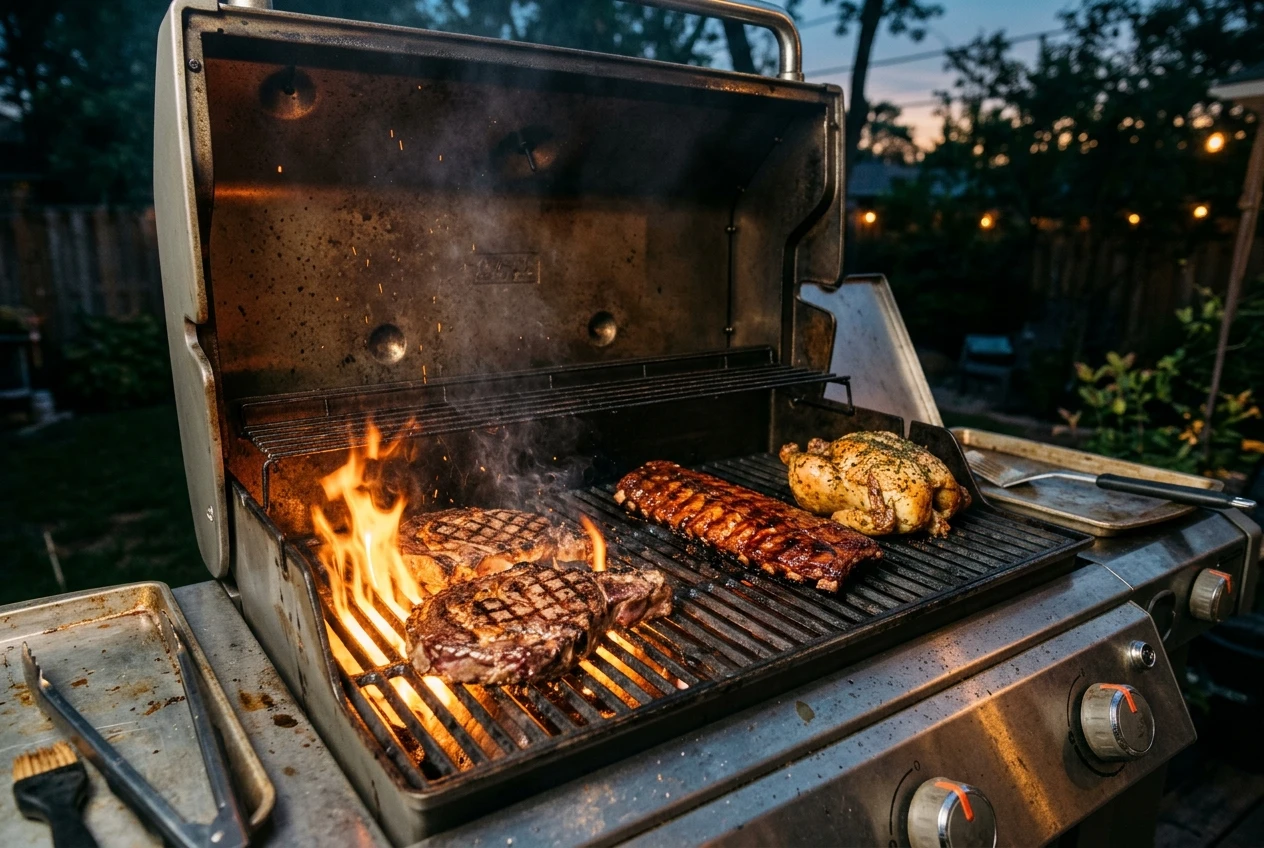
The lid thermometer helps, but it reads the air near the top of the hood, not the temperature at the grate or inside the meat. For ribs, roasts and chicken, a probe thermometer tells you far more. If you are choosing one, this guide to the right grilling thermometer for the way you cook covers the options.
Searing and indirect cooking
For steaks and burgers, preheat with the lid closed for 10 to 15 minutes so the grates and cookbox are fully hot. Grates that have not heated through steam the meat instead of searing it, and the food sticks. Once the grates are hot, brush them, oil the food rather than the grate, and leave the meat alone until it releases on its own.
For slow cooking, light the burners on one side only and put the food on the cool side with the lid closed. This is the two-zone method, and it keeps big cuts from burning on the outside before the middle is done. If you have not set it up on a gas grill before, this walkthrough on setting up a two-zone fire on your gas grill explains the burner settings step by step.
Cooking space
Cooking area is listed in square inches, but that number only means something when you picture your own cookouts. Lay out the food you cook most often: a rack of ribs, a dozen burgers, or a whole chicken. Then check whether you would still have a cool zone left over. A grill that fits the food but leaves no room for a cool zone cannot cook indirectly, so size the grill for the second job as well as the first.
Cleaning and upkeep
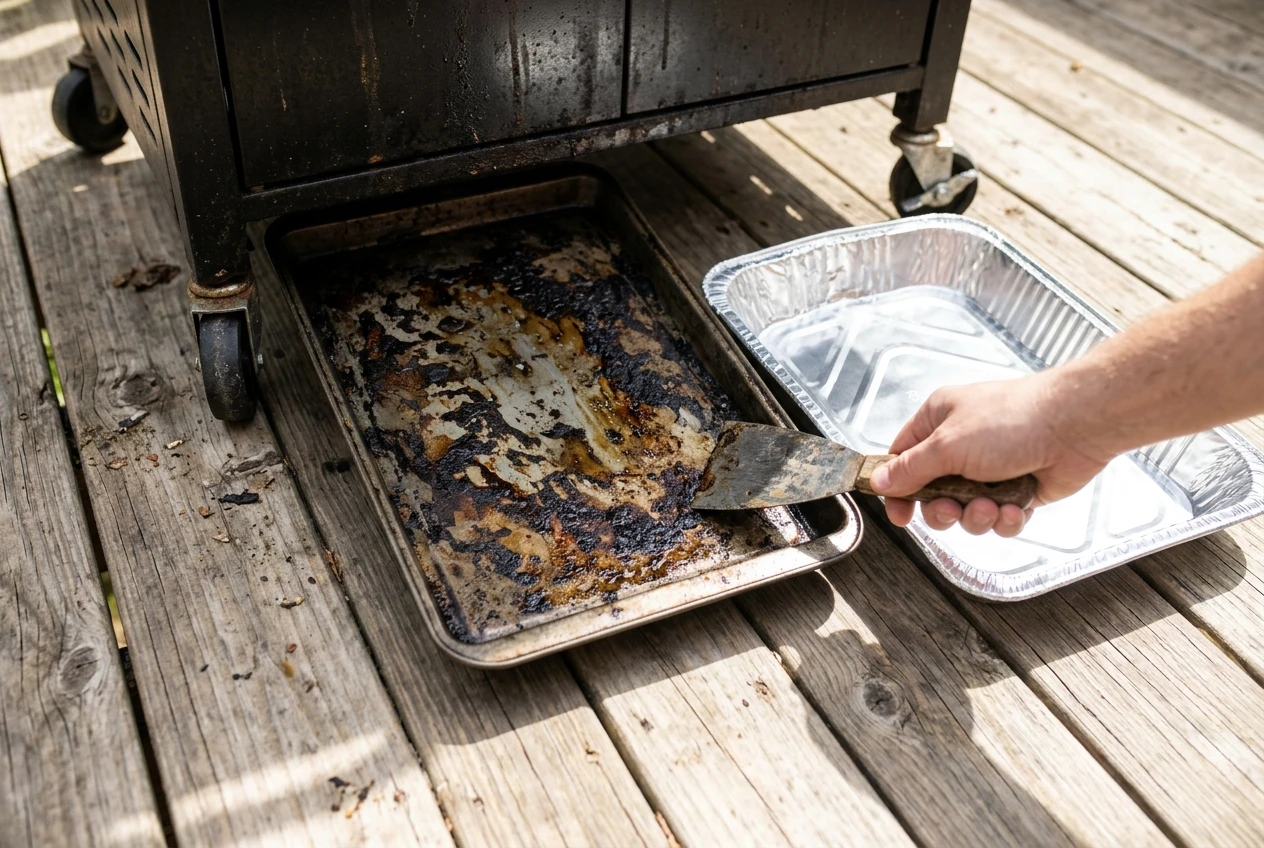
Grease is the main cleaning problem on any gas grill. It collects in the cookbox and the drip tray, and old grease causes flare-ups that scorch food and can start a fire. The easiest habit is to let the grill run on high for a few minutes after cooking, brush the grates while they are still warm, and empty the grease tray regularly.
Look at how the grease tray slides out and how easy it is to reach on the E-315. A tray you can remove without taking things apart gets emptied. One that is awkward to reach does not. For a full routine, this gas grill maintenance guide lists what to do after every cook, monthly and at the end of the season.
Build Quality and Design Aesthetics
A grill lives outdoors, so its materials decide how long it lasts. Before buying, check the product page for what each major part is made of, because different parts of the same grill often use different materials.
-
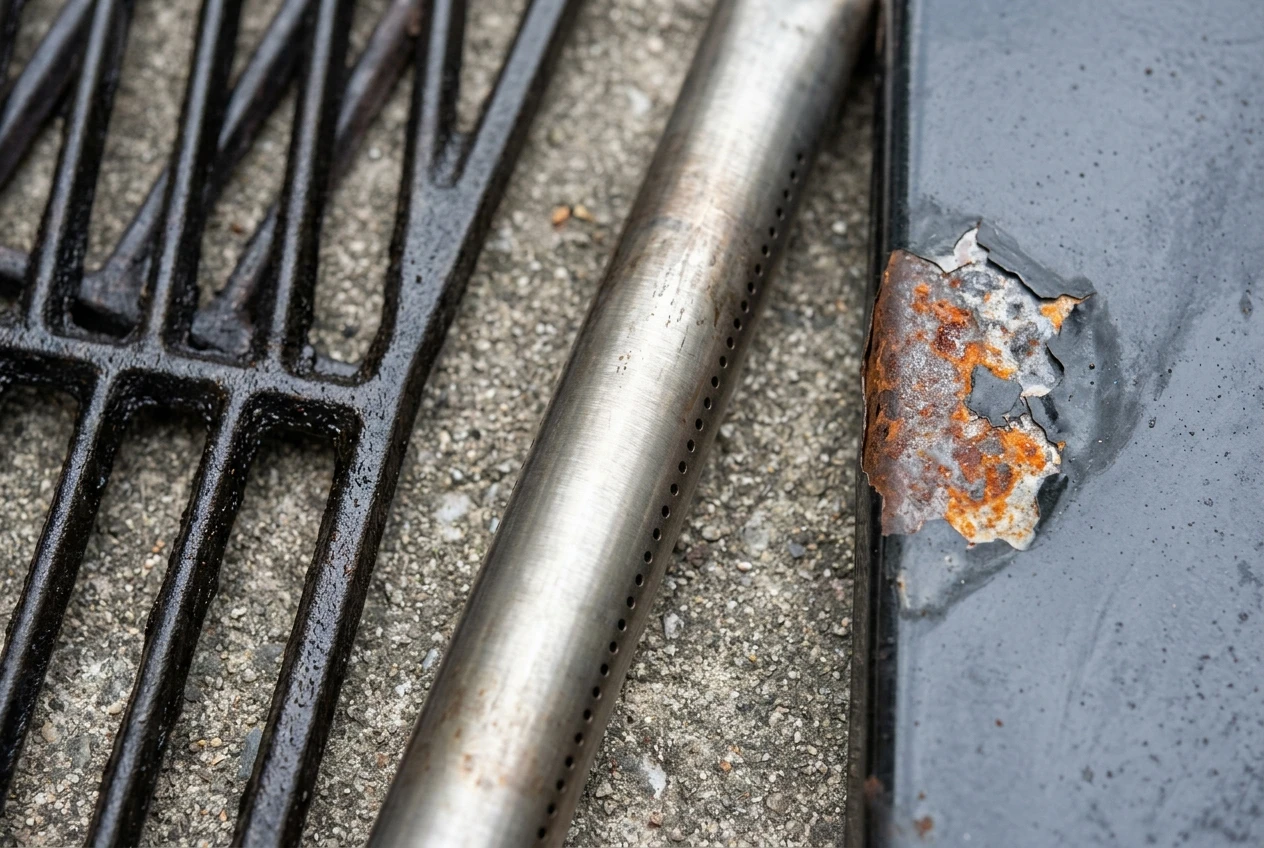
Lid and cookbox: Stainless steel resists rust well. Painted or enameled steel can look good for years, but chips and scratches that expose bare metal are where rust starts.
-
Cooking grates: Cast iron holds heat and gives strong sear marks, but it needs oiling to prevent rust. Stainless grates are easier to maintain. Porcelain-enameled grates clean easily, but the coating can chip if you scrape hard.
-
Burners: Stainless tube burners tend to outlast cheaper alternatives, and burner warranties usually say how long.
-
Cart and shelves: A stable cart that does not wobble matters when you are lifting a hot lid or carrying a full tray of food. Side shelves are where you set tools and plates, so check that they are large enough and sturdy.
Design and placement
Design matters in a practical way. The grill needs clearance on all sides, away from walls, railings and overhanging branches, and the dimensions on the listing tell you whether it will fit your patio. If space is tight, these outdoor kitchen design ideas for small patios show how to arrange a grill and a prep area in a small footprint.
Also check the practical details: wheels that roll over a patio surface, a propane tank holder that makes swapping tanks easy, and a lid that stays open without a hand holding it. A good cover keeps rain and sun off the grill when it is idle, and it will extend the life of every part.
Assembly
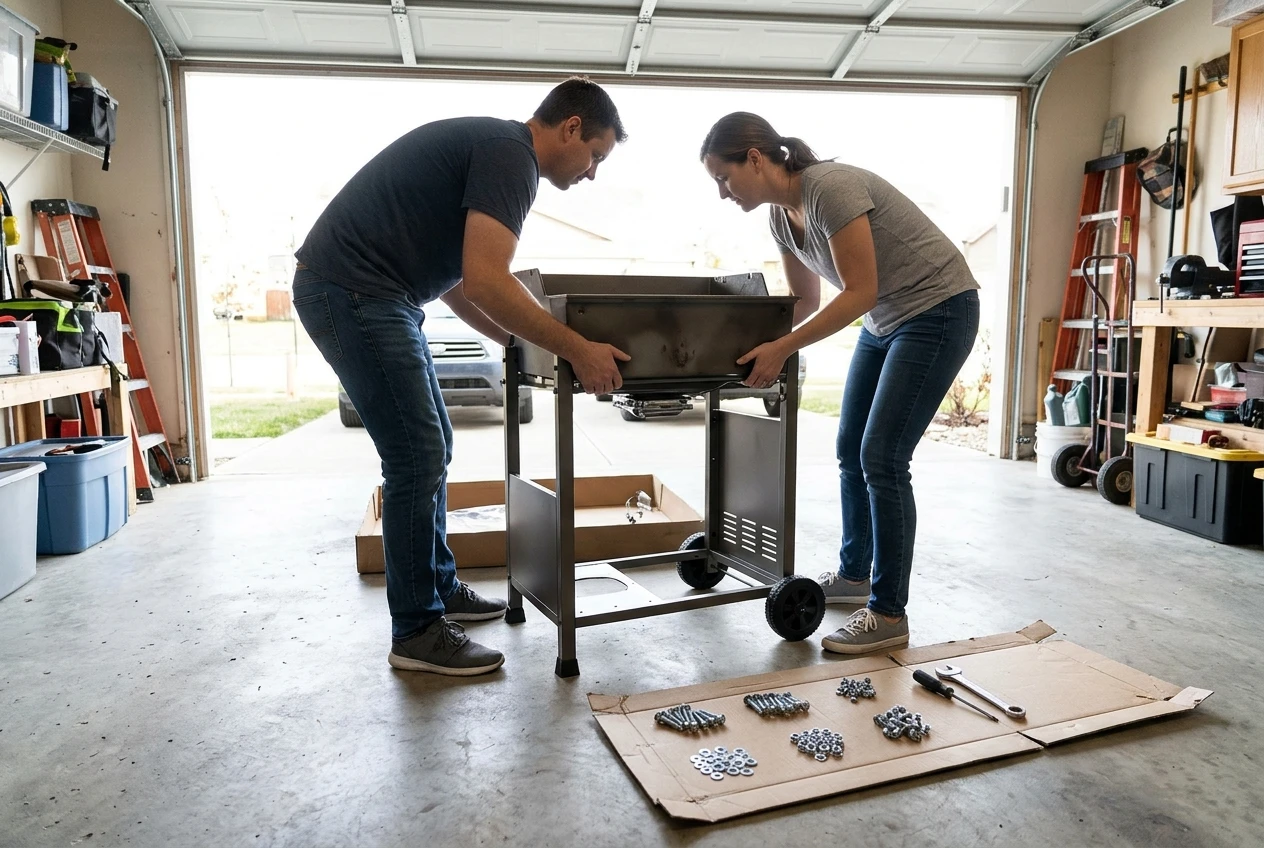
Gas grills usually arrive in a box of parts, and a premium grill has more of them. Set aside a good part of an afternoon, and have a second person around for lifting the cookbox onto the cart. Read the instructions through before starting, and leave the fasteners slightly loose until the frame is assembled so the parts line up. After assembly, check every gas connection with soapy water. Bubbles that form when you open the valve show a leak, and you should fix it before cooking.
Value for Money and Conclusion
The E-315 costs more than an entry-level grill, and the question is whether the extra money buys years of use. A simple way to judge it is to divide the price by the number of seasons you expect to cook on it. A grill that costs twice as much but lasts three times as long costs less per season, and you also spend fewer weekends hunting for a replacement.
Warranty terms are part of that calculation. Gas grill warranties commonly differ by part, with burners, cookbox, lid and grates each covered for a different period. Read the terms on Weber’s site and note what is covered, since the longest cover is usually on the parts that are hardest to replace.
Costs beyond the grill
Budget for the extras: propane, a cover, a grill brush, and a good probe thermometer. None of them is expensive next to the grill, but together they are part of the real cost of getting started.
Trade-offs
The E-315 has real trade-offs to weigh:
-
Price: It costs more than a basic grill, which is hard to justify if you cook outdoors only a few times a year.
-
Assembly: Expect a long build, as with most full-size gas grills.
-
Smoke flavor: A gas grill gives you convenience and control, but not the deep smoke of a dedicated smoker. If smoked brisket and pulled pork are your main goal, a pellet smoker may suit you better, and this roundup of pellet smokers under $1000 is a good place to compare.
-
Gas versus griddle: If most of your cooking is smash burgers, breakfast and stir fry, a flat top may serve you better. This comparison of a Weber gas grill and a Blackstone griddle helps you decide based on how you cook.
If you are comparing Genesis models, the Weber E435 gas grill review shows what a different model in the same family offers.
Who the E-315 suits
The E-315 makes sense for a weekend barbecuer who cooks outdoors often, hosts friends and family, and wants a grill that can sear a steak on Saturday and cook a roast on Sunday. It suits someone who would rather spend more once than replace a cheaper grill every few seasons.
Before you buy, confirm four things on the product page: the burner count and cooking area, what the grates and cookbox are made of, the warranty on each part, and whether the finished grill fits your space. If those answers match how you cook, the E-315 is a sound choice for the long run.