

Gas grills in the four-burner class are bought for a particular kind of cooking: feeding several people at once, with a side dish going alongside the main course. The Weber E435, often listed as the Weber Spirit E-435, is Weber’s offer in that class. This review covers what the grill is, how a four-burner gas grill performs, where problems tend to show up, and who should buy one.
If you are asking “is the Weber 435 a good grill?”, the answer depends on how you cook. For people who regularly cook for four or more, it suits that job well. For someone who grills a couple of burgers on weeknights, a smaller grill will do the same work for less money and take up less room.
Where the Weber E435 Fits
Weber’s reputation goes back to the early 1950s and the kettle charcoal grill, which the company is still known for. Gas grills came later, and the Spirit line is Weber’s range for home backyards, below its more expensive models.
Gas grilling is popular because it is simple. You turn a knob, press an igniter, and the grill is ready in several minutes. Burners can be set independently, so you can run one side hot and the other low. That is how you sear a steak and keep chicken thighs cooking gently on the same grill without burning either.
The E435 follows that design. The “4” in the name refers to four burners, and the model also has a side burner for pots and pans. Before you buy, check the retailer’s current listing for exact dimensions, BTU ratings, and what is included, since Weber updates its models and retailers sometimes list older versions.
The Weber Spirit E-425 is the nearest comparison in the lineup. The sensible way to choose between them is to put the two spec sheets side by side and compare burner count, cooking area, side burner, and price.
Performance and Usability
Heat and cooking space
Four burners give you more control than two or three. With the burners spread across the grate, you can set up two zones: high heat on one side for searing, low heat on the other for finishing thicker cuts. Cooks call this two-zone cooking, and it is the main reason people buy a larger grill.
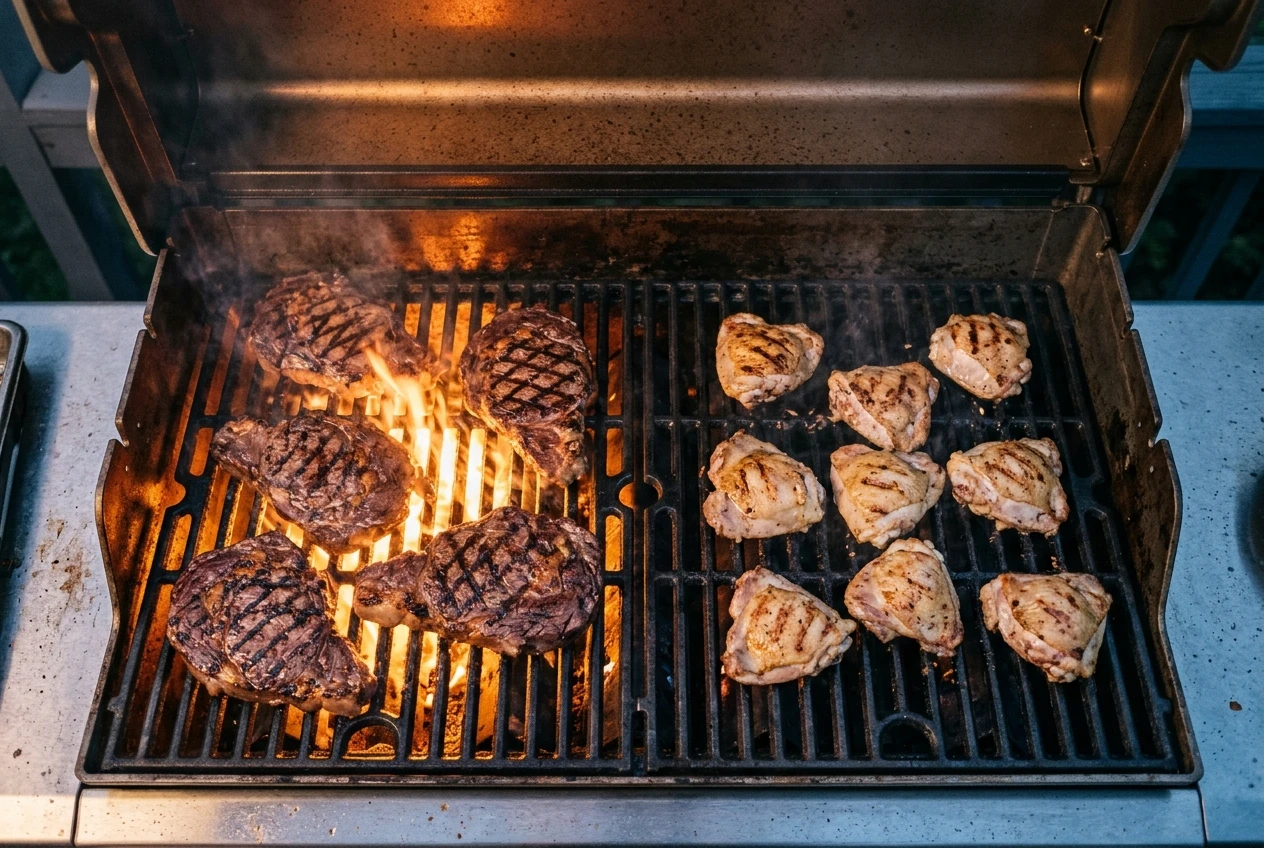
More burners also mean more usable grate area. A grill this size can hold burgers for a group, or a rack of ribs next to a tray of vegetables. If you only ever cook for one or two people, you will leave most of that surface unused.
The side burner
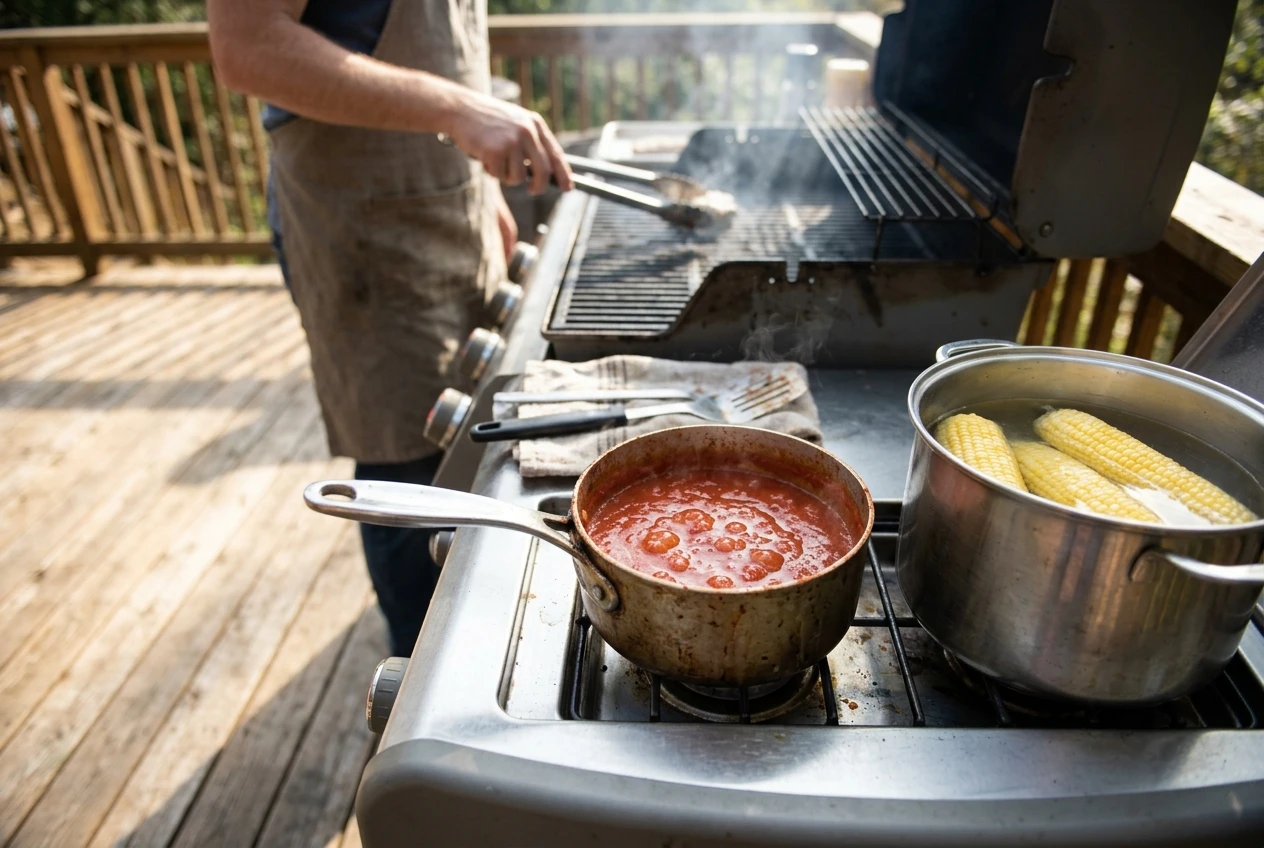
A side burner works like a stovetop ring. It lets you warm a sauce, boil corn, or sauté onions without going back to the kitchen. This is useful when you are hosting, because the cook stays at the grill. It is less useful if you usually keep side dishes in the kitchen, so decide whether you would use it before paying for it.
Ignition and temperature control
Gas grills like this light with a push-button igniter. If it does not spark on the first press, hold the knob, press again, and check that the propane tank valve is fully open. Igniters can wear out over time, and replacements are a standard part to buy.
Temperature is set by the control knobs and read on the lid thermometer. That thermometer measures the air at the top of the lid, not the temperature at the grate, so it is only a guide. A separate probe thermometer is a better way to know when meat is done. Preheat with the lid closed for ten to fifteen minutes before you cook, and the grates will be hot enough to sear and to release food cleanly.
Fuel use
Burners left on high use propane quickly, and a large grill running every burner uses more than a small one. You can reduce consumption by lighting only the burners you need and turning the others off. Keep a spare tank, or check the level before a big cookout. A tank-weight scale or a gauge fitted to the tank takes the guesswork out of it.
Cleaning and upkeep
Most of the upkeep is routine:
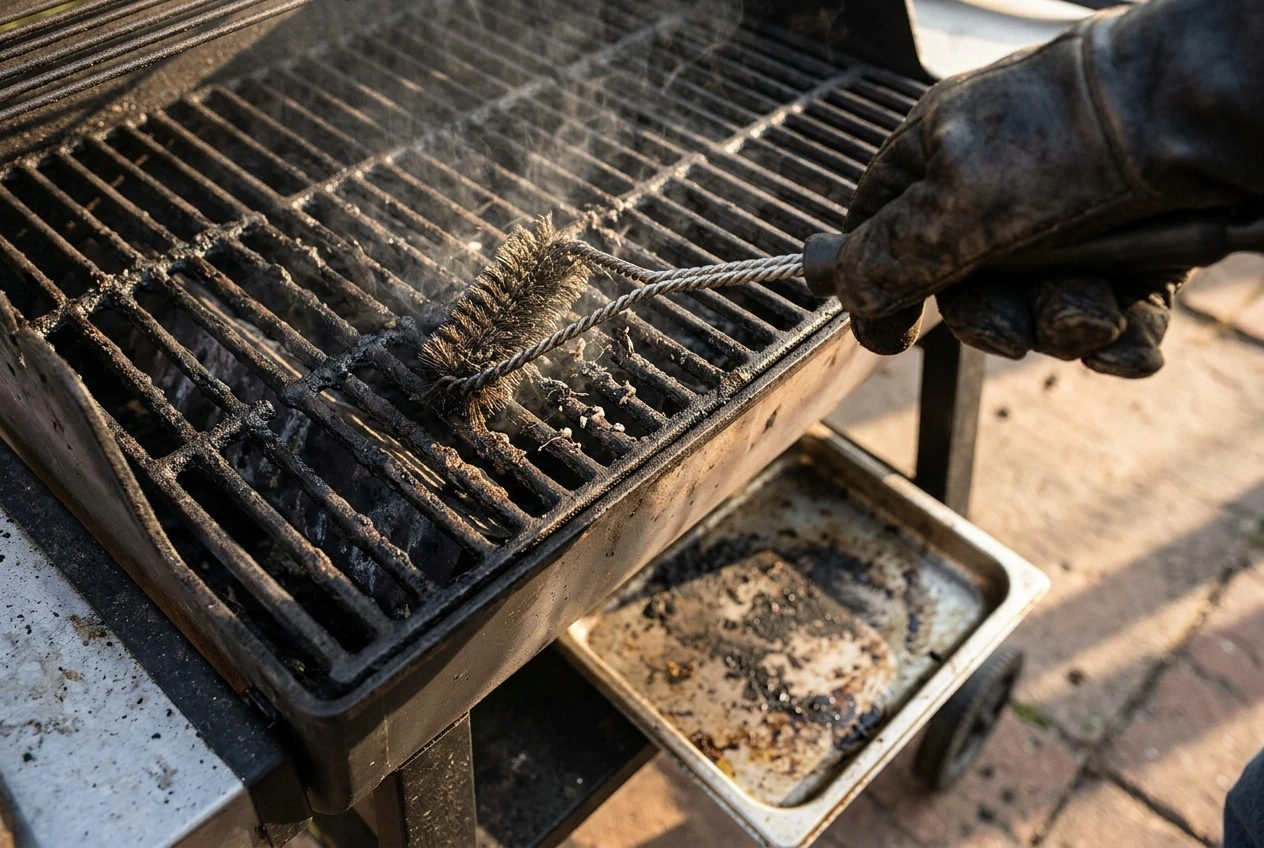
- Brush the grates while the grill is still hot after cooking.
- Empty or replace the grease tray regularly, since built-up grease is the usual cause of flare-ups.
- Wipe down the burner tubes and the area under the cooking grates a few times a season.
- Cover the grill when it is not in use, especially in wet or salty-air climates.
None of this takes long, and it is the biggest factor in how well any gas grill lasts.
Pros, Cons, and Common Problems
What the E435 does well
- Capacity for groups. Four burners and a large grate suit family dinners and backyard gatherings.
- Heat zones. Independent burners let you sear and cook gently on the same grill.
- Side burner. It adds a place to cook sauces and sides outdoors.
- Brand support. Weber is a well-known manufacturer, so replacement parts such as grates, igniters, and burner tubes are widely sold and easy to find.
Drawbacks to weigh
- Price. A four-burner grill with a side burner costs more than a basic two- or three-burner model. Check the current price rather than relying on older listings.
- Size. The grill needs a good amount of patio space, and it needs clearance from walls, railings, and anything flammable.
- Assembly. Gas grills of this size ship in a box and need to be put together. Set aside an afternoon, read the instructions through before starting, and keep the small hardware sorted as you go.
- Surplus capacity. If you cook for one or two, you pay for burners and space you will not use.
Problems that affect gas grills generally
These are not specific to the E435, but they are worth knowing about with any grill of this type:
- Flare-ups. Fat dripping onto hot surfaces catches fire. Trim excess fat from meat, keep the grease tray clean, and move food to a cooler zone if flames rise.
- Weak or uneven flame. If a burner burns low or unevenly, the cause is often a blocked burner port or a spider nest in the tube. Cleaning the burner usually fixes it.
- Igniter that stops clicking. This is usually a dead battery or a worn igniter part, and both are cheap to replace. You can light the grill with a long match while you wait for the part.
- Rust on the grates. Grates can rust if left wet and uncovered. Oil them lightly after cleaning and keep the grill covered.
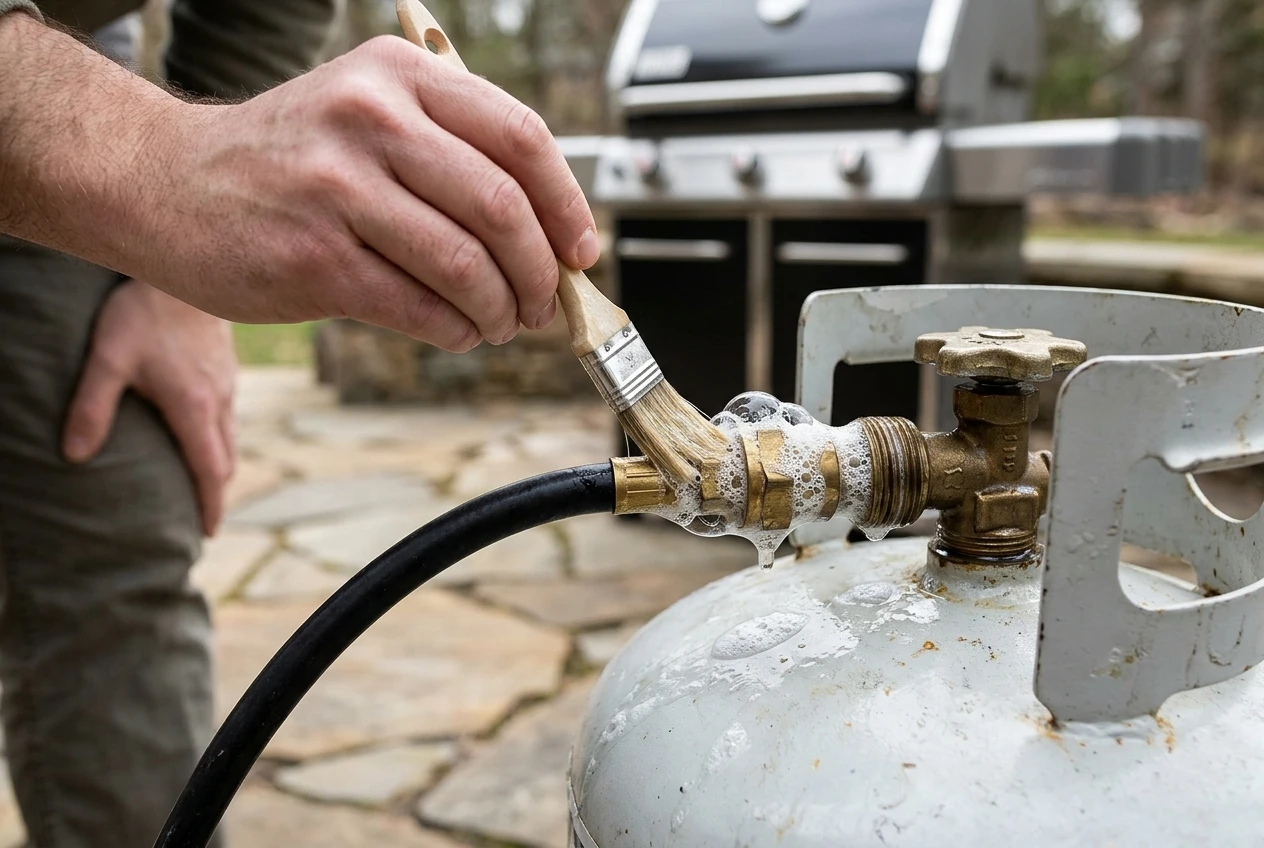
- Gas leaks. Each time you connect a new tank, brush soapy water on the hose and fittings and open the valve. Bubbles mean a leak. Turn off the gas and do not light the grill until the fitting is fixed.
Because feedback on any particular grill varies by year, batch, and how it was set up, read recent customer reviews on the retailer’s page before buying, and look for repeated complaints about the same part rather than single comments.
Who Should Buy the Weber E435
The E435 suits you if:
- You regularly cook for four or more people.
- You like to cook meats and sides at the same time on the same grill.
- You have a patio or deck with enough space and ventilation.
- You prefer a brand with easy access to replacement parts.
You may want a smaller grill, or the Spirit E-425, if:
- You mostly cook for one or two.
- You do not need a side burner.
- Your space is limited.
- You would rather spend less and accept a smaller cooking area.
Conclusion: Is the Weber E435 Worth the Investment?
The Weber E435 is a good choice for a household that grills often and for groups. Four burners give you separate heat zones, the side burner moves some of the kitchen work outdoors, and Weber’s parts availability makes long-term upkeep straightforward. Its main costs are the price, the footprint, and the assembly time.
Before you order, do three things. Compare the current spec sheet and price against the Spirit E-425. Measure the space where the grill will sit, with clearance on all sides. Read the newest customer reviews for repeated complaints. If those checks come out well and you cook for groups, the E435 is worth buying.