

A pellet smoker is a good first smoker for someone who has cooked mostly on gas or charcoal. You fill a hopper with wood pellets, set a temperature on a controller, and the smoker feeds pellets to a small fire to hold that temperature. Your weekend can go to the food and your guests instead of to tending a fire.
This guide is built for that buyer. Instead of ranking models by spec sheets that change every few months, it explains what matters most when you shop the best pellet smokers under $1000, and which kind of smoker matches which kind of weekend cook. By the end you should know what to look for and what to ignore.
Why a pellet smoker suits a weekend cook (and where it falls short)
On a charcoal grill, holding a steady low temperature for hours takes practice: you adjust vents, add fuel, and watch the thermometer. On a gas grill, you can hold a steady temperature, but you get little real smoke flavor, and long cooks mean a lot of propane and a lot of hovering. A pellet smoker automates the fuel feed and the airflow, which is why beginners get consistent results sooner.
The strengths are practical:
- Steady low-and-slow cooking. Ribs, pork shoulder, whole chickens and brisket all want a low, even temperature for hours.
- Little babysitting. Once the smoker is running at temperature, you can do other things for stretches at a time.
- Flexible fuel flavor. Pellets come in different woods, so you can change the smoke character by changing the bag.
- A familiar workflow. You set a number and cook to a target internal temperature, much like using an oven.
The weak points matter just as much when you are deciding:
- Lighter smoke flavor. Pellet smokers generally produce a milder smoke than a charcoal or wood-fired offset smoker. Many people like that, but if you want a heavy, campfire-style smoke ring and bark, set your expectations accordingly.
- Searing is limited. Most pellet smokers are designed for smoking and roasting. Some can run hot enough for decent chicken or burgers, but a screaming-hot steak sear is usually better done on a gas grill or a cast iron pan.
- They need electricity. The auger, fan and controller all run on household power, so you need an outdoor outlet or a safe extension cord within reach.
- Pellets must stay dry. Damp pellets swell and can jam the auger, so storage is part of owning one.
If you already own a gas grill, a pellet smoker does not replace it. It adds a different kind of cooking. If you want a refresher on getting more from the grill you already have, the guide on indirect heat grilling on a gas grill covers a technique that carries over to smoking large cuts.
What you really get for under $1000, and what you give up
A budget of $1000 is a workable range for a first pellet smoker. Pellet smokers in this price range can offer a digital controller, a decent cooking area, and a hopper large enough for a full weekend cook. You do not need to spend more to get good food out of one.
What a sub-$1000 budget usually means is a set of trade-offs. These are tendencies, not guarantees, so confirm each one on the product page of any model you consider:
- Thinner steel and simpler construction than premium models. This affects how well the cooking chamber holds heat in wind and cold weather.
- Simpler controllers. Many hold temperature in steps rather than adjusting continuously, which can mean wider swings.
- Fewer extras. Built-in meat probes, Wi-Fi control, and app features are sometimes included and sometimes not, and the quality varies.
- Smaller or less refined details such as shelves, hooks, wheels and grease management.
The takeaway is that “under $1000” covers a wide spread of quality. Two smokers at similar prices can differ a lot in how steadily they run and how long they last. That is why the features below are worth more attention than the cooking-area number or the number of accessories on the box.
The five features that matter most to a beginner
1. Temperature stability
This is the most important trait for a first smoker. A smoker that holds your set temperature within a modest range cooks evenly and predictably. One that swings widely can dry out ribs or stall a shoulder.
Some temperature movement is normal on every pellet smoker, because the controller feeds pellets in bursts. What you want is a smoker that recovers quickly and does not wander far from your setting. Owner reviews are the best source here. Look for comments about holding temperature over a long cook, in cold or windy weather, and with the lid opened to check food.
2. Hopper size
The hopper holds the pellets, and its size determines how long you can cook before refilling. For short cooks like chicken thighs or a rack of ribs, almost any hopper is enough. For a big pork shoulder or brisket that runs many hours, a small hopper means checking on it and topping up, possibly overnight.
Match the hopper to the longest cook you plan to do. If you will mostly do afternoon cooks, a mid-sized hopper is fine. If you want to start a shoulder in the morning and leave it for most of the day, a larger hopper is worth prioritizing. Also check how the hopper is designed: a pellet-level window or a lid that is easy to open makes refilling less of a chore, and a clean-out door makes switching pellet flavors much easier.
3. Build quality
Build quality shows up in daily use. A well-built smoker has a lid that closes with a tight seal, sturdy legs and wheels, a firepot that is easy to reach, and a finish that resists rust. A poorly built one leaks heat and smoke around the lid, wobbles when you move it, and shows rust sooner.
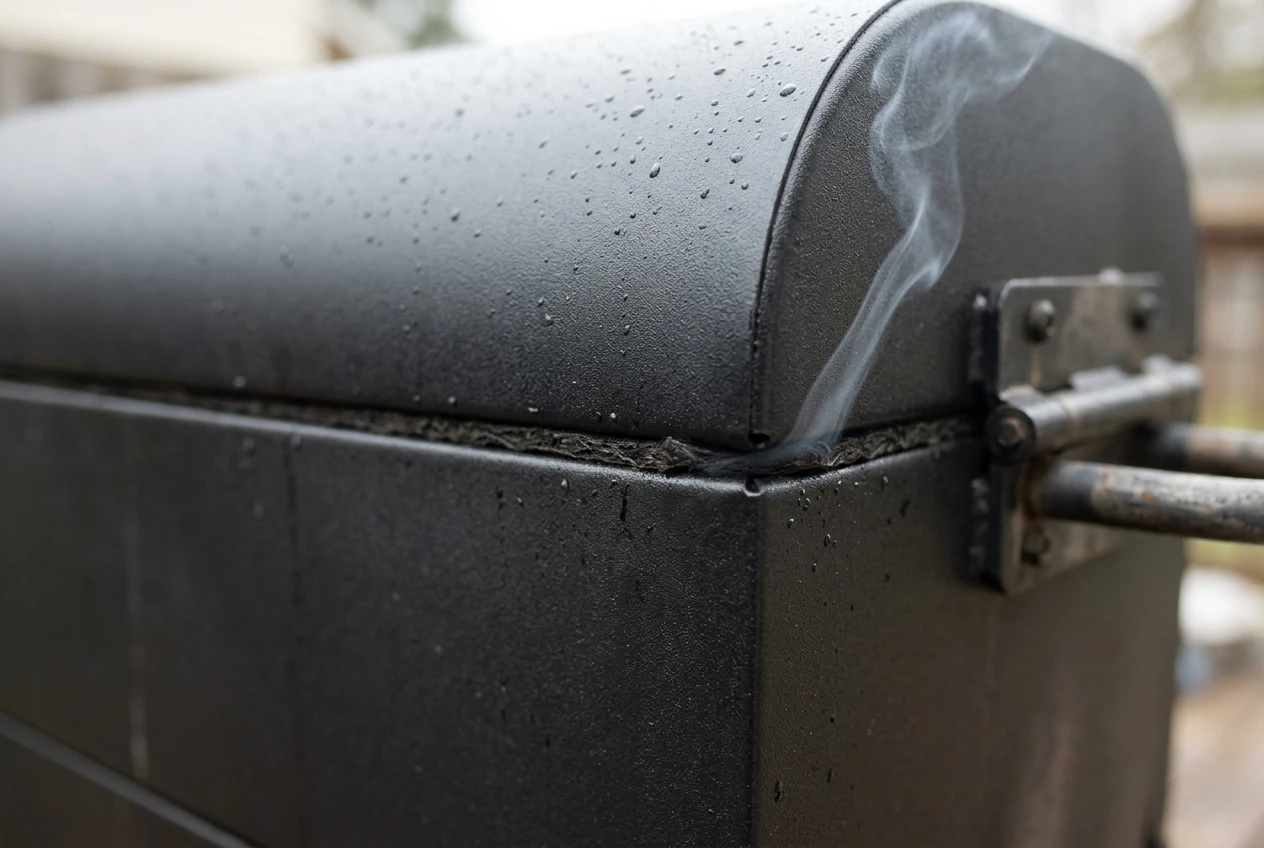
You cannot inspect a smoker through a website, so use proxies: the warranty terms, how reviewers describe the lid and seals after months of use, and how the company handles replacement parts. If a retailer has the smoker on a showroom floor near you, lift the lid, knock on the body, and check how it feels.
4. A forgiving controller
The controller is where beginners feel the difference most. A forgiving controller does a few things well:
- Reaches your set temperature without a big overshoot.
- Has a startup and shutdown cycle that runs itself, so you do not have to remember steps.
- Shows temperature clearly and is easy to read in daylight.
- Includes a low-temperature smoke setting or a clear way to get more smoke early in the cook.
- Works with one or more meat probes so you can watch food temperature without opening the lid.
Wi-Fi and app control can be helpful, since you can check the cook from your kitchen. They are a bonus, not a necessity, and a basic controller that holds temperature well is better than a feature-heavy one that does not.
5. Easy cleanup and grease management
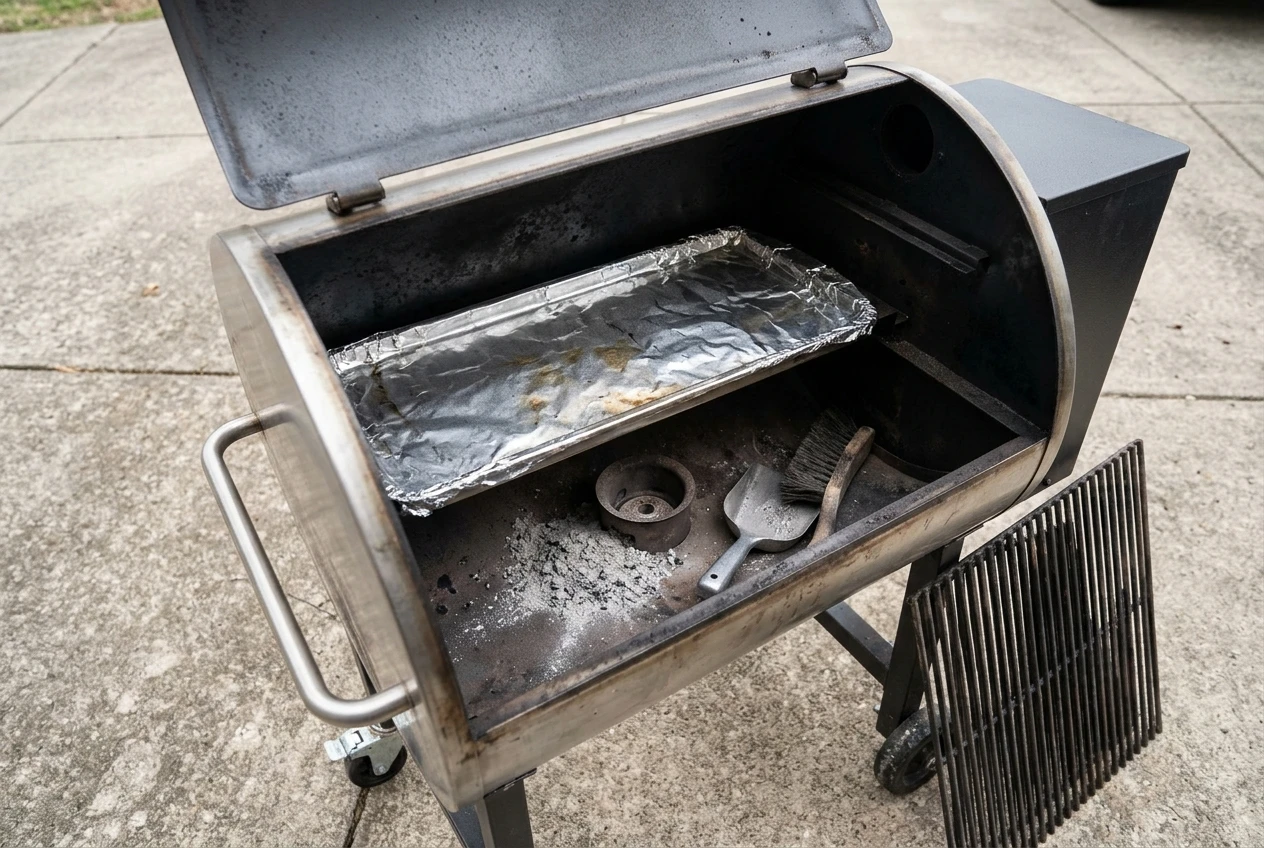
Pellet smokers collect ash in the firepot and grease in the chamber. If these are awkward to get to, you will skip cleaning, and that causes problems: too much ash can interfere with ignition, and built-up grease is a fire risk. Look for a smoker with a removable grease tray, an accessible firepot, and an ash-removal method that does not need a full disassembly. Replaceable drip-tray liners are a small convenience that saves time.
Which pellet smoker fits which kind of weekend
Most weekend cooks fall into one of three patterns. Find yours, and the features to prioritize become clear.
The Saturday-long cook
You like big cuts: pork shoulder, brisket, a pair of whole chickens, a few racks of ribs. You want to start early, check in occasionally, and eat well in the evening.
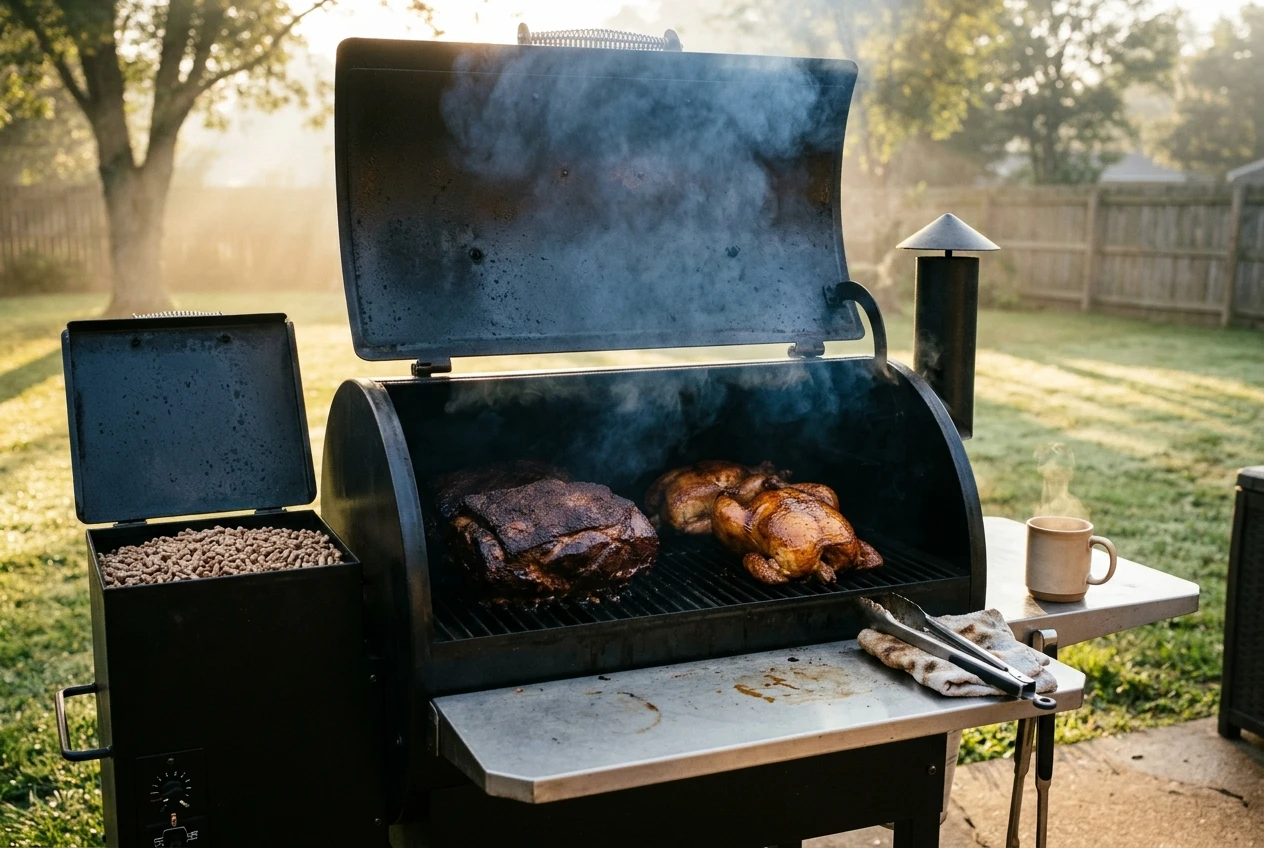
Prioritize: a larger hopper, strong temperature stability, solid build quality with a tight lid, and a controller that works well with a meat probe. A bigger cooking area helps if you cook for a crowd. Stability matters most here, because a long cook magnifies any weakness in how the smoker holds heat.
The mixed-use weekender
You smoke some weekends, but others you want burgers, sausages, chicken pieces or vegetables, and you want the pellet smoker to handle a fair share of the cooking. You may still keep your gas grill for searing.
Prioritize: a wide temperature range with a stable high end, a controller that adjusts quickly, a grease management system that copes with fattier foods, and easy cleanup. The hopper can be mid-sized, since your cooks are shorter. Check the maximum temperature on the product page and read reviews about how well it performs for roasting and grilling.
The small-space, small-crowd cook
You cook for two to four people, or you have a patio with limited room. You want a smoker that fits the space and does not demand much storage or a lot of pellets per cook.
Prioritize: a compact footprint, sturdy wheels or a portable design, an efficient controller, and a manageable hopper size. A smaller cooking area is fine if you rarely cook large cuts. Pay attention to the lid clearance and the shelf placement, since a cramped patio makes awkward designs more annoying. If you are planning the whole patio setup, the member guide on small patio outdoor kitchen ideas is a useful companion.
Pellet smoker picks to compare, and who each one suits
Prices, models and specs shift often, so this section describes three types of pellet smoker to shop for under $1000 rather than naming specific models. Use these as templates when you browse retailers, then confirm the details on each product page before you buy.
The large-hopper workhorse
This type has a big hopper, a generous cooking area, and heavier construction. It usually sits toward the top of the budget.
- Best for: the Saturday-long cook, and anyone who hosts.
- Check on the product page: hopper capacity, cooking area, steel thickness, lid seal, warranty length.
- Watch for: a larger size means it takes more room and may use more pellets per cook.
The all-rounder
This type balances hopper size, cooking area and price, with a controller that handles a wider temperature range. It is the safest choice if you are not sure how you will use the smoker.
- Best for: the mixed-use weekender.
- Check on the product page: maximum and minimum temperature, controller features, meat probe support, grease management design.
- Watch for: the compromise is that it may not excel at very long cooks or at searing.
The compact starter
This type is smaller and lighter, with a modest hopper and a simpler controller, and usually sits at the lower end of the budget.
- Best for: the small-space, small-crowd cook, or anyone who wants to try pellet smoking without a big commitment.
- Check on the product page: footprint, weight, hopper capacity, whether the legs fold, how reviewers describe temperature holding in wind.
- Watch for: a smaller hopper means more refills on long cooks, and thinner construction can mean more temperature swing outside.
When comparing two candidates from the same type, read the most critical reviews first. Complaints that repeat across many owners, such as rust, auger jams or controller errors, tell you more than praise does. Then check whether the manufacturer responds to warranty claims and sells replacement parts.
Mistakes first-time buyers make, and the extras worth skipping
Buying on cooking area alone. A bigger grate is only useful if the smoker holds temperature across it. A well-built mid-sized smoker usually beats a large, thin-walled one.
Ignoring where it will live. Measure your patio, check the outlet location, and think about wind. A smoker placed in a sheltered spot holds temperature better and uses fewer pellets.
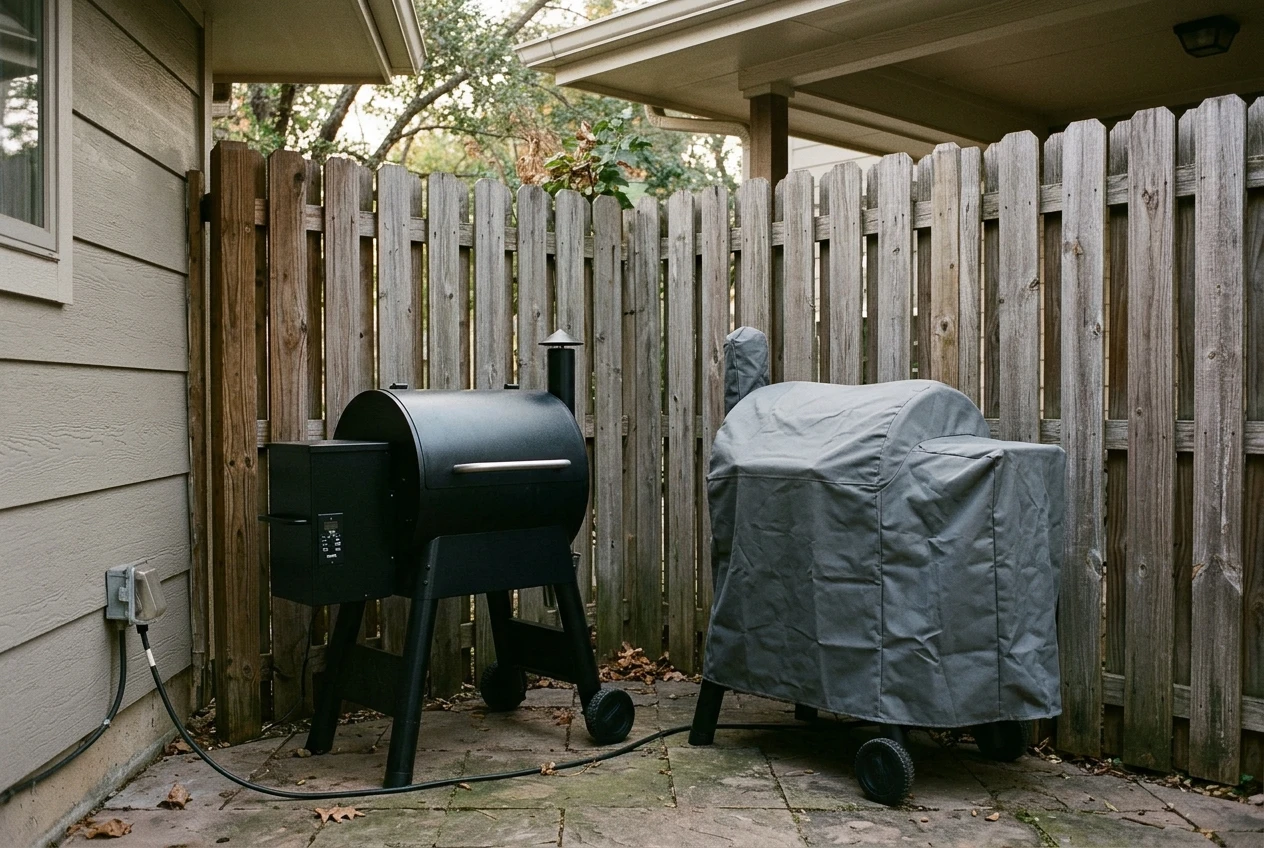
Skipping the cover and a good thermometer. A weather cover protects the controller and the finish, and it is one of the few accessories worth buying immediately. Built-in probes on budget smokers can be inaccurate, so a separate thermometer is useful. The guide to the best meat thermometer for grilling helps you pick one for how you cook.
Buying cheap, damp or flavored-oil pellets. Pellets matter. Store them in a dry container, and choose pellets made from hardwood without fillers. If your smoker runs poorly, bad pellets are a common cause.
Chasing every feature. Extras that are easy to skip at this budget include:
- Elaborate app features if the basic controller is already good.
- A pile of included accessories that are low quality.
- Extra side shelves and gadgets you will not use in the first month.
- Premium branded pellets for your first few cooks. Standard hardwood pellets are enough to learn on.
Expecting a perfect sear. If searing is important to you, keep your gas grill or a cast iron pan in the mix and use the smoker for what it does best.
Your first cook: a simple, forgiving plan for the first Saturday
Your first cook should be forgiving. Chicken thighs or a rack of ribs are good choices, because they handle small temperature swings better than a brisket does. If you want a recipe to follow, the best tender ribs recipe is a natural place to start.
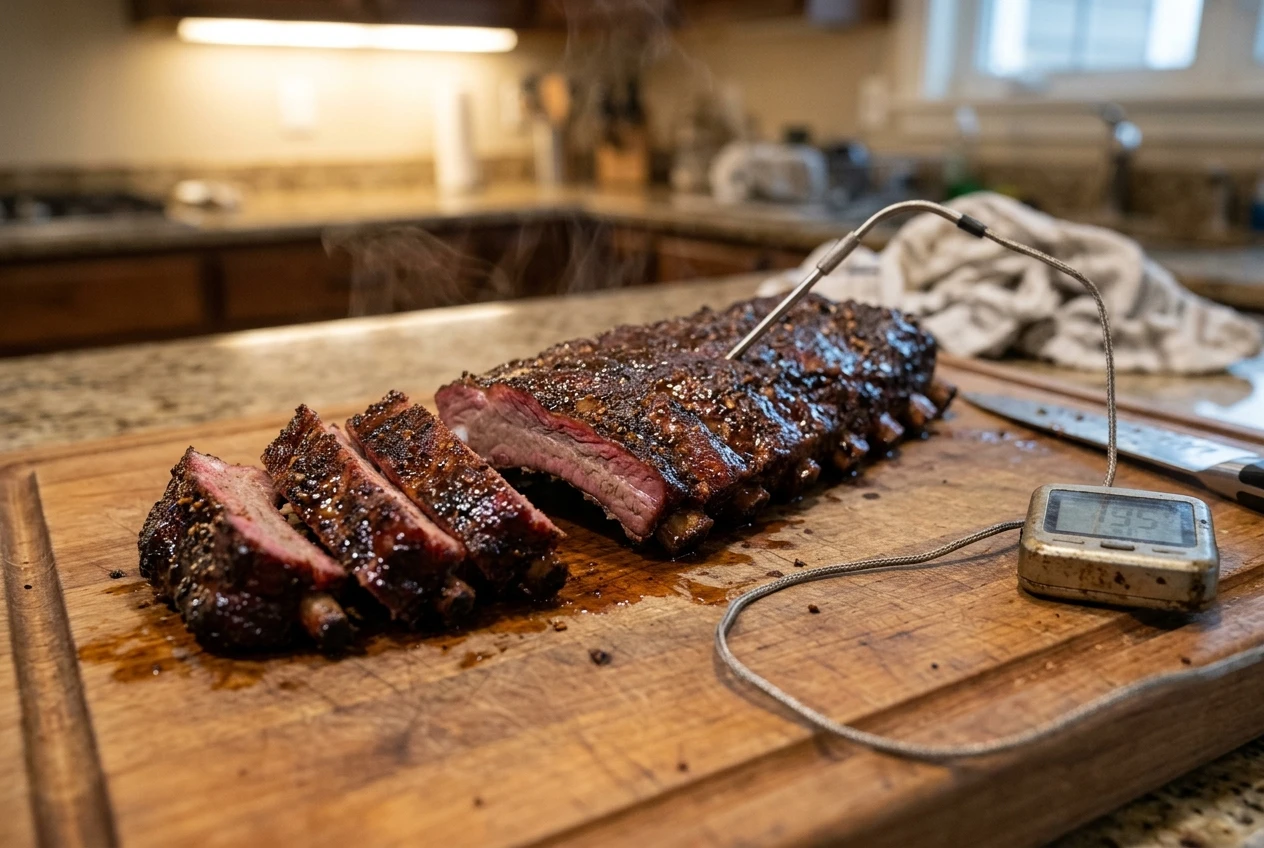
- Season the night before. A simple rub of salt, pepper and a little paprika is enough. Keep it basic for the first cook.
- Read the manual and run a burn-in. Most manufacturers recommend running the smoker empty at a high temperature first to burn off manufacturing residue. Follow the instructions for your model.
- Fill the hopper with dry pellets. Use a standard hardwood blend. Check the hopper level before you start, so you do not run out mid-cook.
- Start the smoker and let it stabilize. Use the startup cycle, set a moderate smoking temperature, and give it time to settle before the food goes in. Many beginners find a temperature around 225 to 275°F a good range for ribs and chicken, but follow the recipe you choose.
- Place a probe in the food and close the lid. Resist the urge to open it. Each time you do, the temperature drops and the cook takes longer.
- Cook to internal temperature, not to the clock. Time estimates vary with weather, cut size and the smoker. Use your thermometer to decide when the food is done, and let it rest before you cut.
- Clean up after it cools. Empty the ash, check the grease tray, and cover the smoker. A five-minute habit at the end of each cook prevents bigger problems later.
Take notes on the first cook: the set temperature, how long it took, and how the result tasted. After two or three weekends you will know how your smoker behaves and can adjust. The first cook does not need to be perfect, it needs to teach you how the smoker runs.
Choosing and buying
The best pellet smokers under $1000 are the ones that match how you cook on weekends. Pick the type that fits your pattern, confirm the five features on the product page, and read the critical reviews before you commit. Check the current price and reviews on the pellet smoker that fits your weekend cooking style, using the links in this guide.