

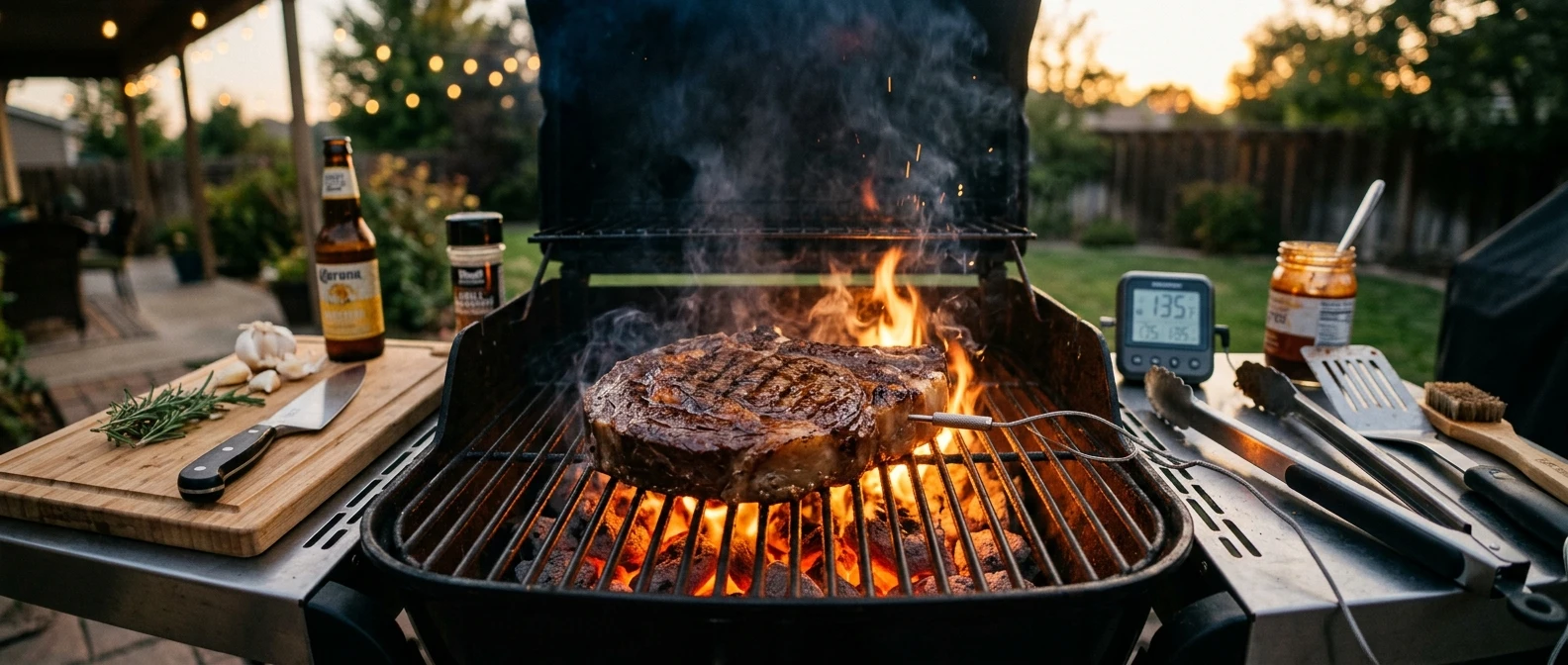
Grab a thermometer with the wrong design for how you actually cook, and you end up fighting the tool instead of the food. A weeknight sear needs a fast, single-point reading. A six-hour brisket needs something that stays in the meat for hours without you lifting the lid. A multi-zone cook with chicken on one side and vegetables on the other needs a completely different setup than either of those. The best meat thermometer for grilling isn’t one model. It’s the one that matches the cook you’re actually doing most often.
Why guessing doneness is costing you good meat
Cutting into a steak to check the color, or pressing it with a finger and hoping, wastes the meat you just spent money on and the time you spent grilling it. A steak cut open to check doneness loses juice before it ever reaches the plate. Chicken left on the grill “just to be safe” because you can’t confirm the internal temperature dries out fast, especially on thighs and breasts that go from perfect to chalky in a couple of minutes.
A thermometer removes the guessing. It tells you the actual internal temperature of the meat, not an estimate based on how long it’s been on the grate or what the recipe card says. Grill temperatures swing with wind, lid position, and how often you open it, so time alone is never a reliable stand-in for a direct reading. Once you start cooking to temperature instead of to the clock, the inconsistent results that come from guesswork mostly disappear.
Instant read thermometers: best for quick sears and thin cuts
An instant read thermometer is built for one job: a fast, accurate spot check. You insert the probe, wait a few seconds, get a number, and pull it out. That makes it the right tool for burgers, chicken breasts, pork chops, and steaks, anything that cooks quickly and needs a final temperature check right before it comes off the grate.
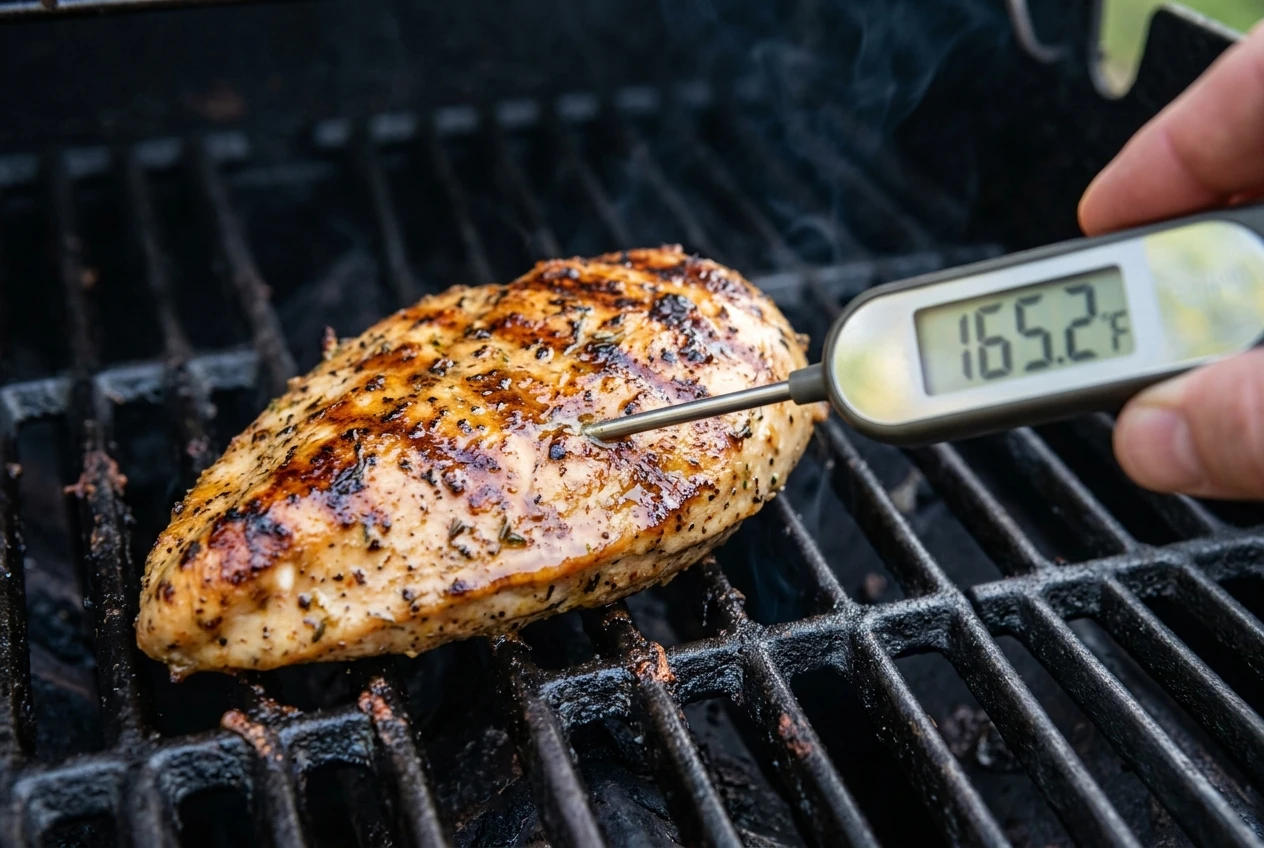
The main thing to look for is speed. A good instant read model gives you a stable reading in two to three seconds. Slower ones tempt you to leave the lid open longer than you should while you wait, which lets heat escape and throws off the rest of the cook. A thin probe tip also matters, since it leaves a smaller puncture in the meat and does less damage to thin cuts like chicken breast or a pork chop.
Weekend grillers who mostly cook steaks, burgers, and quick cuts on direct heat will probably reach for this style more than any other. If that’s your usual cook, it’s worth reading through our guide to direct grilling techniques for more on timing sears correctly alongside your temperature checks.
Leave in probe thermometers: built for low and slow cooks
Low and slow cooking is a different problem entirely. A brisket, a pork shoulder, or a rack of ribs can sit on the grill for hours, and opening the lid to check temperature with an instant read model every twenty minutes lets out heat and smoke you can’t get back. A leave in probe solves that by staying in the meat the entire cook, with a wire running to a base unit or display that sits outside the grill.
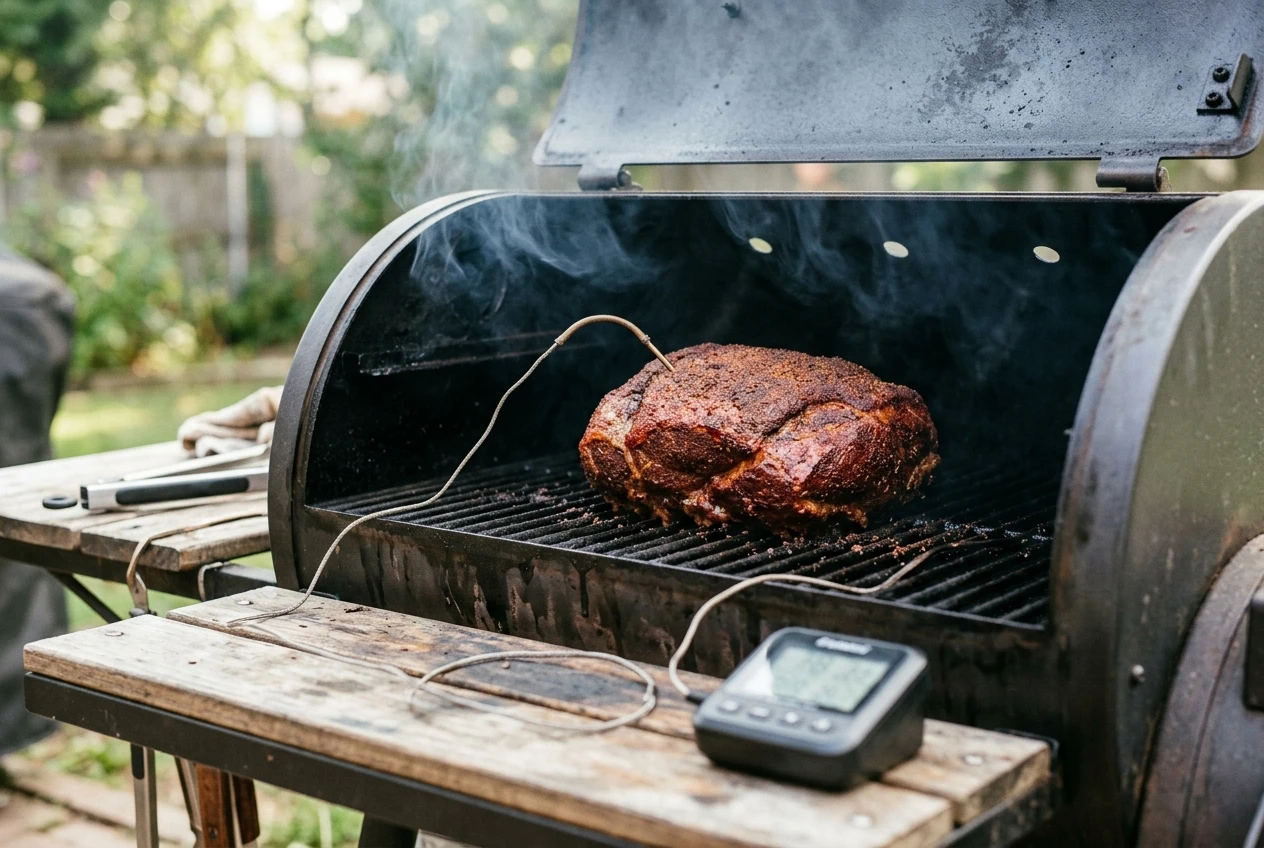
This style typically includes a timer and a high and low alarm, so you can set a target temperature and get a signal when the meat hits it rather than checking manually. Some models also come with a second probe for monitoring the grill or smoker’s ambient temperature, which matters just as much as the meat’s internal temperature when you’re holding a long cook steady for hours.
If ribs are part of your regular rotation, a leave in probe pairs well with the approach in our best tender ribs recipe, since hitting the right internal temperature without repeatedly opening the lid is a big part of getting the texture right.
Wireless and Bluetooth thermometers: monitoring multiple zones at once
Once you’re cooking more than one thing at a time, chicken on indirect heat while vegetables sit over direct flame, or two different cuts of meat finishing at different rates, a wired probe tied to a base unit sitting next to the grill starts to feel limiting. Wireless and Bluetooth thermometers send the reading to your phone instead, so you can walk away from the grill entirely and still know exactly what’s happening inside the meat.
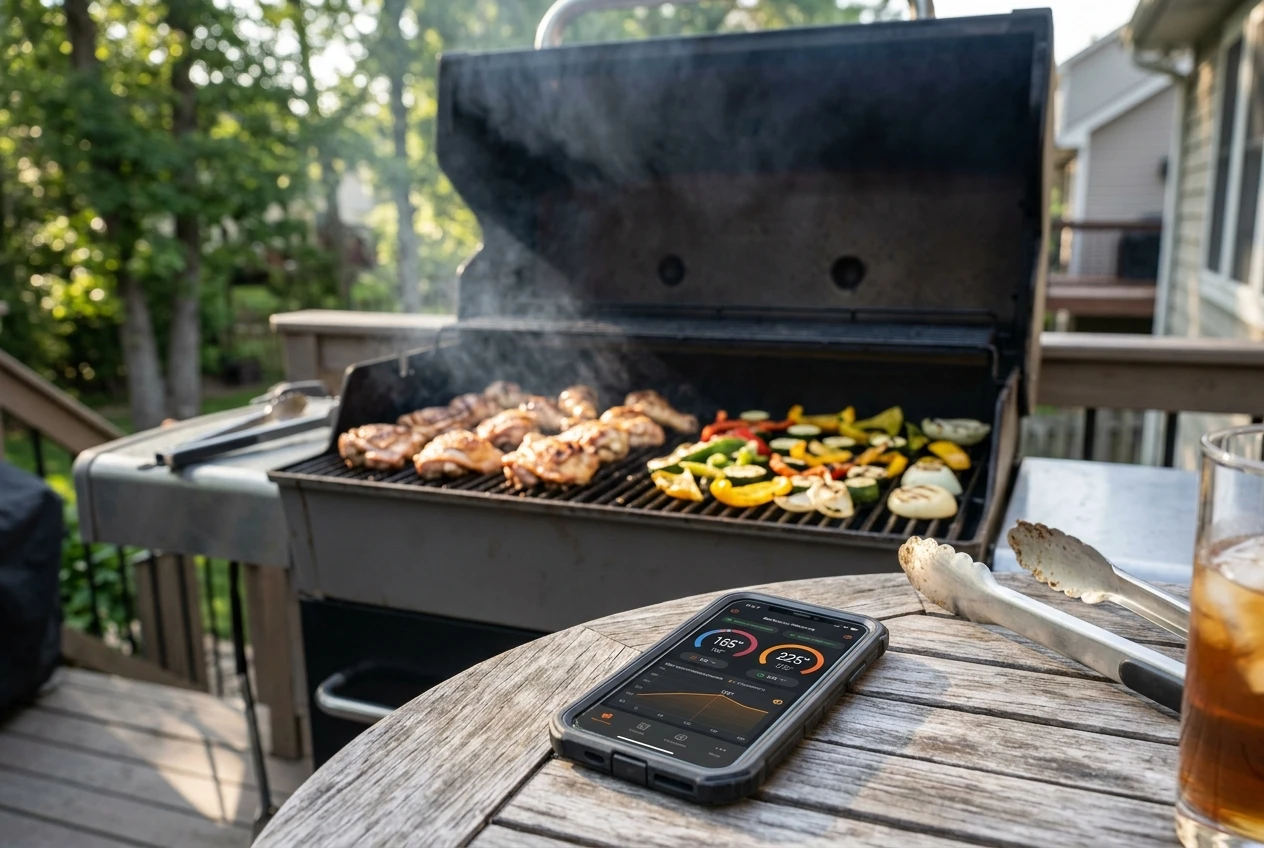
Most of these models support multiple probes at once, often four or more, each tracking a different piece of meat or a different zone on the grill. That’s the real advantage over a basic leave in probe: you’re not just watching one number, you’re watching several at the same time from a phone on the patio table or in your pocket.
Range is the detail that trips people up. Some Bluetooth models only work reliably within thirty or forty feet, which is fine if you’re staying in the backyard but frustrating if you want to step inside. Wi-Fi connected models get around that limit but usually cost more. If your usual cook involves a mix of proteins or a grill with distinct hot and cool zones, the extra cost of a wireless setup tends to pay for itself in fewer trips back and forth to check.
Infrared thermometers: when surface temperature actually matters
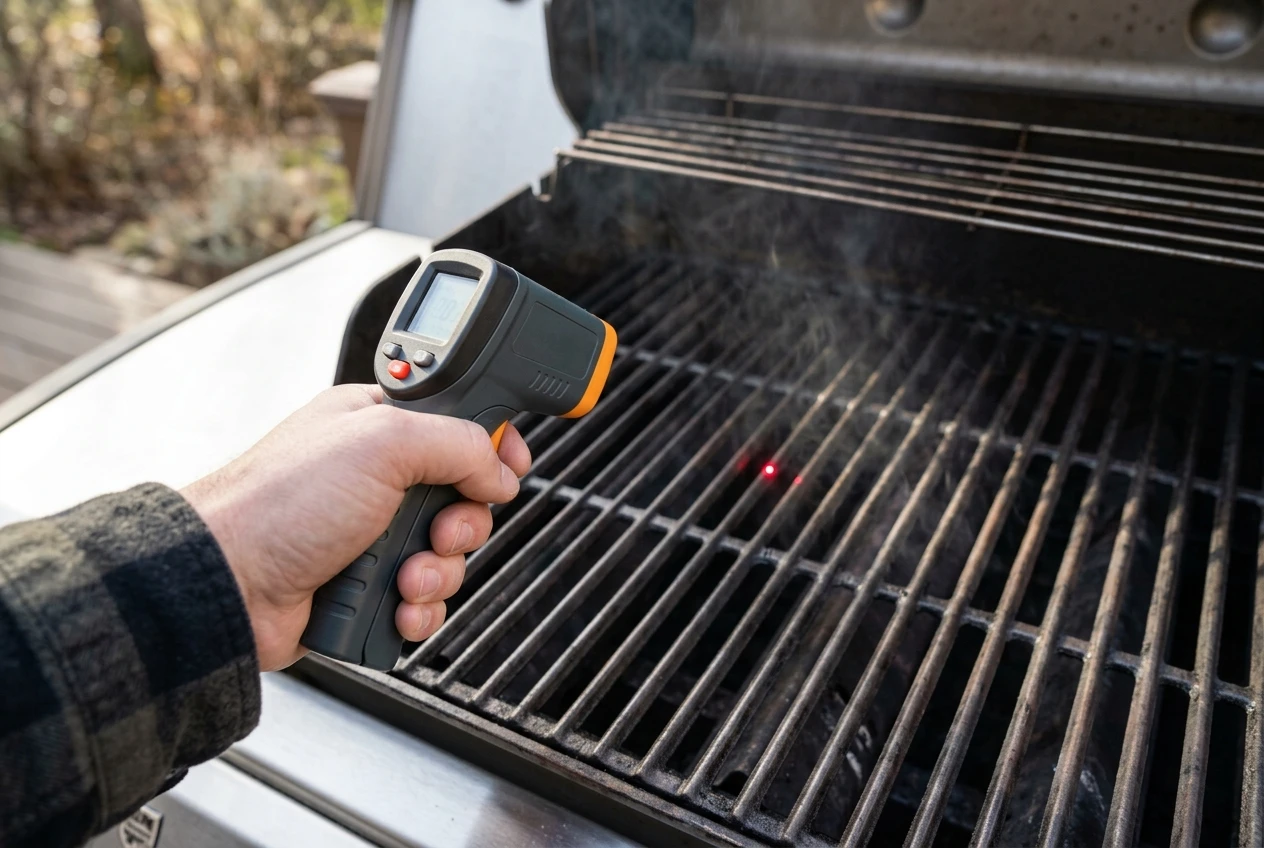
Every thermometer covered so far measures internal temperature. An infrared thermometer does the opposite: it reads surface temperature without ever touching the food, using a laser pointer to aim at a spot on the grate or the meat itself.
That makes it useful for a narrower set of tasks, mainly preheating. Pointing an infrared thermometer at the grates tells you whether the grill has actually reached searing temperature before you put a steak down, which matters more than most people realize since a grill’s built-in dial often reads the air temperature under the lid rather than the grate surface itself. It’s also handy for griddle cooking, where an even, consistent surface temperature across the plate affects how food cooks.
An infrared thermometer isn’t a replacement for an instant read or leave in probe model, since it can’t tell you anything about what’s happening inside the meat. Think of it as a specialty tool that complements one of the other three rather than a primary option on its own.
What separates an accurate thermometer from a cheap one
Price alone doesn’t tell you much about accuracy, but a few concrete features do. Look for a stated accuracy of plus or minus one degree Fahrenheit, which is standard on reliable models and noticeably looser on bargain-bin versions that can be off by three or four degrees. That gap sounds small until it’s the difference between medium rare and medium on a steak you’ve been waiting twenty minutes for.
Response time matters just as much, particularly for instant read models. A two to three second reading keeps the lid closed and the heat in. A ten second reading defeats much of the purpose of an instant read thermometer in the first place.
Build quality shows up over time rather than on day one. A thermometer rated for outdoor use and splash resistance will hold up to a grill environment, humidity, grease, the occasional rain shower, far longer than one built for indoor kitchen use. Probe durability matters too, especially with leave in and wireless models where the probe stays in the meat and gets handled constantly. A probe with a reinforced connection point at the base is less likely to fail after a season of regular use.
Matching a thermometer to your grill and your recipes
The right thermometer depends on what’s actually on your grill most weekends, not on what gets the best reviews in general. Someone grilling burgers and chicken breasts on direct heat most of the time is better served by a fast instant read model than a four-probe wireless system that mostly sits unused. Someone doing ribs or pulled pork regularly gets more value from a leave in probe with a built-in timer than from an instant read model that requires constant lid-opening.
Your grill itself plays a role too. A larger grill with distinct zones, like the kind covered in our best gas grills 2026 roundup, benefits from a multi-probe wireless setup that can track more than one area at once. A smaller grill or a tight patio setup, similar to what we cover in our outdoor kitchen design ideas for small patios guide, often doesn’t need that complexity and does fine with a single accurate instant read model.
Getting the most out of your new thermometer
A thermometer is only as reliable as the habits around it. Insert the probe into the thickest part of the cut, away from bone and away from fat pockets, since both throw off the reading. Give digital models a moment to stabilize rather than reading the first number that flashes up, particularly with instant read thermometers where the display can keep climbing for a second or two after insertion.
Calibrate your thermometer occasionally by testing it in ice water, which should read 32 degrees Fahrenheit. A thermometer that’s consistently off by several degrees is worth replacing rather than working around. And keep the probe clean between uses, especially after it’s been in raw poultry, since a quick wipe with a sanitizing wipe takes a few seconds and avoids cross-contamination on the next cut you check.
Pick the thermometer style that matches your most common cook, then check the linked options to compare current prices before you buy.
**As an Amazon Associate I earn from qualifying purchases, at no extra cost to you.**