

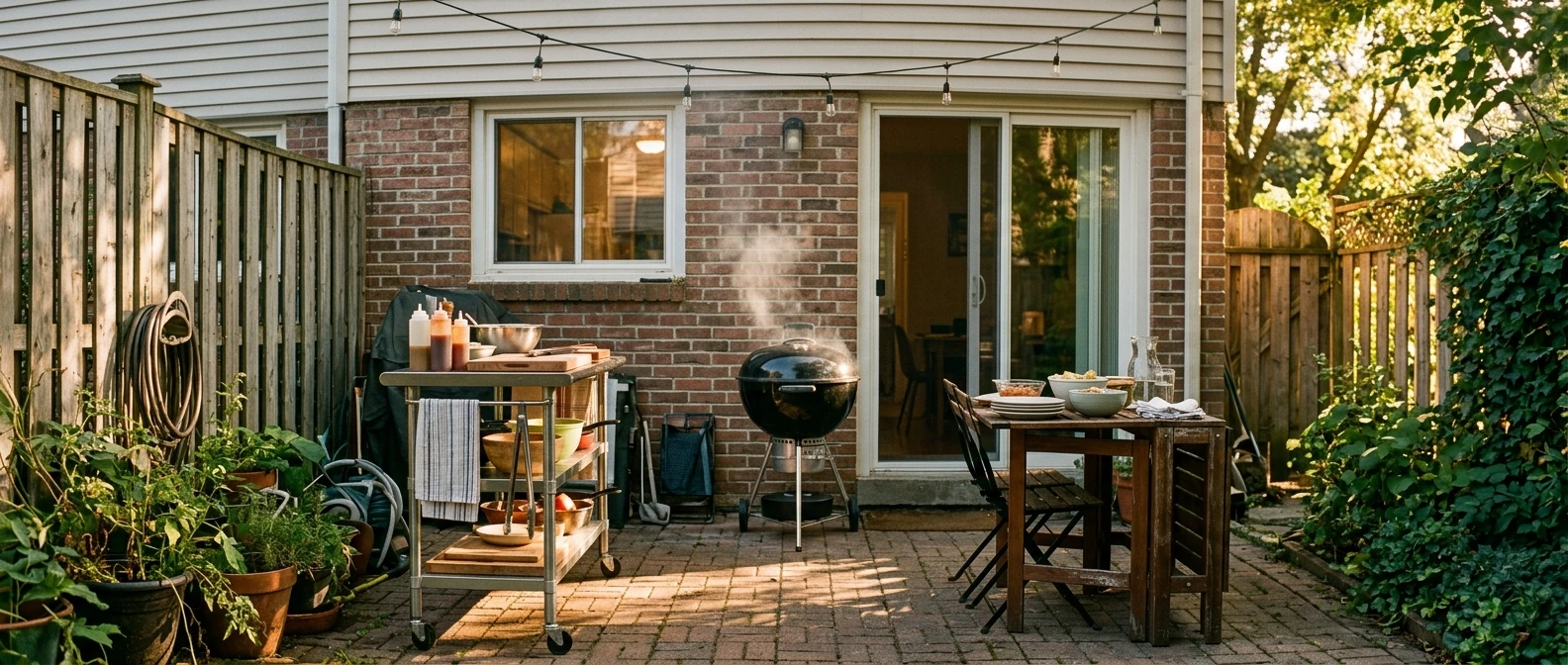
Most outdoor kitchen articles start with a photo of a 400 square foot stone patio, a built-in pizza oven, and a bar that seats eight. None of that helps if your patio is 8 feet by 10 feet and you’re trying to fit a grill, a prep surface, and somewhere to put the plates without knocking the ketchup into the hostas. Small patio outdoor kitchen ideas need to start from the space you actually have, not the one in the brochure.
This guide works backward from a real constraint: a cooking area under 100 square feet, often closer to 80. That’s enough room for a working layout if you think in zones instead of square footage, pick equipment sized to the footprint, and let furniture do double duty. None of it requires tearing out pavers or calling a contractor.
Why a Small Patio Needs a Different Kind of Outdoor Kitchen
A full-size outdoor kitchen is built around separation: the grill station sits apart from the prep island, which sits apart from the dining area, because there’s land to spare. On a small patio, that separation is the thing you can’t afford. Every square foot has to do more than one job, and every piece of equipment has to earn a spot it can’t give back.
The other difference is heat and clearance. A 92,000 BTU six-burner grill throws off a lot of radiant heat, and on a tight patio that heat has nowhere to go. It bounces off the house wall, warms up a railing that’s two feet behind it, and makes the three feet next to the grill unusable for anything except standing there sweating. A small-patio layout has to account for where that heat goes, not just where the grill sits.
So the goal isn’t a scaled-down version of a dream kitchen. It’s a tight, deliberate workflow: prep, cook, serve, each with its own few square feet, arranged so you’re not crossing your own path every time you flip something.
The Three Zone Layout That Fits in 80 Square Feet or Less
Think of the patio as three stations laid out in a line or an L, depending on your corners:
- Prep zone: a counter or cart with a cutting surface, close enough to the cook zone that you’re not carrying a platter of raw chicken across the whole patio.
- Cook zone: the grill or griddle itself, with a buffer of at least two feet of noncombustible clearance on the sides that face anything flammable.
- Serve zone: a small table or the same fold-down counter, repurposed once the food is off the grill.
On an 8×10 patio, that often means the grill against the house wall (if your model and local code allow it, which is worth checking before you commit to the layout), a narrow cart or fold-down shelf to its left for prep, and a small table or bar cart to the right for serving. The key is that prep and serve don’t need to be separate pieces of furniture. A single cart that rolls from one position to the other does both jobs, which is exactly the kind of multitasking a small space rewards.
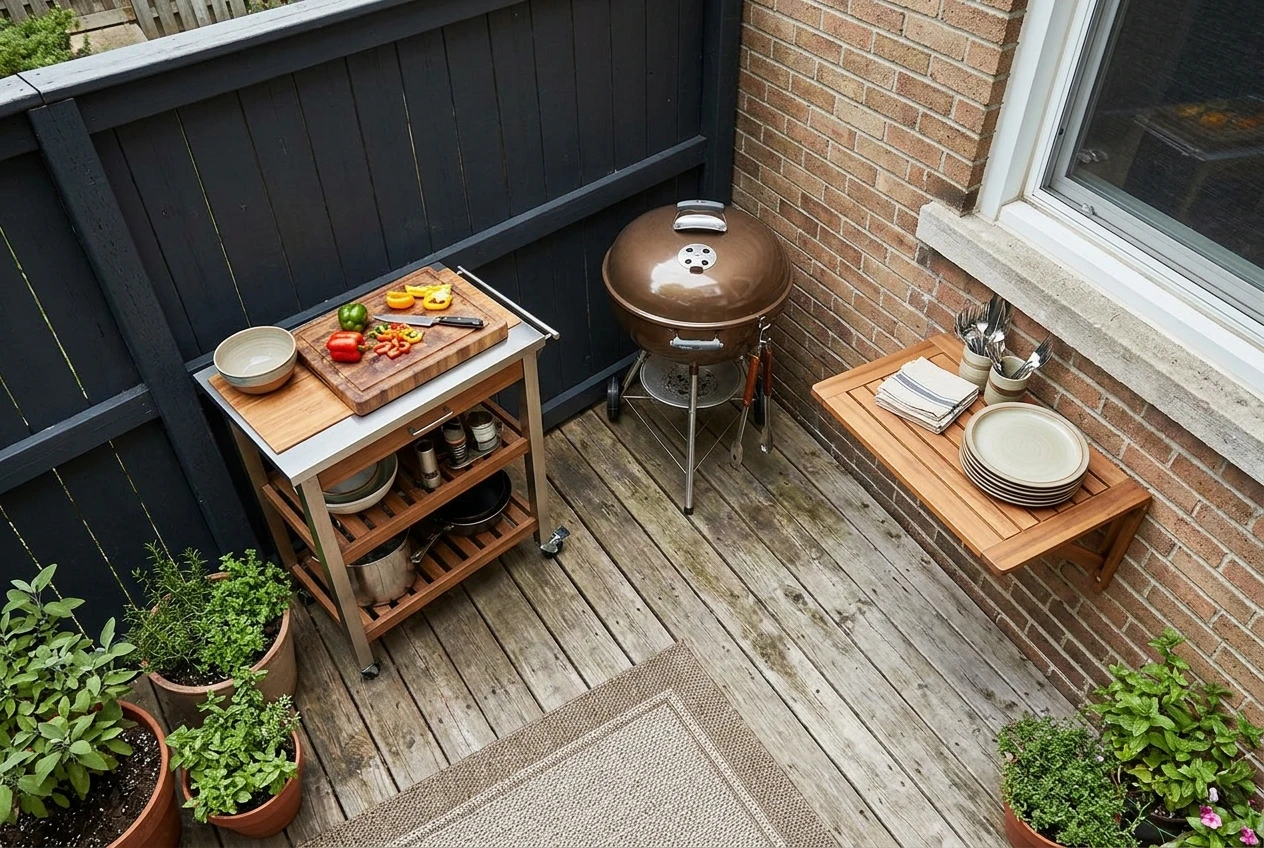
Walk the layout before you buy anything. Stand where the grill would go, mime flipping a burger, and see if your elbow hits a railing or a door. That five-minute test catches more layout mistakes than any diagram.
Picking a Grill or Griddle That Matches Your Footprint
The single biggest layout decision is the cook surface itself, because everything else gets arranged around it. On a small patio, a compact 3-burner gas grill or a tabletop griddle does more for the space than a full-size unit ever will, simply because it leaves room for the other two zones to exist.
A 3-burner grill in the 30 to 36 inch width range gives you enough cooking area for a weekend’s worth of burgers and chicken thighs without eating the whole wall. If you’re still deciding between models, the Best 3 Burner Gas Barbecue 2026 roundup is built around exactly this kind of footprint.
Griddles solve a different problem: they let prep and cook happen on the same surface, which matters a lot when counter space is the scarcest resource you have. A compact flat-top means your “prep zone” can shrink to just a cutting board and a bowl, because the sear, the sauté, and the warm-holding all happen on the griddle itself. The Blackstone 28 Griddle Review covers a size that fits well against a wall or on a stand without dominating the patio.
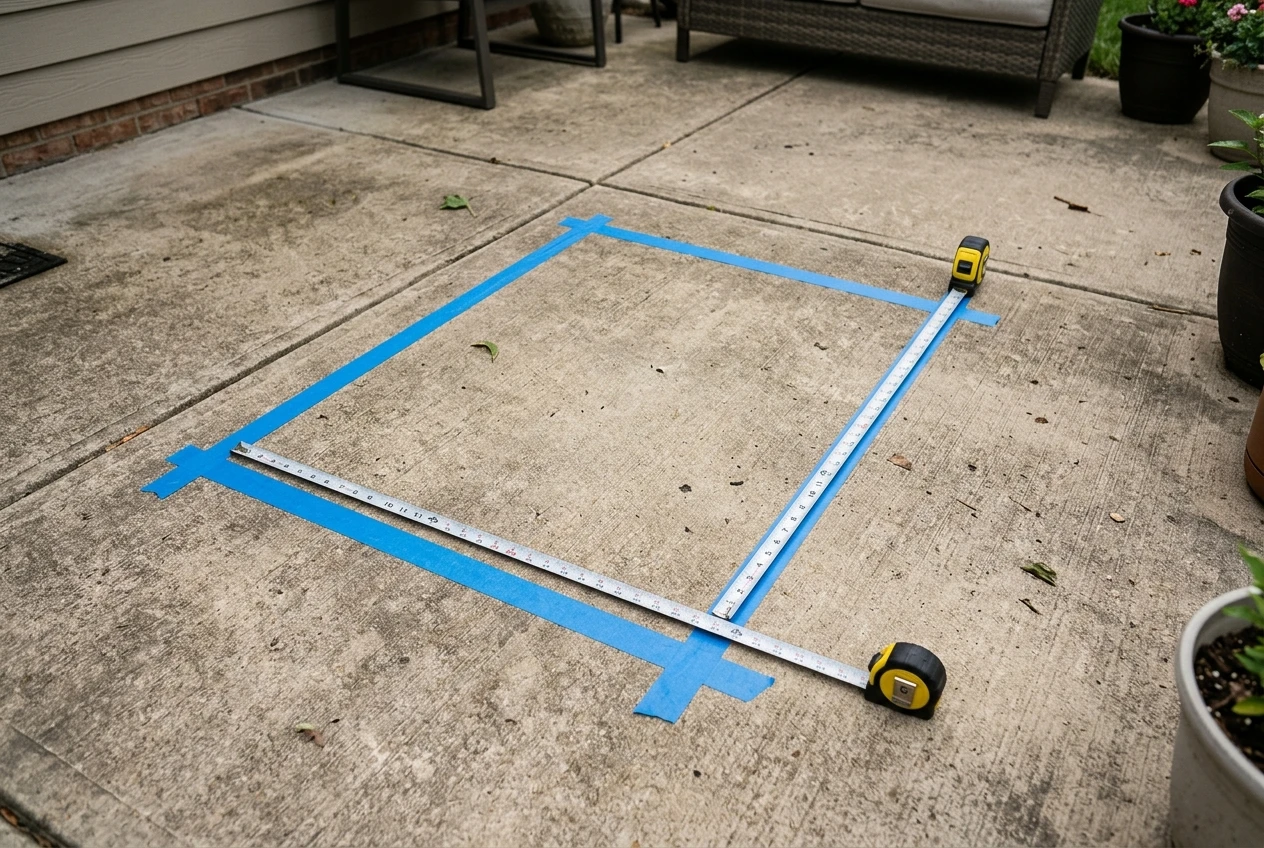
Either way, measure twice. Write down the width, depth, and lid-open clearance of any unit you’re considering, then tape it out on the actual patio floor with painter’s tape before you buy. It takes ten minutes and saves you from a grill that technically fits but leaves no room to open the lid.
Fold Down Counters and Vertical Storage That Earn Their Keep
A countertop that’s bolted to the wall and folds flat when you’re not grilling gives you prep space on demand without permanently eating floor area. These are usually a simple bracket-and-hinge setup, rated for the weight of a cutting board and a few plates, and they fold down to a few inches of depth when stowed. For a patio under 100 square feet, that’s often the difference between having a prep surface and not having one at all.
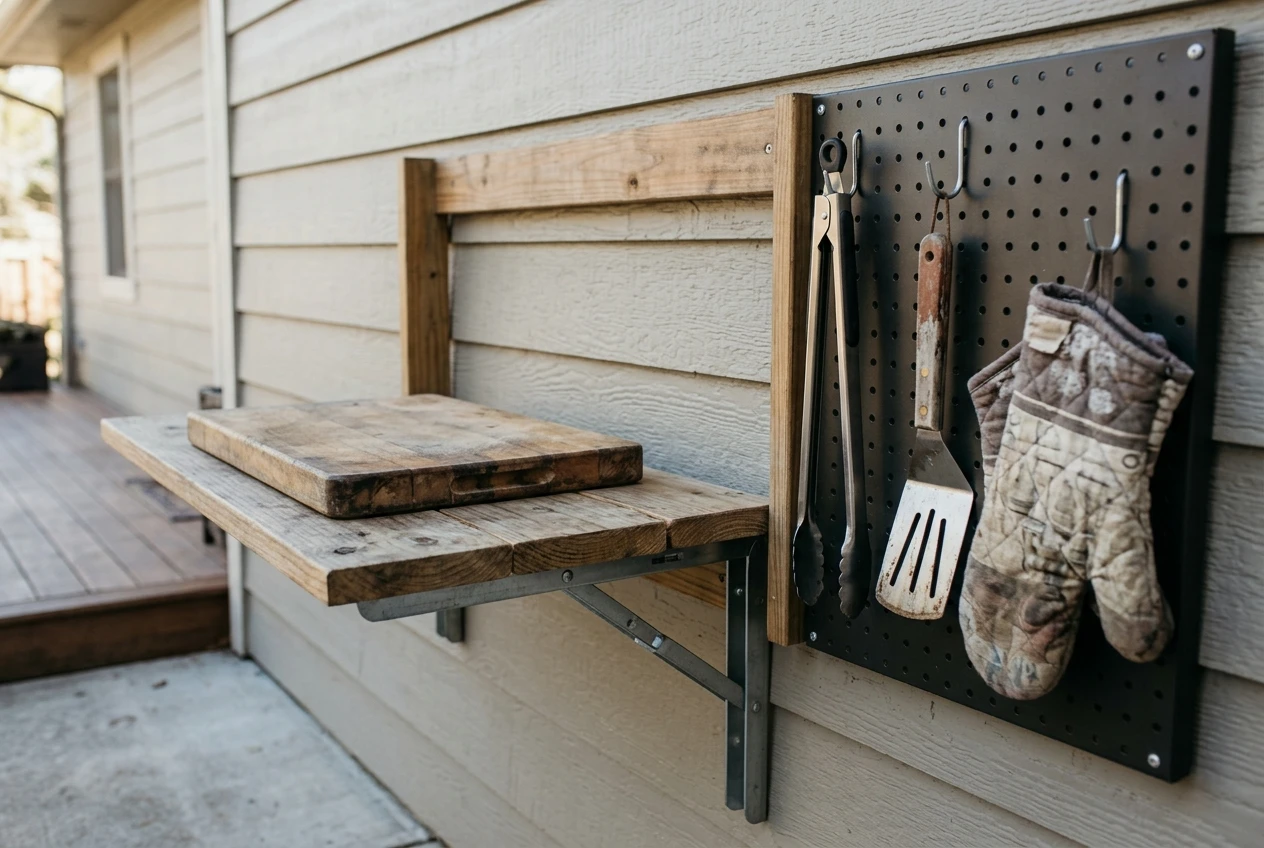
Vertical storage does similar work for tools and supplies. A slatwall panel, a pegboard, or even a few heavy-duty hooks mounted on the house wall keeps tongs, spatulas, and oven mitts off the counter and off the ground. Small bins or a narrow rolling cart with drawers can hold charcoal, skewers, and extra propane without needing a dedicated cabinet.
The rule of thumb for a tight patio: if it doesn’t fold, hang, or roll, it’s probably taking up floor space you need for something else.
Weatherproof Materials That Hold Up Without Bulk
Small patios often sit closer to the elements than a big backyard kitchen tucked under a pergola, so materials matter more here, not less. Stainless steel carts and counters shed water and don’t warp, which is why they show up so often in compact outdoor setups despite costing more upfront than painted wood.
Powder-coated steel is a lighter, often cheaper alternative for furniture frames, as long as the coating is rated for outdoor use and you keep an eye out for chips that expose bare metal underneath. For countertops, a sealed concrete composite or a solid-surface outdoor laminate handles rain and UV better than untreated wood, and it won’t add the bulk of a stone slab, which a small patio usually can’t support structurally anyway.
If you’re using a griddle or grill with a cast iron or carbon steel surface, the material question extends to maintenance too: a wipe-down and a light oil coat after each use keeps a small-footprint cook surface from rusting in a space that gets more rain exposure than a covered kitchen would. The same logic that applies to a full-size grill applies here, just on a tighter schedule. If you haven’t already got a maintenance routine down, how to maintain a gas grill covers the basics that keep any gas unit, compact or not, running well past its first season.
Lighting and Shade Tricks for Tight Spaces
A small patio can’t fit a pergola with built-in lighting, but it doesn’t need one. A string of warm LED bulbs clipped along a railing or under an eave does most of the job for almost no installed depth. Battery or solar-powered puck lights stuck to the underside of a shelf or counter edge light up the cook zone directly, which matters more than ambient lighting once the sun goes down and you’re trying to read a thermometer.
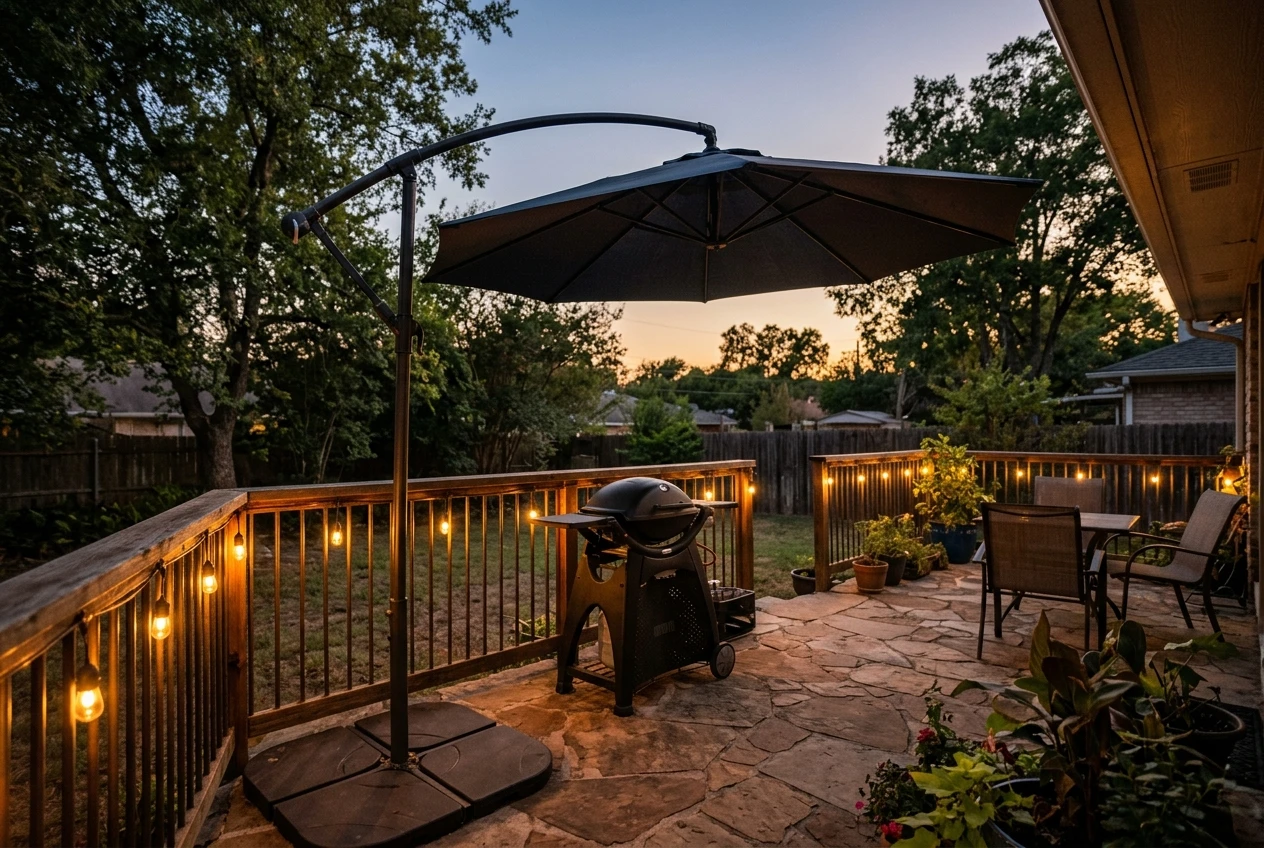
Shade works the same way: a cantilevered umbrella with a base that sits at the patio’s edge, rather than a center pole that eats the middle of your cooking area, keeps the whole footprint usable. A retractable awning mounted to the house wall is a step up if you’re willing to install it, and it takes zero floor space once it’s up.
For both lighting and shade, the test is the same one from the layout section: does it take away usable floor space, or does it sit above or beside the zones you’ve already mapped out? Anything that passes that test is worth adding.
Five Upgrades Under $200 That Make the Space Feel Bigger
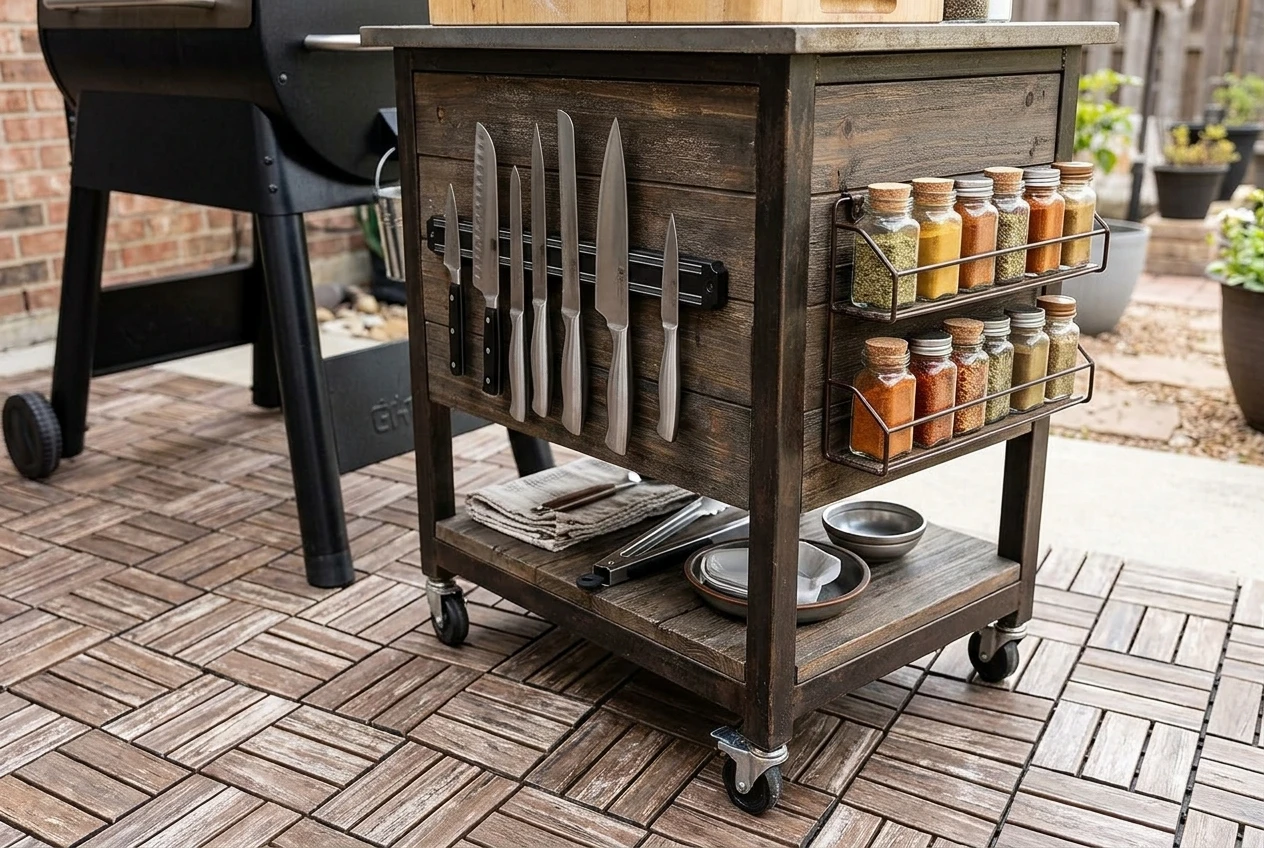
A handful of small, affordable additions change how a tight patio feels to cook in, without adding bulk:
- A magnetic knife strip mounted on the side of a cart or a metal panel, freeing up drawer space for everything else.
- A fold-down spice rack or a small hanging caddy that holds rubs and sauces at arm’s reach instead of on the counter.
- Interlocking deck tiles laid under just the cook zone, which protect the patio surface from grease and heat without the cost of resurfacing the whole area.
- A rolling bar cart that serves as a drinks station during the cook and folds into extra serving space once the food comes off the grill.
- A compact side table with a weather-resistant top, sized to sit right next to the grill for tongs, a thermometer, and a plate, so you’re not setting hot food down on a railing.
None of these require a renovation or a weekend of construction. They’re the kind of additions you can pick up, test for a season, and swap out if they don’t earn their spot, which is really the whole philosophy behind designing for a small patio: everything in the space has to prove it belongs there.
If you’re still deciding on the grill or griddle to build your layout around, check the member’s Best 3 Burner Gas Barbecue 2026 and Blackstone 28 Griddle Review for compact options sized for small patios.