

Gas grill vs pellet smoker is a question people usually try to settle with flavor reviews and spec sheets. A better starting point is your Saturday: how many hours you have, how much attention you want to give the cooker, what you plan to put on it, and how much cleanup you will tolerate at the end.
Both cookers make good food. They fit different weekends, and the right pick depends on which weekend you actually have.
The Real Question: What Does Your Saturday Look Like?
Start by writing down your typical cookout in plain terms. Do you decide at 4:30 that dinner will be on the grill? Or do you plan on Thursday and have the whole day open?
Four questions sort most people quickly:
- Time: Do you cook in under an hour, or do you want a cook that runs most of the day?
- Attention: Do you want to stand at the cooker, or set it and do something else?
- Cuts: Do you mostly cook burgers, chicken, steaks and sausages, or do you want brisket, ribs and pork shoulder?
- Cleanup: Are you fine with a quick scrape, or will you tolerate emptying ash and vacuuming out a firepot?
If your answers lean toward fast, hands-on and quick, a gas grill is the natural fit. If they lean toward slow, hands-off and smoky, a pellet smoker is. Many cooks land in the middle, and that is where the rest of this comparison helps.
How Each One Cooks: Direct Flame vs Steady Smoky Heat
A gas grill burns propane or natural gas under metal grates (or flavorizer bars on many models). The heat is strong and adjustable by burner, so you can run one side hot and the other low. It excels at high-heat cooking where food sits close to the flame and browns fast.
A pellet smoker works differently. An auger feeds wood pellets from a hopper into a small firepot, and a fan circulates the heat and smoke around a closed cooking chamber. A controller switches the feed on and off to hold a set temperature. Most models are built for low and steady cooking, and many can also run hot enough for a decent sear on thinner cuts, though the range depends on the model.
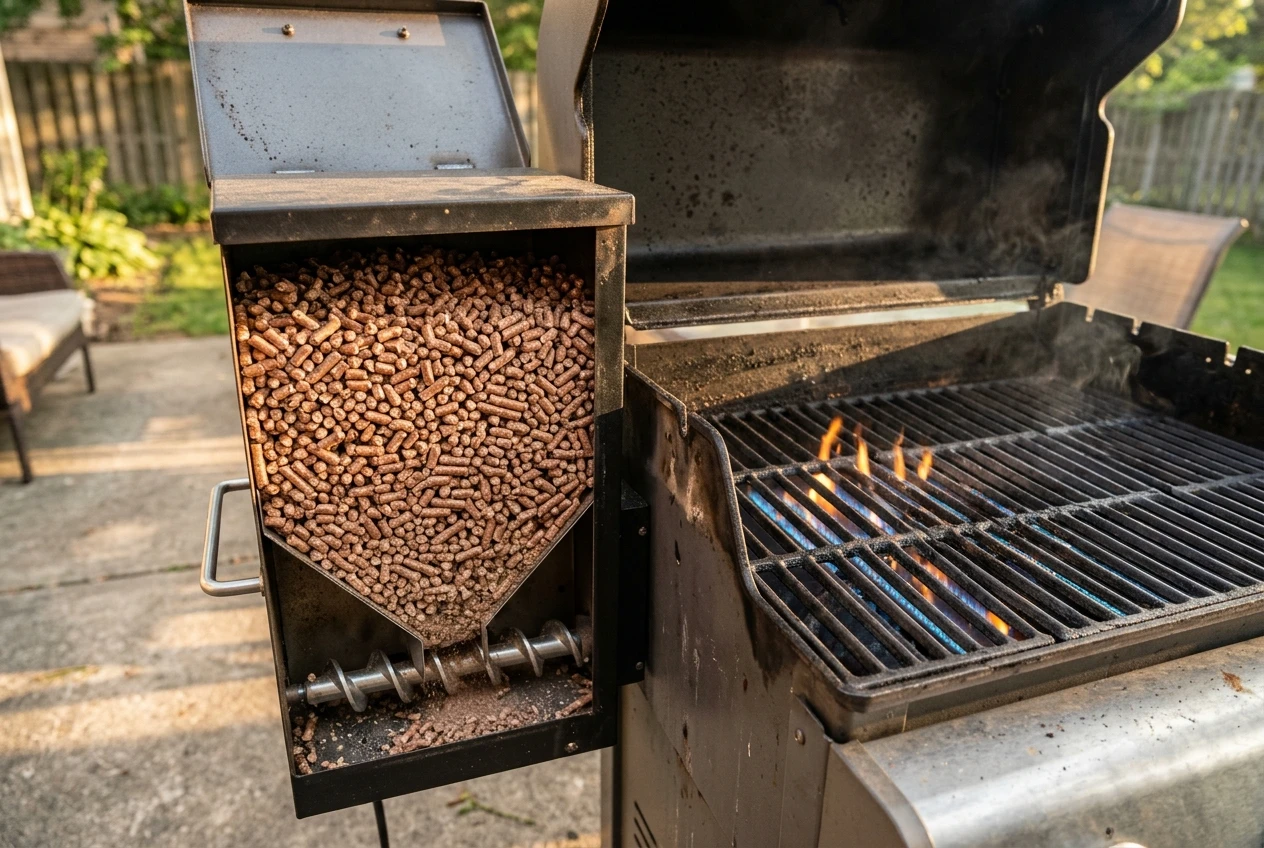
The core difference is the heat source and how it behaves. Gas gives you strong, direct heat that responds quickly when you turn a knob. Pellets give you indirect heat that moves slowly and stays stable. A gas grill can cook indirectly if you set up zones, which is covered in the two-zone gas grill setup guide. But a gas grill does not generate wood smoke on its own, and that is the biggest practical gap between the two.
Flavor Compared: What You Gain and What You Give Up
Pellet smokers produce real wood smoke, since the fuel is compressed hardwood. Hickory, oak, apple, cherry and blends each leave a different character on the meat, and a long cook lets that smoke build a flavorful bark and a visible smoke ring on cuts like brisket and pork shoulder.
Gas burns clean. The flavor on a gas grill comes from the food itself: browning, caramelization, and drippings hitting hot surfaces and vaporizing back onto the meat. That produces the char and crust many people want from a steak or a burger. It tastes like grilled food, not smoked food.
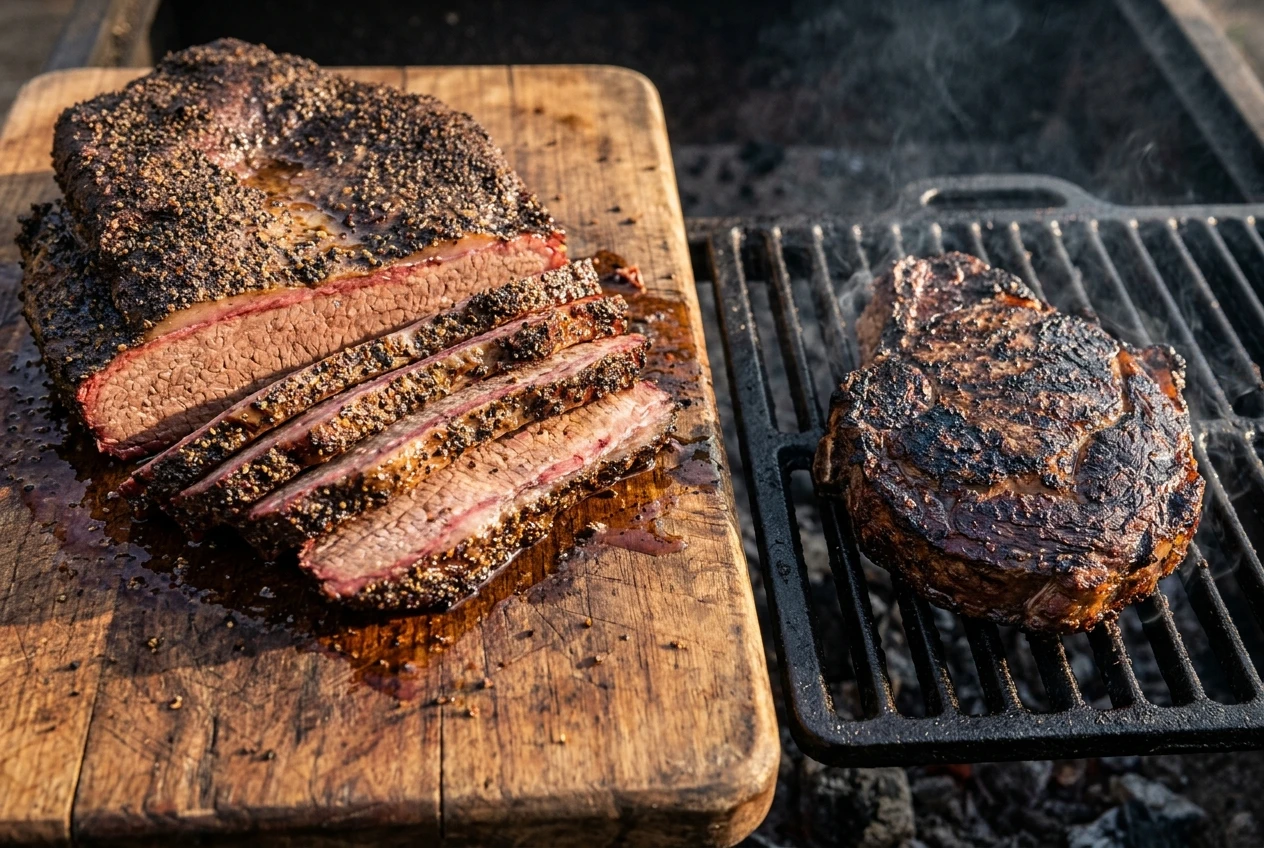
What you give up on each side:
- Gas: deep smoke flavor. You can add a smoker box or foil pouch of wood chips, but the result is lighter than a dedicated smoker produces.
- Pellet: a hard, fast sear. Even with a model that reaches high temperatures, you will usually get a gentler crust than a hot gas grill or a cast iron pan gives you.
One more variable is pellet quality. Brands and wood types vary, and a milder pellet gives a milder smoke. If smoke flavor is a priority, experimenting with different woods is part of the fun.
Convenience on a Busy Weekend: Startup, Temperature Control and Cleanup
This is where the two cookers differ most in daily use.
Startup. A gas grill lights with a turn of the knob and a button, and is ready to cook after a short preheat. A pellet smoker runs a startup cycle, then needs time to come up to temperature, and it should be given that time before food goes on. For a weeknight-style dinner, gas has a real advantage.
Temperature control. Pellet smokers hold a set temperature automatically, which is their main selling point for long cooks. You choose a number, and the controller manages the fire. On a gas grill you manage heat yourself with the burner knobs, and wind, cold weather and fuel level all affect results. Gas is easy to adjust, but it needs watching.
For both cookers, a good probe thermometer matters more than the built-in dome gauge, which is often inaccurate. The guide on choosing a grilling thermometer for the way you actually cook covers what to look for.
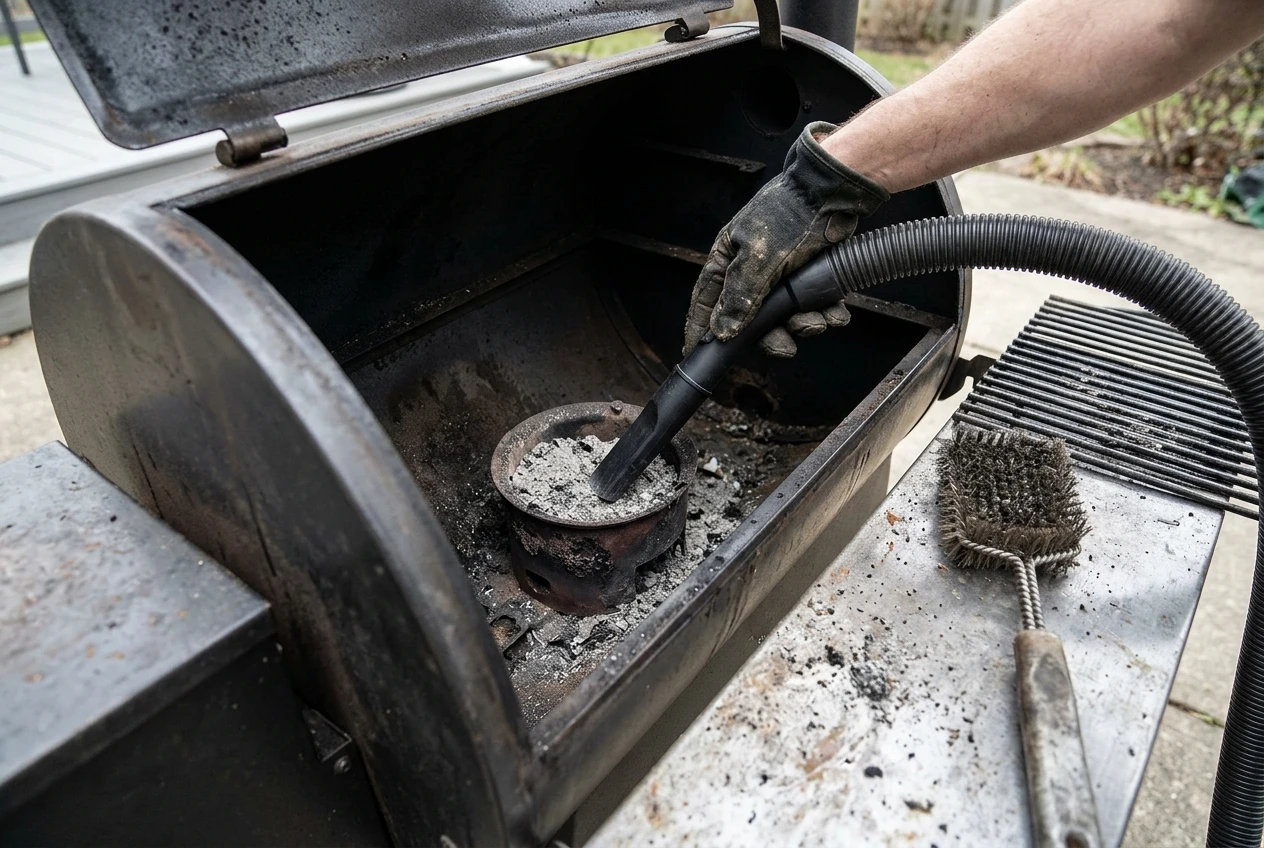
Cleanup. Gas cleanup is usually a grate scrub after cooking, plus occasional grease tray emptying and deeper cleaning now and then. Pellet smokers need more: ash collects in the firepot and has to be cleared periodically, the grease management system needs attention, and pellets must stay dry. Skip the cleanup and a pellet smoker can start misbehaving, with poor ignition and uneven temperatures.
On a busy weekend, a gas grill asks less of you. On a free weekend, a pellet smoker asks little during the cook itself, then more at the end.
What Each Handles Best: Burgers and Steaks vs Brisket, Ribs and Pork Shoulder
Match the cooker to the cut and most of the decision is made.
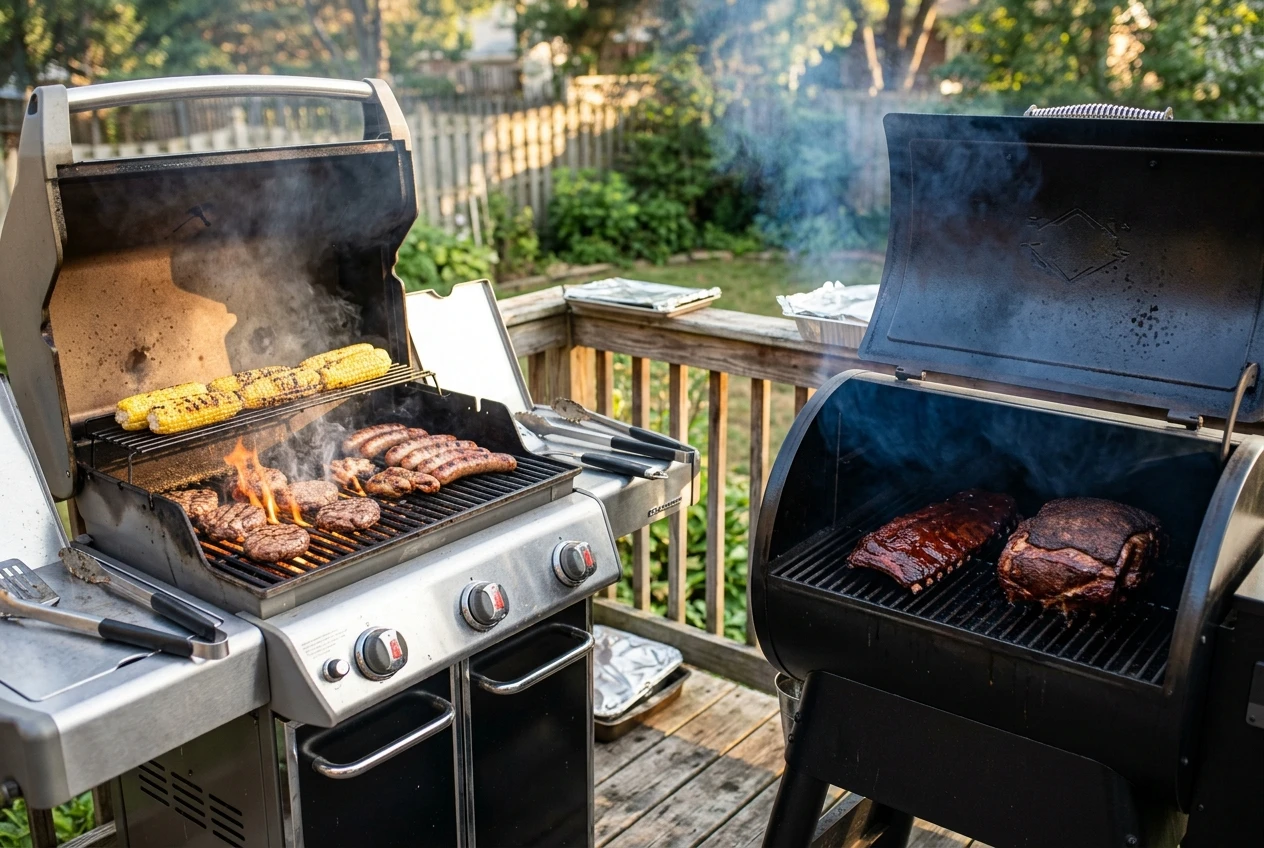
Gas grill strengths:
- Burgers, hot dogs, sausages and brats
- Steaks and chops that benefit from a hard sear
- Chicken pieces, kebabs and fish
- Vegetables, corn and anything quick
These foods cook in minutes, want strong direct heat, and do not need long smoke exposure. A gas grill handles a full dinner for a crowd in one session.
Pellet smoker strengths:
- Brisket, which takes most of a day at low heat
- Pork shoulder for pulled pork
- Ribs, which cook in several hours and take smoke well
- Whole chickens and turkey, which benefit from steady, even heat
- Sausage, cheese and other foods that suit gentle smoke
These are long, low cooks where tenderness comes from time and stable temperature, and a pellet smoker’s automatic control does the babysitting. If tender ribs are the goal, resting and cooking technique still matter as much as the cooker you pick.
Some foods work on both. Chicken, pork chops and even thick steaks can be done either way, depending on whether you want crisp skin and char (gas) or a smokier, more evenly cooked result (pellet, sometimes finished with a hot sear).
Big cuts on a gas grill are possible with indirect heat. A two-zone setup lets you roast a large piece without burning the outside, though you will not get the same smoke profile.
Space, Fuel and Upkeep: What Owning Each Really Involves
Space. Both cookers need room, and a pellet smoker generally needs a clear spot with access to an outlet, since the fan and controller run on electricity. Gas grills do not need power (unless you want lights or a rotisserie motor), which makes placement easier. Whichever you buy, measure your patio and leave clearance from walls, railings and siding. Ideas for tight spaces are in the post on small patio outdoor kitchen ideas.
Fuel. Gas grills run on propane tanks, so the practical rule is to know how much is left before you start. Pellet smokers use bags of pellets, and fuel use climbs on long cooks, so a brisket day can empty a good portion of a bag. Pellets also need dry storage, because moisture swells and ruins them. Neither fuel is universally cheaper, since prices vary by region and brand.
Upkeep. A gas grill needs burner, grate and grease tray care, plus checks for rust and blocked burner ports. The gas grill maintenance guide lays out a simple routine. A pellet smoker needs regular ash removal, a clean firepot, a cleaned grease path and attention to the auger and fan. It has more electronics and moving parts, so there is more that can wear out or fail.
For a beginner, the upkeep difference is worth weighing. A gas grill is the more forgiving machine if you tend to skip maintenance.
Pick by Weekend Habit: A Quick Match Guide (and When Owning Both Makes Sense)
Here is a simple way to choose.
Choose a gas grill if:
- You cook dinner on short notice and want to light it and go
- Your menu is mostly burgers, steaks, chicken and vegetables
- You prefer a fast cleanup and low maintenance
- You like standing at the grill and controlling the flame yourself
Choose a pellet smoker if:
- You have long, open weekends and enjoy cooking as a project
- Brisket, ribs and pulled pork are what you want to make
- You want to set a temperature and spend the day on other things
- Smoke flavor matters more to you than a hard sear
Stay with the cooker you own if:
- It already covers 80 percent of what you cook, and the missing part is technique, not equipment. A gas grill with a good two-zone setup handles more than most people expect.
Owning both makes sense when your cooking splits into two clear camps. If you grill weeknight dinners and also want a long smoke a few times a year, one cooker will always be a compromise. Gas handles the quick meals, and the pellet smoker handles the all-day projects. It also helps on hosting days, when the smoker works on the main course while the grill covers sides and a few extra items.
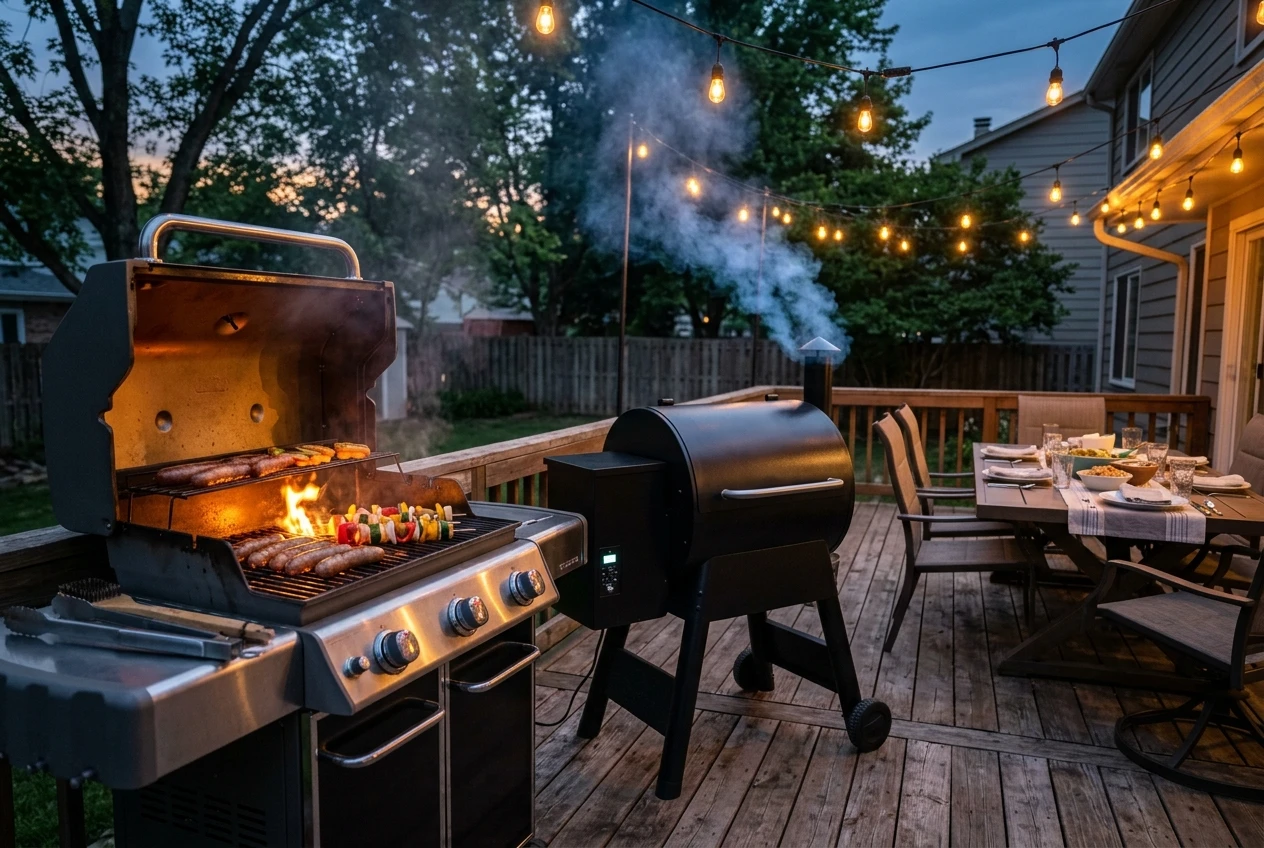
Owning both does not make sense if you cook mostly one style, if space is tight, or if budget is the limit. In that case, buy for the cooking you do most, and add the second cooker later if the gap keeps bothering you.
Where to Go Next
If the pellet smoker won you over, the best pellet smokers under $1000 for weekend beginners roundup compares models for people starting out. If you are staying with gas, the two-zone gas grill setup guide shows how to cook big cuts without burning them.
Some links to specific models in those guides are affiliate links. If you buy through them, this site may earn a commission, and the recommendations stay based on how each cooker fits a weekend cook.