

Weber updates its grill lineup regularly, and the feature lists on new models can be long. This guide covers how to read the features on a new Weber grill sold in 2026 and decide which ones matter for weekend cooking. Exact specs differ from model to model, so confirm figures such as cooking area, burner count and warranty length on Weber’s own product page or the retailer listing before you buy.
The advice below applies whether you are looking at a gas grill, a charcoal kettle, a pellet grill or an electric model. Each section covers one group of features, what it does for your food, and what to check.
Start With the Fuel Type
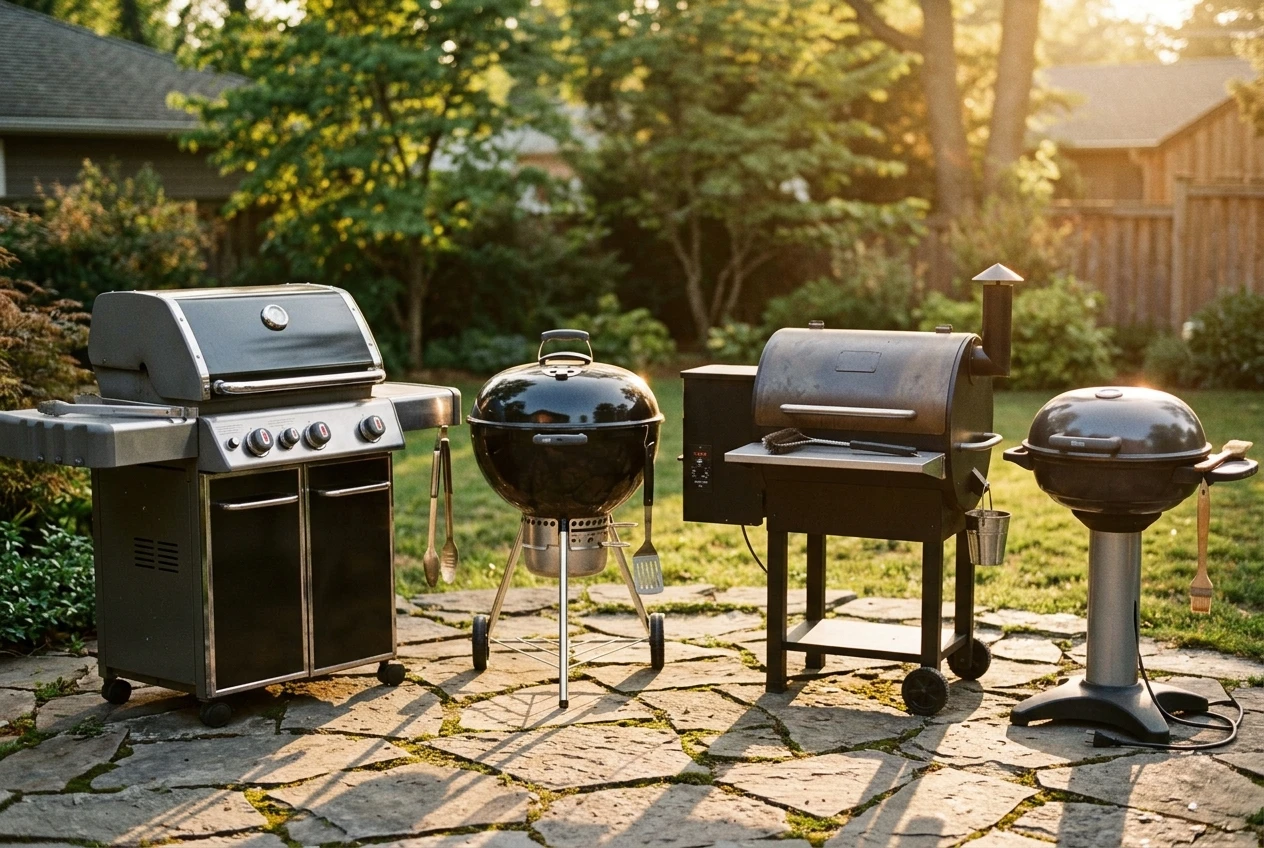
Weber sells grills in every major fuel category: gas, charcoal, pellet and electric. The fuel decides most of how a grill behaves, so settle it before comparing anything else.
-
Gas lights quickly, holds a steady temperature and suits weeknight and weekend cooking alike. It adds little smoke flavor on its own.
-
Charcoal gives the strongest traditional flavor and the hottest sear, but you manage the fire by hand with vents and coal placement.
-
Pellet controls temperature automatically and works well for long cooks like ribs and pork shoulder. It needs electricity and a supply of pellets.
-
Electric suits balconies and patios where open flame or gas tanks are restricted. Check your lease or building rules first.
If you cook for friends most Saturdays and want the least fuss, gas is the usual starting point. If you want smoke flavor with little tending, a pellet grill fits better. If you enjoy managing a fire, choose charcoal.
Burners and Heat Zones
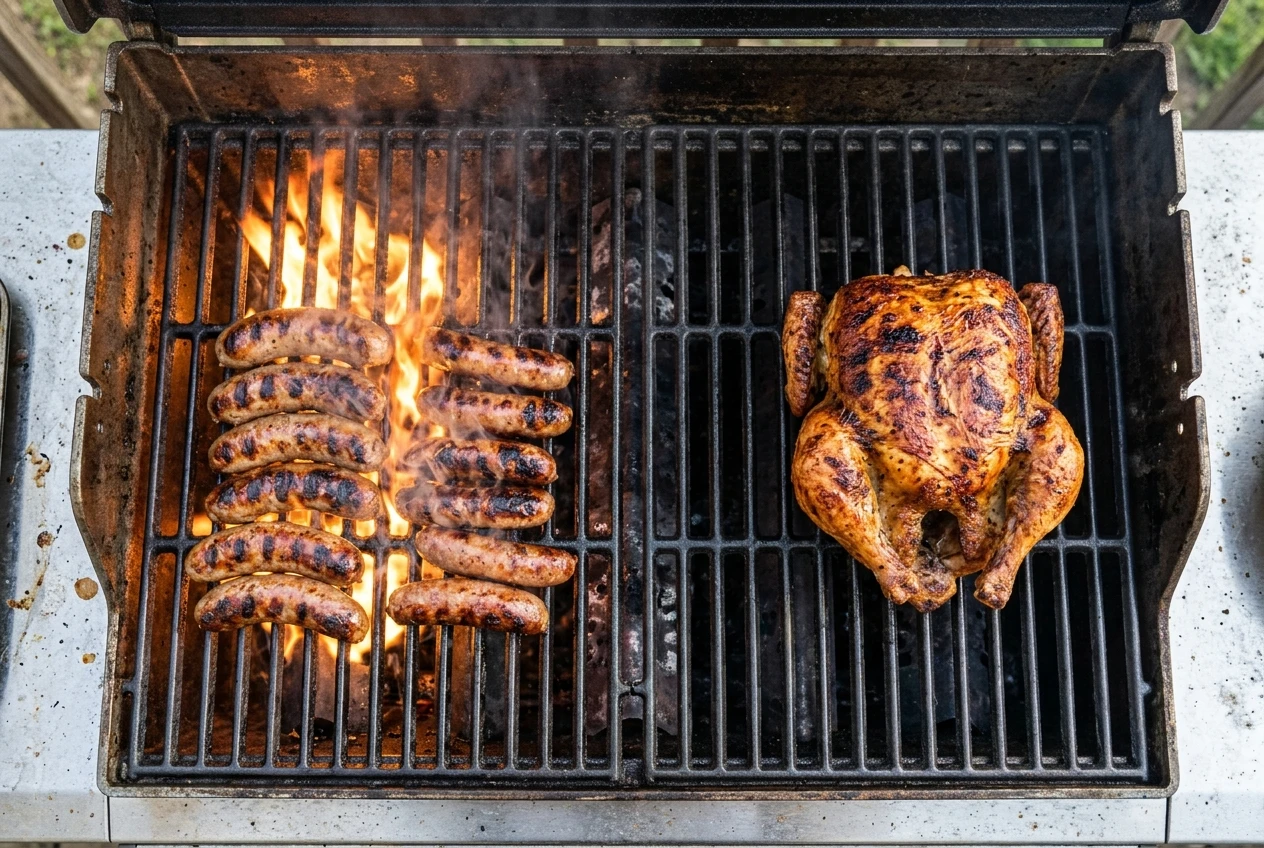
On a gas model, the burner layout matters more than the headline power number. Look for burners that you control separately, because separate controls let you run one side hot and the other low or off. That setup is what makes indirect cooking possible for big cuts that would burn on the outside before cooking through.
BTU ratings are printed on most gas grill listings. A BTU figure measures how much fuel the burners can consume per hour. It does not tell you how hot the food gets. A well-built grill with a tight lid and a smaller BTU rating can outperform a leaky one with a bigger number, so use the figure only to compare similar models.
When you check a new Weber, ask these questions:
-
How many burners does it have, and does each one have its own control knob?
-
Is there a dedicated sear burner or side burner, and is it something you would use?
-
Does the layout leave a cool zone large enough for a whole chicken or a rack of ribs?
If you plan to cook large cuts on gas, the guide on setting up a two-zone fire on your gas grill shows how to arrange the burners for indirect heat.
Grates and Cooking Surface
Grate material changes how food sears and how much cleaning you do afterward. The common options are:
-
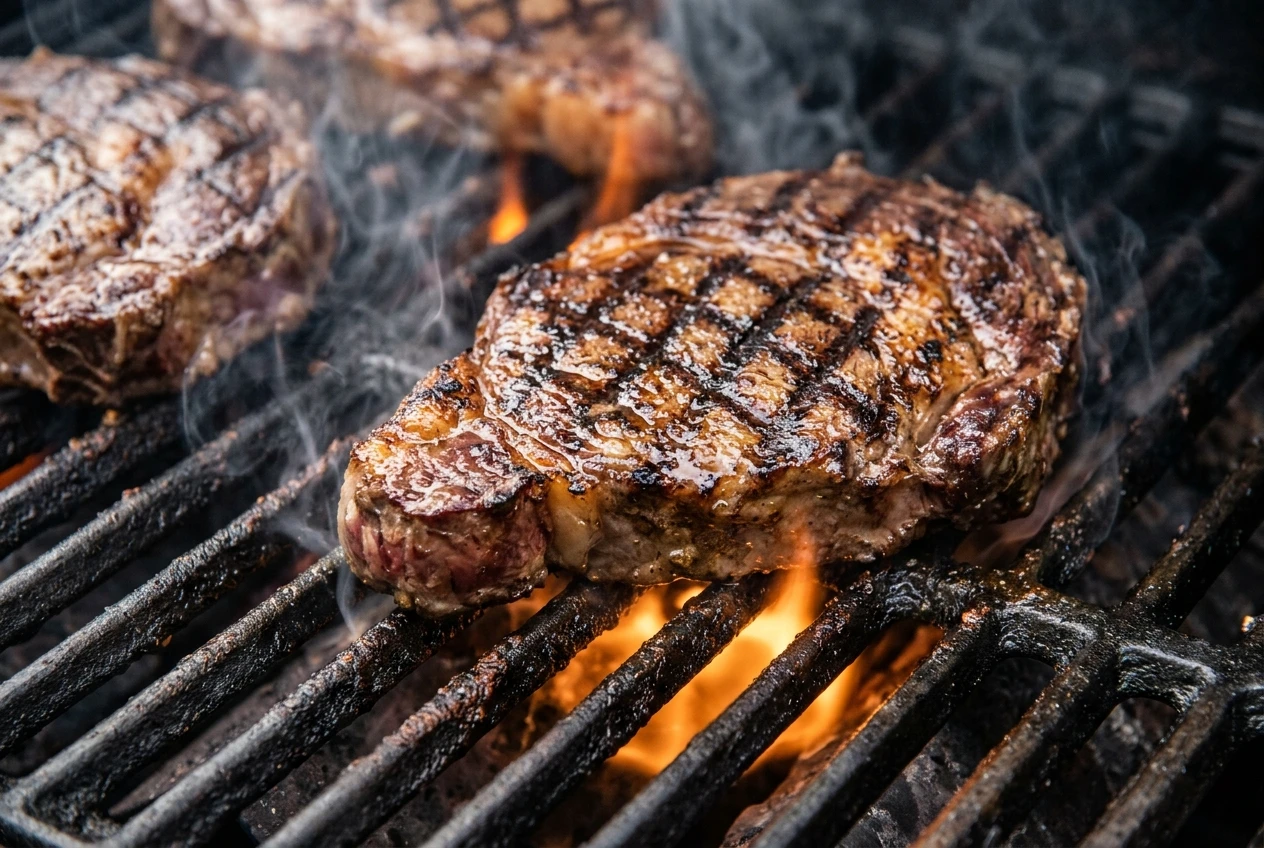
Porcelain-coated cast iron: holds heat well and leaves strong sear marks. It chips if you scrape it hard, and the exposed iron underneath can rust.
-
Stainless steel rod: heats up fast and is easy to brush clean. It holds less heat, so sear marks are lighter.
-
Bare cast iron: gives the best sear but needs oiling after each cook to prevent rust.
Cooking area deserves a quick calculation. Check the listing for the primary cooking area in square inches, and ignore the warming rack when you compare, since the warming rack is only for keeping cooked food warm. As a rough guide, picture how many burgers or chicken thighs you cook for your usual crowd, then compare that to the area. A grill that is too small forces you to cook in batches, which is the most common complaint from hosts.
Temperature Control and Thermometers
Most grills have a thermometer built into the lid. It reads the air temperature near the top of the cooking chamber, which can differ from the temperature at the grate by a good margin. That is why two grills with the same lid reading can cook differently.
For meat, the temperature that counts is inside the meat. A probe thermometer gives you that reading and removes guesswork on doneness, whatever grill you own. If you are choosing one, the article on the right grilling thermometer for the way you actually cook compares options by cooking style.
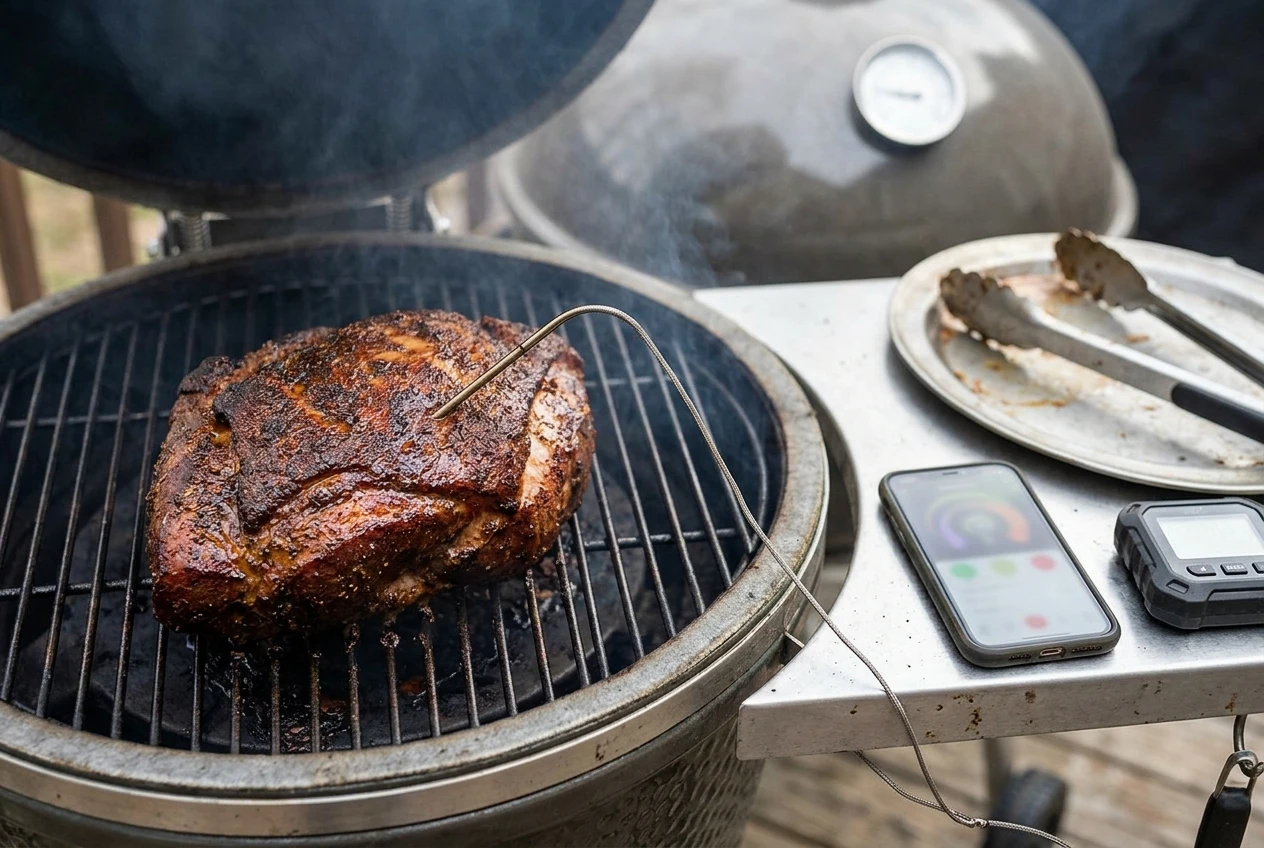
Some newer grills pair with a phone app. If a model you are considering lists connected features, check these points:
-
Does the grill still work fully without the app, or does it depend on a phone and a network connection?
-
What connection does it use, Bluetooth or Wi-Fi, and what is the stated range?
-
Does the app offer alerts for temperature changes, or only readouts?
Alerts are the part that frees you to leave the grill for a few minutes. A readout alone adds little over a standard probe.
Ignition, Fuel Level and Everyday Convenience
Small features decide how often you actually enjoy using a grill. Check them on the product page and in photos.
-
Ignition: electronic igniters should light each burner reliably. Read customer reviews of the specific model for repeated complaints about igniters failing.
-
Fuel level: on gas models, a gauge or scale for the propane tank tells you before you run out in the middle of a cook. On pellet grills, a hopper window or sensor does the same job.
-
Side tables: you need space for a platter, tongs and sauce. Fold-down tables save room on small patios but hold less.
-
Tool hooks and storage: a place for tools and a cabinet for the tank keep the area tidy.
-
Lighting: lights built into the handle or control panel help for evening cooks.
None of these change how food tastes, but a grill that is awkward to light or has nowhere to set a plate gets used less.
Grease Management and Cleanup
Grease handling affects both safety and how much time you spend cleaning. Look at where grease drains, how large the catch pan is, and whether you can pull it out without tipping it. A shallow, easy-to-reach tray gets emptied regularly. A hard-to-reach one gets ignored until it causes a flare-up.
Check whether the grates lift out easily and whether the interior has surfaces you can scrape. Ask whether the manufacturer sells disposable liners for the catch pan, and whether replacement parts are listed on its site. Parts availability tells you whether the grill can be repaired in five years.
For upkeep after you buy, the gas grill maintenance guide covers routine cleaning and checks that extend a grill’s life.
Build Quality and Warranty
Metal thickness, lid fit and the firebox material all influence how well a grill keeps heat and how long it lasts. These details are hard to judge from a listing, so look for specific information instead of marketing language:
-
The material of the lid and firebox, such as cast aluminum, stainless steel or porcelain-enameled steel.
-
The warranty terms by component. Manufacturers often cover burners, the firebox and the lid for different lengths of time, and the warranty can differ from other models in the same brand.
-
Assembly time and difficulty, which previous buyers usually mention in reviews.
If you can see the grill in a store, open and close the lid, shake the cart gently and check that the wheels roll smoothly. A wobbly cart or a lid that does not sit flush is a warning sign.
Matching Features to the Way You Cook
The best feature set depends on what you cook most. Use this as a quick guide.
-
Burgers, hot dogs and sausages for a crowd: prioritize cooking area and high, even heat across the grates.
-
Steaks: look for a strong sear capability, either a sear burner or cast iron grates.
-
Ribs, brisket and pork shoulder: look for a pellet grill, a charcoal setup with good vent control, or a gas grill with a large cool zone.
-
Small patio or balcony: check the closed and open dimensions, whether an electric model is allowed, and how the side tables fold.
-
Frequent hosting: think about side table space, lighting and fuel level monitoring.
If you are weighing a Weber gas grill against a flat-top, Weber vs Blackstone walks through how to choose based on weekend cooking habits.
Questions to Answer Before You Buy
Run through this list for any new Weber model you are considering:
-
Which fuel type fits my space, my budget and how much attention I want to give the fire?
-
How many burners or heat zones does it have, and can I set up a hot side and a cool side?
-
Is the cooking area big enough for my usual crowd without batches?
-
What are the grates made of, and am I willing to maintain them?
-
Does it have a connected feature, and does the grill work well without it?
-
How is grease collected and removed?
-
What does the warranty cover, and for how long?
-
Are replacement parts available from the manufacturer?
-
What is the retailer’s return policy if assembly or the first cooks go badly?
Write the answers down for two or three models and compare them side by side. The grill that answers the most questions well for your cooking is the right one, even if another model has a longer feature list.
To see how a specific Weber gas model is assessed in detail, read the Weber E435 gas grill review.