

If you cook on weekends and want a gas grill that does not need much fuss, the Weber Spirit II E-320 GBS is a model worth a close look. This review goes through the features Weber lists for it and what each one means when you are standing at the grill with a few burgers, a rack of ribs or a tray of vegetables. It does not quote performance numbers, because those change with the version you buy and the retailer’s current listing. Check the current spec sheet for size and price before you order.
Unboxing and Assembly
A full-size gas grill arrives as a large box of parts, and the Spirit II is no different. The cookbox, lid, cart frame, wheels, side tables, burner tube assembly, and the hardware for all of them come in one shipment. Work from the manual that comes with the grill rather than from memory of an older model.
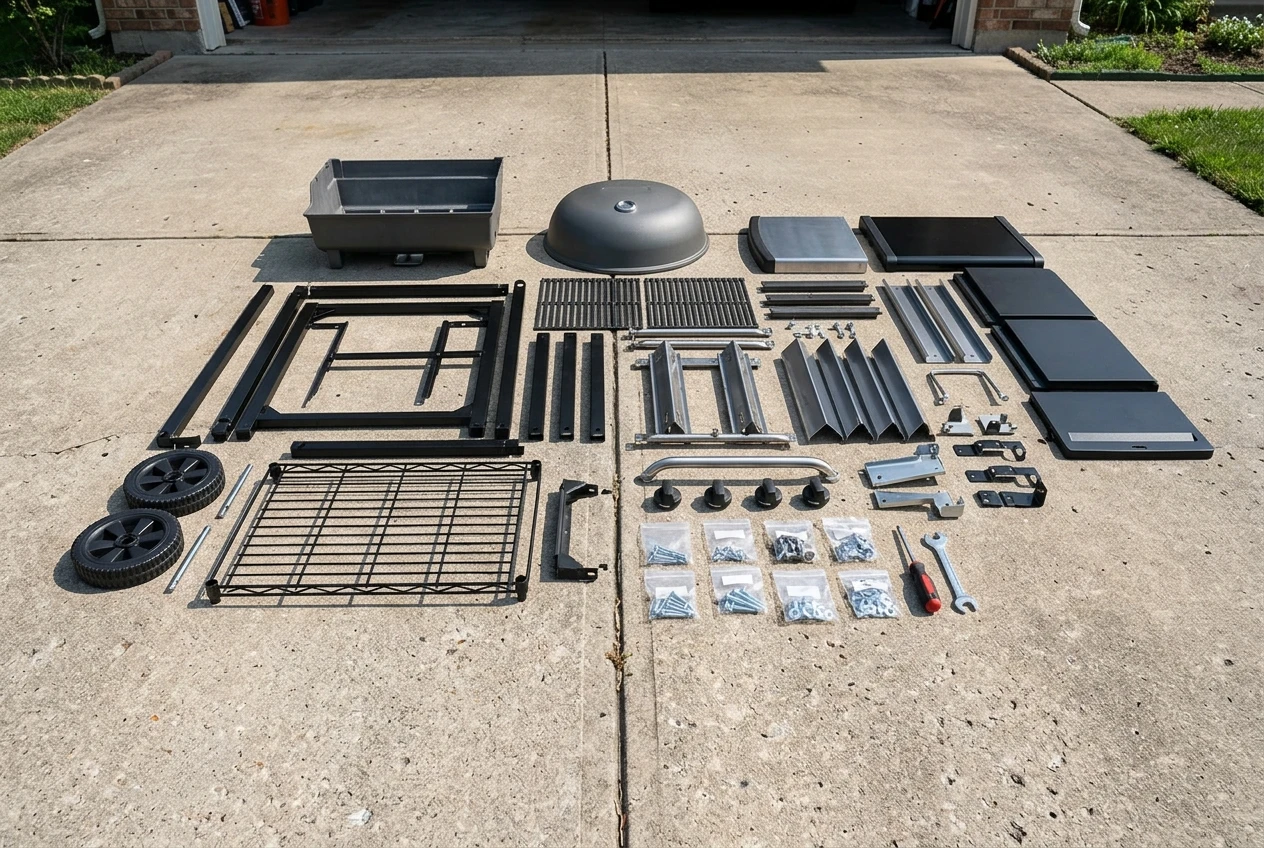
A few habits make assembly go smoother on any grill like this:
-
Lay out every part and group the bags of bolts by number before you start.
-
Build on a flat surface with room to turn the cart over, such as a driveway or a cleared patio.
-
Hand-start every bolt before you tighten any of them, so the frame can still shift while you line up the next piece.
-
Read the gas section of the manual twice. The hose and regulator connection is the one step where a mistake matters for safety.
-
Keep the box packaging until the grill has been lit and checked.
Power tools can speed up the work, but a screwdriver and a wrench handle everything. Once the grill is built, check every gas connection with a soapy water solution, as the manual describes, and look for bubbles before you cook anything.
Build and Materials
The Spirit II uses an enameled cast-aluminum cookbox with a lid, which is a standard Weber approach. Cast aluminum holds heat well and does not rust the way thin sheet steel can. The enamel finish protects the surface and wipes clean, though it shows grime if the grill sits uncovered.
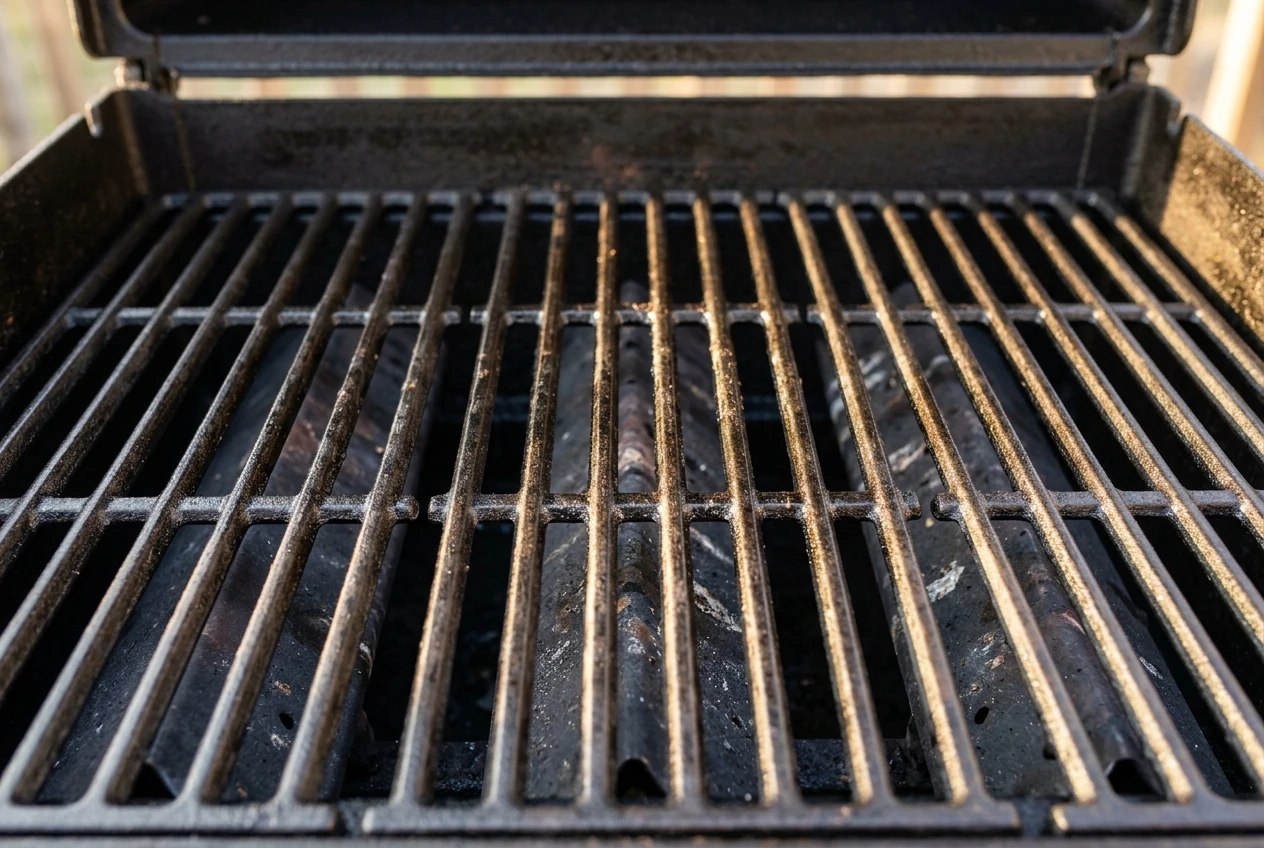
The cooking grates are cast iron, a material many grillers choose for sear marks and for holding heat when cold food hits the surface. Cast iron needs a little care: keep it oiled and dry, and brush it while it is hot. Below the grates, porcelain-enameled flavorizer bars sit over the burners. They catch drippings, which vaporize and add a grilled taste to the food, and they shield the burners from grease.
The cart is open, so the propane tank sits in plain view. Some people dislike how that looks. In return, you can see the tank and the fuel gauge without opening a cabinet door, which makes it easy to notice when you are running low before guests arrive.
Cooking Performance
The GS4 grilling system is Weber’s name for the set of parts that drive the cooking: the Infinity ignition, the burners, the flavorizer bars and the grease management system. Each one has a practical job.
Infinity ignition lights the burners when you push the knob, so you do not need a lighter. That matters most on a windy evening or when you are cooking for a crowd and want to get started quickly. Light the grill with the lid open, then close it and let the cookbox preheat before you put food on.
Three burners give you room to build different heat levels across the grates. Run one side high and leave the other low or off, and you can sear a steak over the hot burners and finish it on the cooler side. The same setup works for chicken thighs, thick pork chops and sausages that would burn on the outside before cooking through over full heat. Our guide to indirect heat grilling on a gas grill explains how to set up those zones step by step.
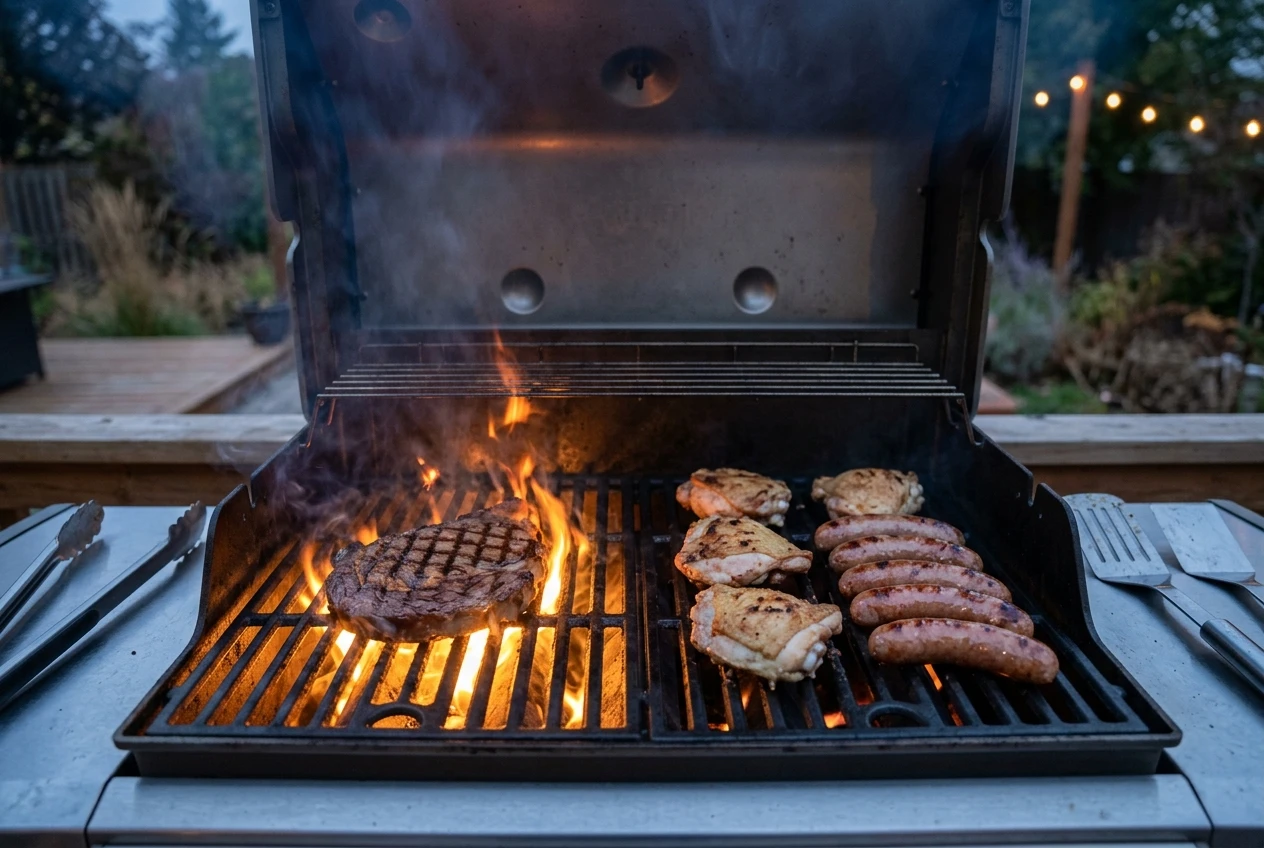
Cast aluminum and a closed lid keep heat steady, which helps with slow cooking. Ribs, pork shoulder and whole chickens do better at a moderate, even temperature over a long time than over high flame. With a gas grill, you set the burners, close the lid, and check on the food at intervals rather than constantly adjusting.
On searing: a gas grill in this class can brown a steak well, but it will not match the extreme heat of a dedicated infrared burner or a chimney of charcoal. If a restaurant-style crust on thick cuts is your top priority, check whether the version you are buying includes a sear station or whether you would need to add one.
Practical Features for Weekend Cooking
Grease management
Grease is the part of grilling that creates the most work afterward. The Spirit II’s grease management system directs drippings away from the burners and into a catch pan under the cookbox. That reduces the chance of a grease fire, and it makes cleanup quicker, since you empty one tray instead of scraping the whole bottom of the grill.
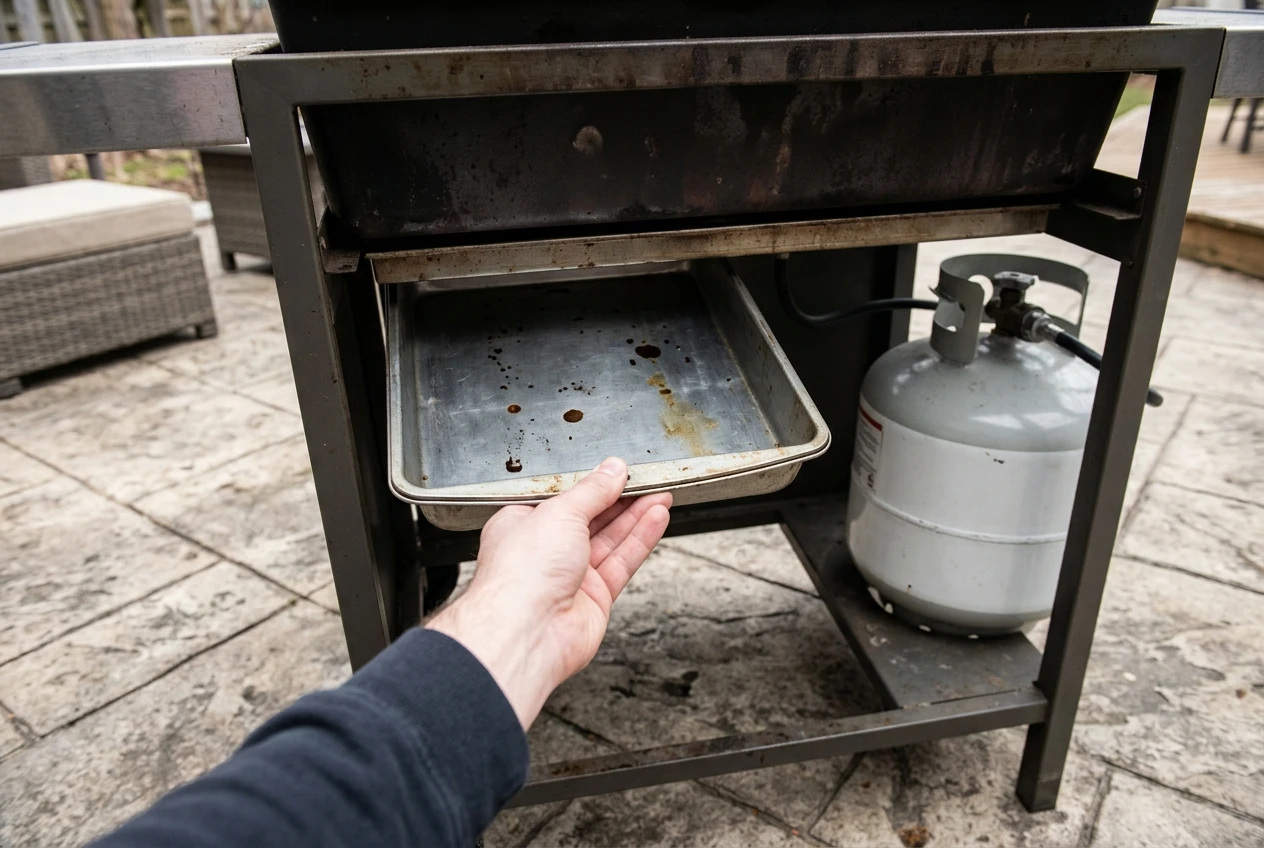
Swap or empty the tray regularly. A tray that fills up and overflows defeats the system, and it is easy to forget between cookouts. For a full schedule of what to clean and when, see our gas grill maintenance guide.
Lid thermometer
A built-in thermometer in the lid reads the air temperature at the top of the cookbox. It is useful for knowing when the grill is preheated and for holding a steady temperature during long cooks. It does not tell you the temperature inside the meat. For that, you need a probe thermometer, and our piece on the best meat thermometer for grilling helps you choose one for the way you cook.
Side tables and cart
The side tables give you a spot for a platter, tongs and sauce, which saves trips back to the kitchen. Wheels on the cart let you roll the grill into position and back out of the way. Rolling it over a lawn or uneven pavers is harder than over a smooth patio, so think about where it will live before you buy.
Fuel gauge and tank
The visible fuel gauge on the open cart answers a question every gas griller has: how much propane is left? You can check at a glance, which is more helpful than finding out halfway through a rack of ribs.
iGrill compatibility
The Spirit II works with Weber’s iGrill 3, a Bluetooth thermometer that is sold separately. It sends probe temperatures to your phone, so you can step away from the grill and still watch a roast. It is an add-on and does not come in the box, so treat it as an optional upgrade.
Who the Spirit II E-320 GBS Suits
This grill fits a weekend barbecuer who cooks for a household and the occasional gathering. A three-burner grill handles family dinners, a few guests, and the standard run of burgers, chicken, vegetables, fish and ribs. If you regularly cook for large groups, compare the cooking area against what you need, since sizes differ across the Spirit line. Our Weber Spirit E335 review covers a close relative, and the best 3 burner gas barbecue roundup for 2026 puts several options side by side.
It also suits someone who values low fuss. Push-button ignition, a grease system that is simple to empty, and a lid thermometer all reduce the number of things you have to think about during a cookout. Beginners can learn the basics of heat zones on it without fighting the equipment.
It is less suited to a few kinds of cooks:
-
Anyone who wants a very hot sear on thick steaks every time may want a sear burner or a different grill.
-
Anyone who prefers a flat cooking surface for breakfast or smash burgers may be better served by a griddle. Our comparison of Weber vs Blackstone explains the trade-offs.
-
Anyone who wants the propane tank hidden will not like an open cart.
Care and Longevity
A grill like this lasts longer with a little routine attention. Brush the grates after each cook while they are still warm. Empty the grease tray before it fills. Cover the grill when it is not in use, which also keeps the enamel looking better. Once or twice a season, clean the flavorizer bars and inspect the burners for blockages.
Weber backs the Spirit II with a warranty, and coverage differs by part, so read the current terms on Weber’s site or the retailer’s listing before you buy. Register the grill and keep your receipt in case you need to make a claim.
Final Verdict
The Weber Spirit II E-320 GBS is a sensible choice for a weekend griller who wants a dependable three-burner gas grill from a well-known brand. Its strengths are the cast-aluminum cookbox, cast-iron grates, easy ignition, a grease system that simplifies cleanup, and steady heat for both quick and slow cooking. Its drawbacks are the exposed propane tank, a finish that shows grime without a cover, and searing power that stops short of specialist equipment.
Compare the current price and the exact configuration across retailers, confirm the cooking area suits your usual crowd, and decide whether you want to add a probe thermometer or an iGrill. If those points match how you cook on weekends, this grill will handle burgers, chicken, ribs and most things in between.