

The Weber Slate Griddle is a flat-top cooker for people who want to cook more than burgers and steaks outside. A flat steel or coated surface handles pancakes, eggs, fried rice, smash burgers, sliced onions and shrimp, all things that fall through or stick to a grill grate. For a weekend barbecuer, that adds breakfast and a lot of side dishes to the cookout.
This review covers what the griddle does well as a type of cooker, what to check on the Weber Slate before buying, how it compares to a Blackstone, and how to choose between the 28-inch and 30-inch sizes. Prices, burner counts and cooktop specs change between model years, so check the current listing on Weber’s site or your retailer for those details.
What a griddle does that a grill grate cannot
A grill grate touches your food in thin lines. A griddle touches it across the whole surface, and that difference explains most of what people like about them.
-
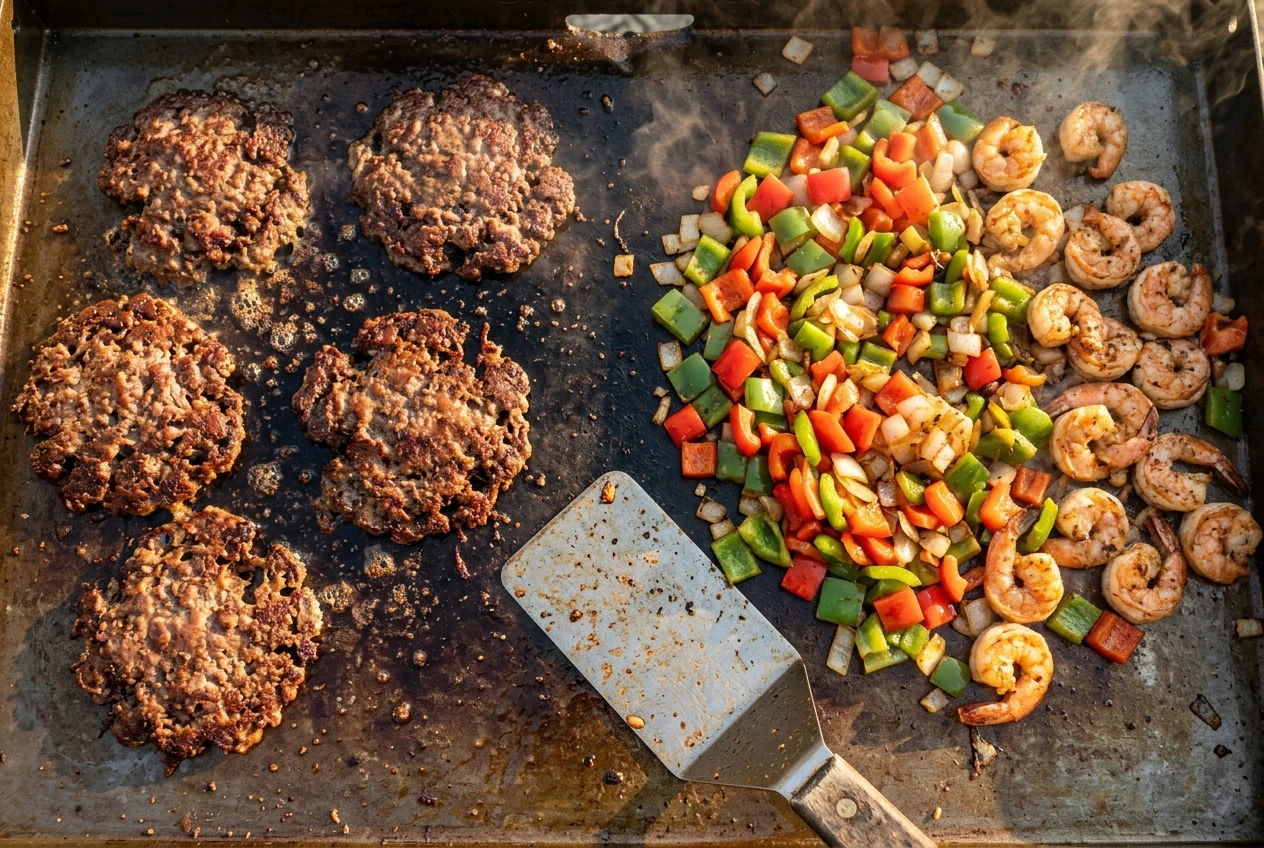
Crust: A burger pressed flat on a hot griddle browns edge to edge instead of in stripes. That is the reason smash burgers work so well on one.
-
Small and loose food: Diced peppers, shrimp, chopped onions, cooked rice and scrambled eggs stay on the surface instead of dropping into the burners.
-
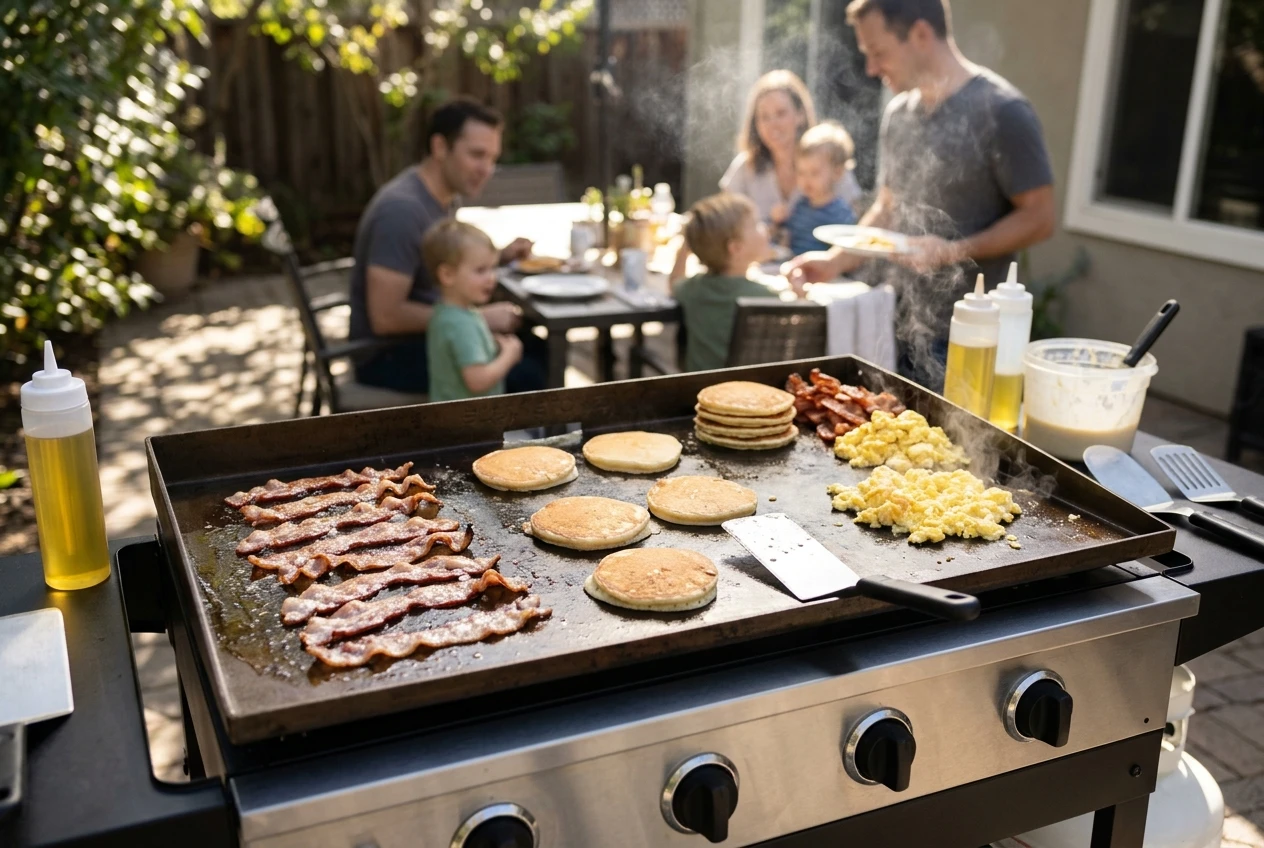
Breakfast: Pancakes, bacon, eggs and hash browns can all cook at the same time on different parts of the surface.
-
Fat and sauce stay in contact with the food: Fat that would drip off a grate pools on the griddle and helps brown the food. You can also cook with sauce or butter without losing it to the fire.
A griddle does not replace a grill. It will not give you grill marks, and it will not smoke food the way a smoker does. It covers a different set of foods, and that is why many people end up with both.
What to check on the Weber Slate Griddle
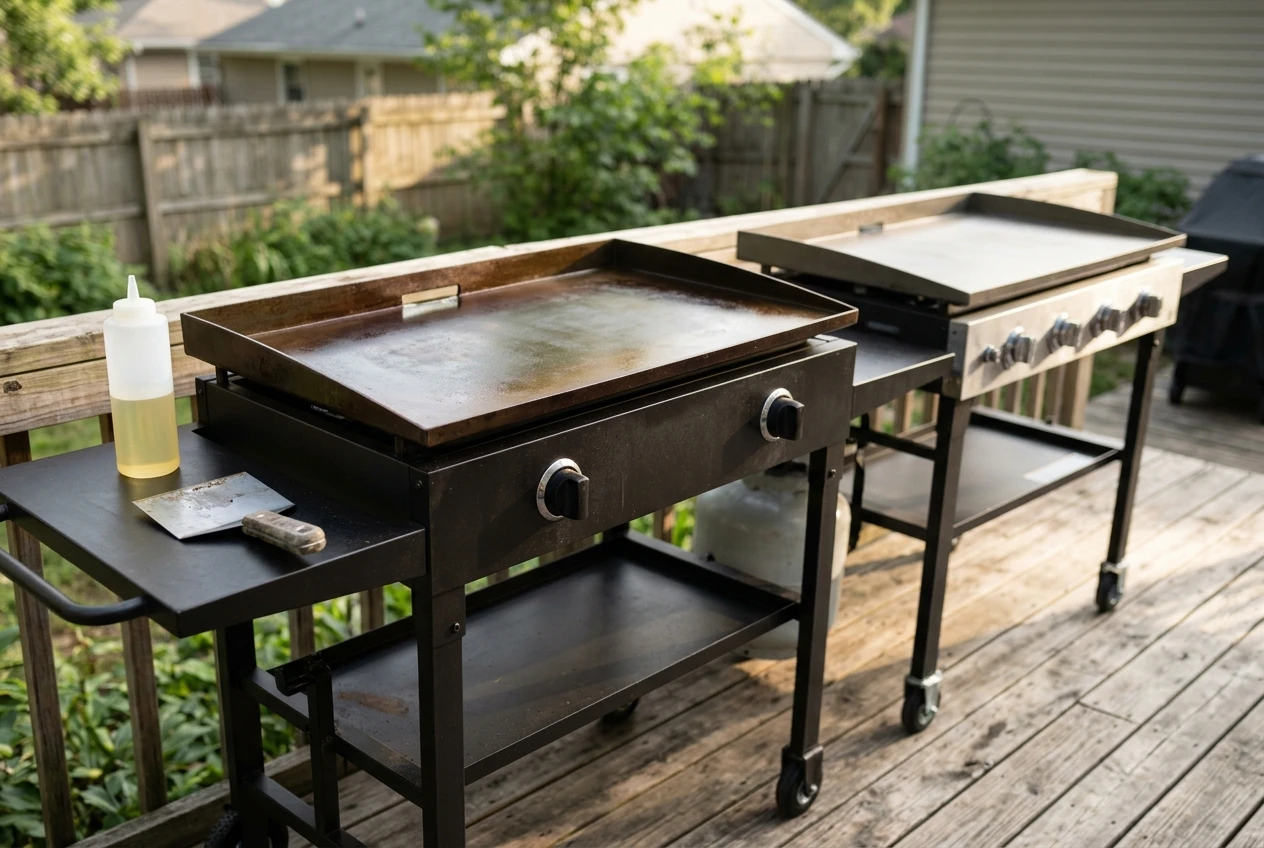
The name “Slate” is Weber’s product name, so confirm on the product page what the cooktop is made of and what the maker says about seasoning, cleaning and rust protection. Those facts decide how much upkeep the griddle needs, and they differ between cooktop materials.
Before you buy, look for answers to these questions:
-
Cooktop material and care: Does it need seasoning like a carbon steel flat-top, and what does Weber recommend for cleaning after a cook?
-
Burners and zones: How many burners are there, and can you set different parts of the surface to different heat levels? Separate zones let you sear on one side and keep food warm on the other.
-
Grease management: Where does grease go, how large is the catch container, and how easy is it to empty?
-
Fuel: Confirm the fuel type and whether you need to buy anything else to run it.
-
Cover and storage: A cover or lid keeps the cooktop clean between uses, so check whether one is included or sold separately.
-
Price and warranty: Compare the current price and the warranty terms with other griddles in the same size range.
Griddles hold their heat well once they are fully preheated, so the burner layout matters more than the maximum temperature. A griddle with a hot spot in the middle and cool edges cooks unevenly. A griddle with controllable zones is easier to cook on, so look for owner feedback that describes how evenly the surface heats.
Weber Slate vs. Blackstone
Weber and Blackstone are the two names weekend cooks most often compare, and the right choice depends on how you cook. If you want a deeper look at that decision, the member guide Weber Gas Grill or Blackstone Griddle? How to Pick for the Way You Cook on Weekends walks through it.
For the griddles themselves, compare these points side by side:
|
Question |
Why it matters |
|---|---|
|
Total cooking area |
Decides how many burgers or pancakes you cook at once |
|
Number of burners and zones |
Decides how much control you have across the surface |
|
Cooktop material |
Decides how you season, clean and protect it |
|
Grease handling |
Decides how messy cleanup is |
|
Price |
Decides how much surface you get for your money |
Blackstone’s cooktops are rolled carbon steel, which builds a nonstick layer through seasoning and needs oiling after use to prevent rust. That upkeep is worth it to many cooks, but it is a habit you have to keep. Ask the same questions about the Weber Slate: what does the maker say about seasoning and rust, and what routine does it require?
A fair comparison also means comparing similar sizes. A larger Blackstone will give you more cooking area for the money than a smaller Weber, but that does not make it better for you if your patio is small or you usually cook for two to four people. Match the size and the upkeep to your cooking, not to the brand’s reputation.
Choosing between the 28-inch and 30-inch
The 28-inch and 30-inch Weber Slate sizes are close, so the choice comes down to space and how many people you cook for.
Start with the space
Measure the spot where the griddle will sit, then add clearance around it. You need room to stand, to open the cover and to set down a tray of food. If the patio is tight, the smaller size is easier to live with. If you are weighing how a griddle fits into a small outdoor setup, the member guide Outdoor Kitchen Design Ideas for Small Patios covers layout.
Then think about the crowd
A larger surface lets you cook more at once, and it also lets you keep one part of the griddle hot and another part cooler. That is useful for holiday brunch, where bacon, eggs and pancakes all need to finish around the same time. For a family dinner of four, both sizes have room to work.
Compare current specs, not assumptions
Check the exact cooking area, burner count and weight on Weber’s page for each size, since the numbers are what separate them. If the two sizes have the same burner layout and the same features, the extra inches are the only difference, and you can decide on space alone.
Getting good results on a griddle
Some habits carry across almost every flat-top cooker, whichever brand you buy.
-
Preheat fully. Give the surface several minutes so the whole cooktop is hot before food touches it. Cold spots cause sticking and uneven browning.
-
Use a thin layer of oil. A thin film is enough. Pooled oil makes food greasy and smokes.
-
Do not crowd the surface. Food that is packed together steams instead of browning. Leave space between pieces.
-
Cook in order. Start with food that should stay clean tasting, such as eggs and pancakes, then move to bacon and onions, and finish with strongly flavored food like fish or marinated meat.
-
Keep a cooler zone. Move finished food to a cooler part of the surface to rest while you cook the next batch.
-
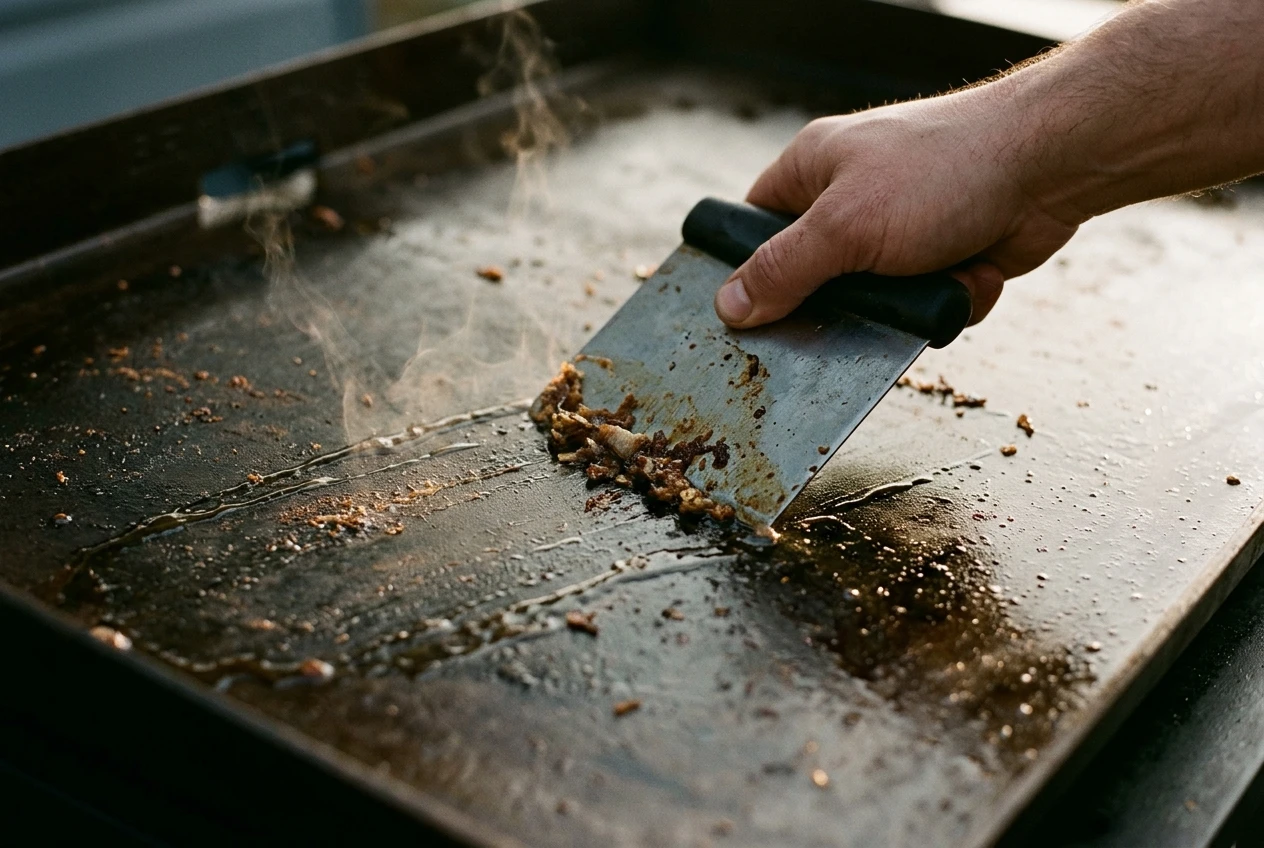
Scrape while it is warm. Clean the surface with a scraper right after the cook, before leftover food hardens.
Thick or bone-in cuts like chicken thighs and pork chops are easier to cook through when you check the internal temperature instead of guessing. The member guide The Right Grilling Thermometer for the Way You Actually Cook explains how to pick one.
What to weigh before you buy
Advantages of a griddle like this
-
Wider menu: You can cook breakfast, lunch and dinner on one surface, including food that is awkward on a grate.
-
Better browning on thin foods: Full contact with the surface gives smash burgers and cheesesteak-style sandwiches a deeper crust.
-
Easy cooking for a group: Many small items cook at once and can be served as they finish.
-
Less food lost: Small and loose food stays on the cooktop.
Trade-offs
-
Price: Compare the current price with the size and features you actually need. A larger griddle costs more, and you should only pay for surface you will use.
-
Space: A flat-top takes up patio room and needs storage or a cover when you are not using it.
-
Upkeep: Every cooktop needs cleaning, and some need seasoning or oiling. Confirm the routine for this one before you buy.
-
Different strengths from a grill: Griddles do not make grill marks or smoke flavor, and they are not the best tool for large roasts or slow barbecue.
Who it suits
The Weber Slate Griddle fits weekend barbecuers who already have a grill or smoker and want a second cooker for breakfast, burgers and sides. It also suits anyone who likes cooking for a crowd and wants everything to be ready at the same time.
If you cook mostly steaks and ribs over open flame, a griddle will probably stay a secondary cooker, and a good grill or smoker will do more for you. If you are weighing a smoker purchase, the member guide Best Pellet Smokers Under $1000 for Weekend Beginners covers that side. Decide by listing the five things you cook most on weekends, then check whether a flat surface handles them better than a grate.