

Grilling does not have to stop when the weather turns cold. Meat cooked outdoors in winter air tastes the same as it does in July, and the dishes that suit the season, like ribs, root vegetables and spiced fruit, hold up well to a grill. Cold air does change a few things, though: the grill takes longer to heat, it loses heat faster, and you will spend more time out there watching it.
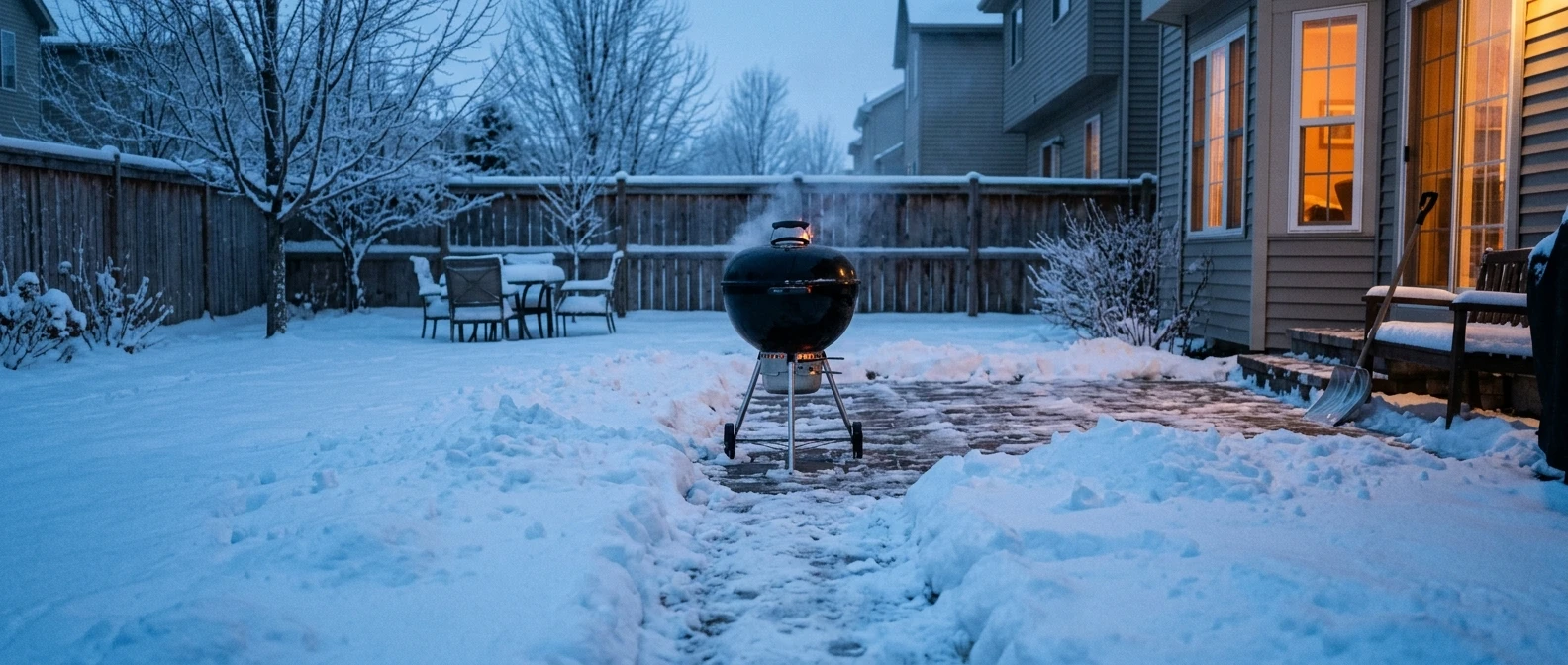
This guide covers winter grilling for beginners: how to set up safely, what to buy, which ingredients work in cold months, three recipes to start with, and some habits that keep the fire steady when the temperature drops.
Set Up Your Grill Safely for Cold Weather
Safety comes first, because winter adds hazards that summer does not. Snow and ice around the grill make footing slippery while you are carrying hot food, so shovel a clear path and a clear patch of ground before you light anything.
Work through this list each time you grill:
-
Clear the area. Brush snow and ice off the lid, the side shelves and the ground around the grill.
-
Keep distance from the house. Place the grill at least 10 feet from walls, railings, eaves and anything else that can burn.
-
Stay outdoors. Never use a grill in a garage, shed, porch with a roof closed in by walls, or any enclosed space. Grills produce carbon monoxide.
-
Check gas connections. If you cook on propane, inspect the hose and fittings before lighting, and make sure you have enough fuel. A grill working against cold air burns through more of it.
-
Clean the grates and grease tray. Built-up grease causes flare-ups, and flare-ups are harder to manage when you are wearing bulky gloves.
If your grill spent the autumn uncovered, give it a proper clean before the first winter cook. The guide on how to maintain a gas grill covers what to inspect and how often.
Pick a spot out of the wind
Wind pulls heat out of a grill faster than cold air alone. If your patio has a corner that blocks the prevailing wind, put the grill there, while still keeping the safe distance from the house. A steadier fire means more predictable cooking times, which matters a lot when you are still learning how your grill behaves.
Gear That Makes Winter Grilling Easier
You do not need much beyond what you already own, but a few items are worth having once the temperature drops.
-
A grill cover. A fitted cover keeps snow, ice and moisture off the grates, burners and controls between cooks.
-
Insulated grill gloves. Regular oven mitts are too short and too thin. Long gloves rated for heat protect your hands and wrists, and they keep your fingers warmer too.
-
Long-handled tongs and spatula. A longer reach keeps your arms away from flare-ups and lets you work at the grill without leaning over it.
-
A reliable meat thermometer. In cold weather the clock tells you very little, because cooking times stretch and vary with wind and air temperature. A thermometer tells you when the food is done. If you are choosing one, this thermometer guide explains how to match one to the way you cook.
-
A headlamp or grill light. It gets dark early in winter, and you will often be cooking after sunset.
Choosing the Right Ingredients for Winter Grilling
Winter produce and cuts of meat suit the grill better than you might expect. Heavier, sturdier ingredients cope with a longer cook and stronger seasoning.
Vegetables
Root vegetables such as carrots, potatoes and parsnips are the easiest place to start. They are dense, so they stay firm on the grill and pick up char on the outside while softening inside. Cut them into pieces of similar size so they cook evenly, toss them in oil and salt, and cook them on the cooler side of the grill with the lid closed until they are tender. Finish them over direct heat for a minute or two to brown the edges.
Winter squash, onions and Brussels sprouts also work well, and all of them take to the same method.
Meat
Pork and beef are good choices because they handle bold seasoning and long cooks. Ribs, pork shoulder, thick pork chops and beef roasts all do well over steady heat. Thin, lean cuts are less forgiving in the cold, since they can dry out quickly while you wait for a grill that is struggling to hold its temperature.
Marinades and rubs
Seasoning does a lot of the work in cold-weather cooking. A simple marinade of olive oil, minced garlic and fresh thyme suits pork and vegetables alike. For something brighter, add lemon juice and a pinch of chili flakes.
Dry rubs are even easier. A mix of smoked paprika, cumin, salt and a little cayenne gives a warm, savory crust with almost no preparation. Mix a jar of it ahead of time and you can season anything in a minute.
Whatever you buy, choose fresh produce and meat that looks and smells right. Seasoning can improve good ingredients, but it cannot rescue limp vegetables or meat that has been sitting too long.
Winter Grilling Recipes for Beginners
These three recipes cover a main, a starter and a dessert. Each one uses ingredients you can find at an ordinary grocery store, and each one cooks without much attention once the fire is set.
Spice-rubbed ribs with roasted root vegetables
Ribs reward patience, and winter gives you a reason to stand near a warm grill for a while. Mix brown sugar, chili powder, garlic powder, smoked paprika and salt, and coat the ribs on both sides. Let them sit for a while so the rub clings to the meat.
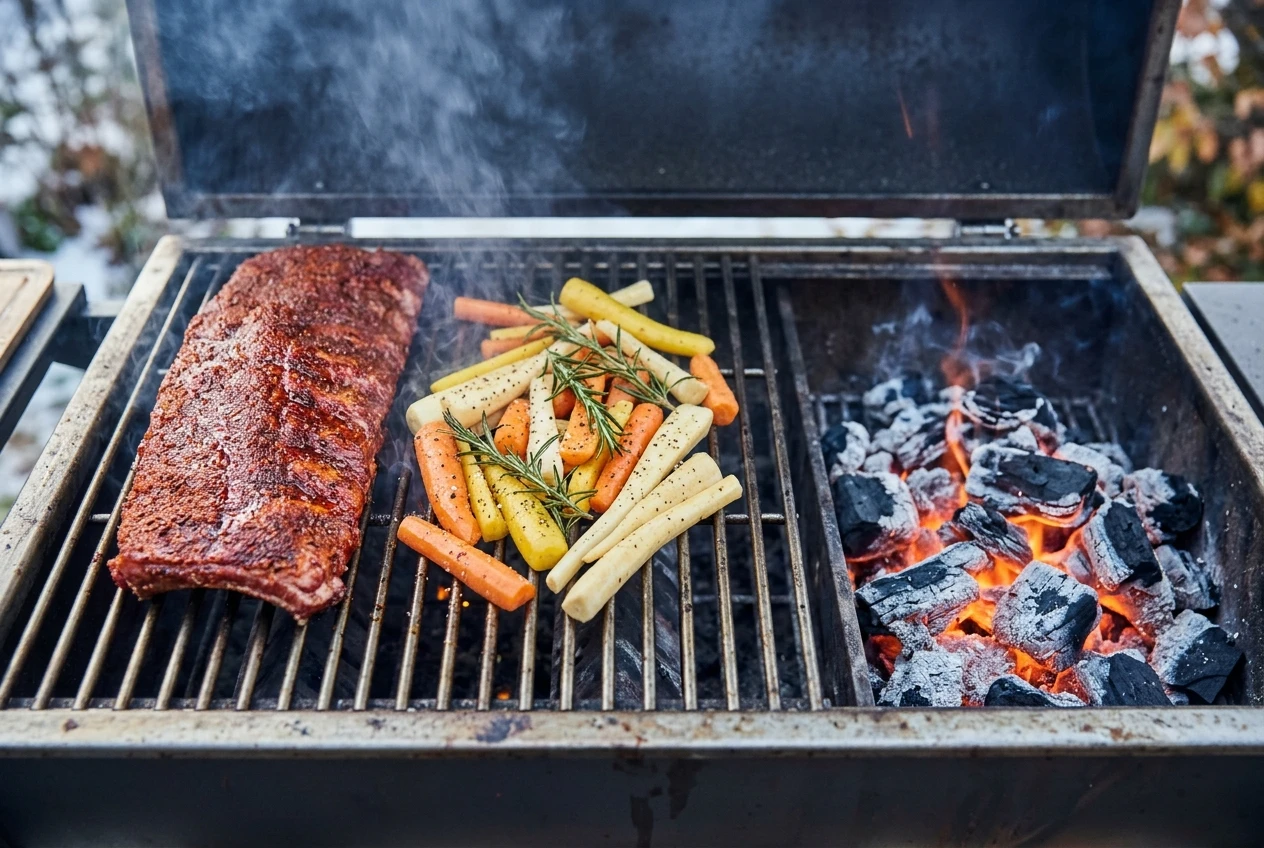
Set the grill up for indirect heat, with the fire on one side and the ribs on the other, and keep the lid closed. If you cook on gas, this walkthrough on setting up a two-zone fire shows the layout. Cook the ribs at a low, steady temperature until the meat has pulled back from the ends of the bones and a rack bends easily when you lift it with tongs. Cold air adds time, so treat any recipe’s cooking time as a rough guide and judge by how the meat looks and feels.
Put the root vegetables on the cooler side of the grill while the ribs cook, tossed in olive oil, salt and chopped rosemary. They will be tender by the time the ribs are ready. If you want a fuller method for the ribs themselves, the best tender ribs recipe goes into more detail.
Grilled oysters with chili garlic butter
Oysters cook fast, which makes them a good choice when you do not want to stand outside for hours. Scrub the shells, then set them on the grate with the rounded side down so the liquid stays inside. Close the lid. They are done when the shells open. Throw away any that stay shut.
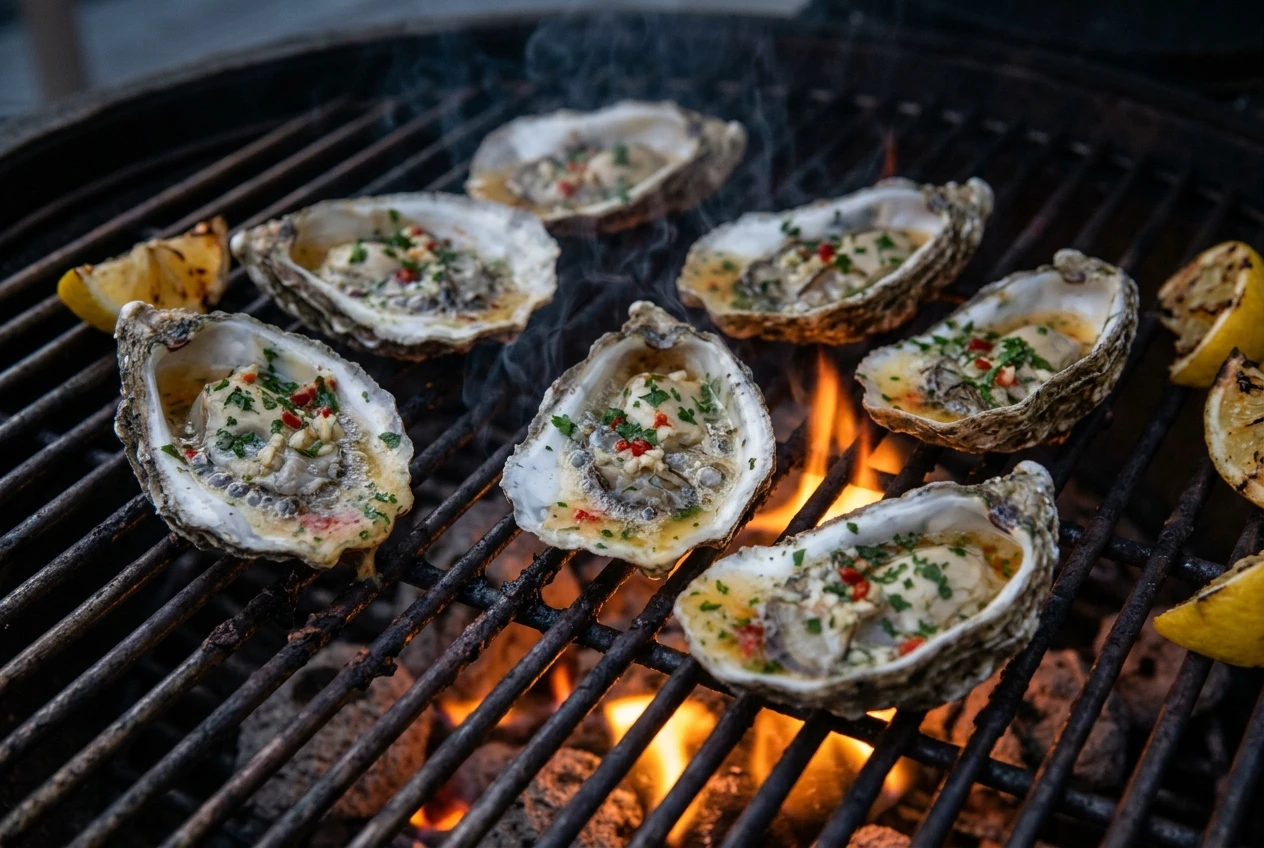
Melt butter with minced garlic and a pinch of chili flakes. Spoon a little over each oyster, then finish with a squeeze of lemon and chopped parsley. Serve them right away, while they are hot.
Grilled spiced apples
This dessert needs no special equipment. Slice apples thinly, toss them with cinnamon, brown sugar and a small piece of butter, and wrap them in a foil packet, folding the edges tight so the juices stay in.
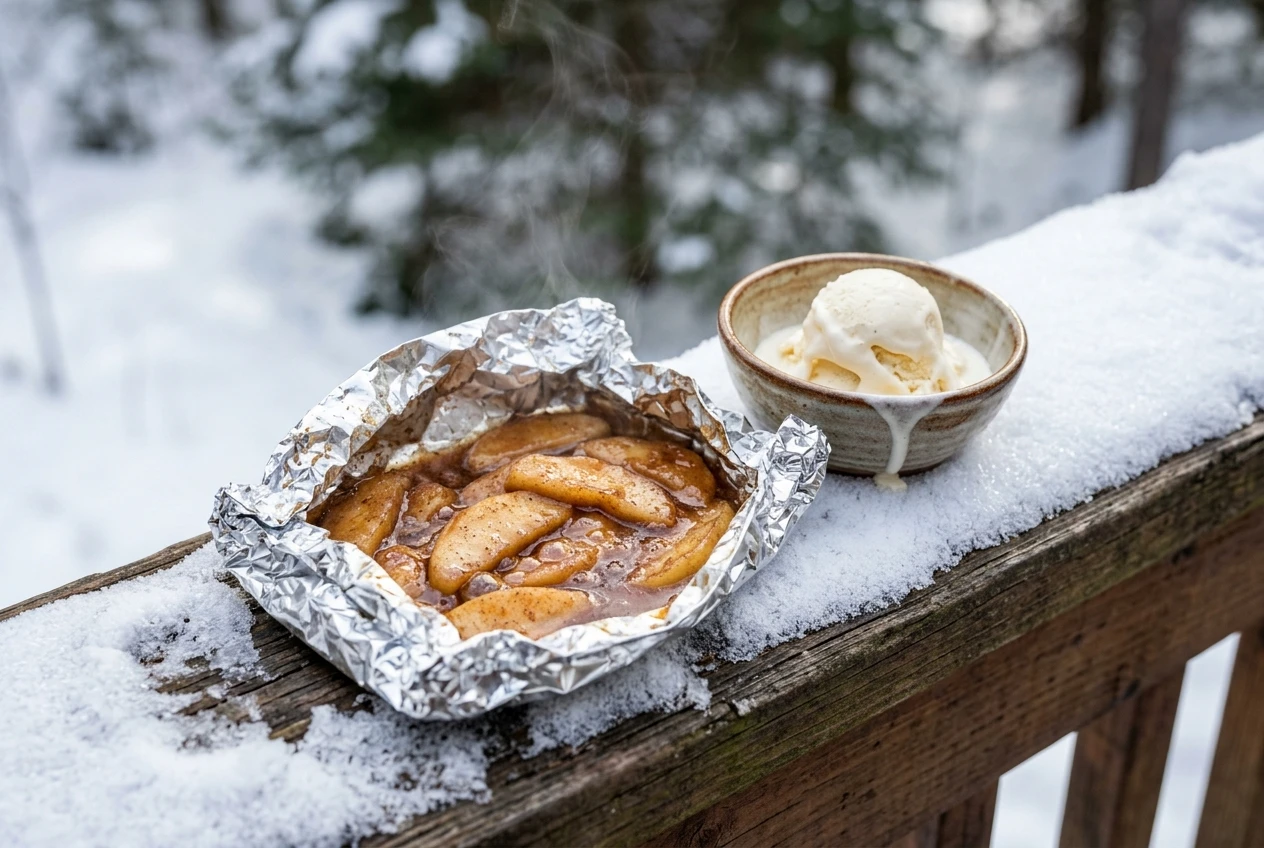
Set the packet on the cooler side of the grill and close the lid. After a while, open one corner carefully, because steam escapes fast, and pierce an apple slice with a fork. When it goes in easily, the apples are ready. Spoon them over vanilla ice cream or eat them as they are.
Tips for Keeping the Fire Steady in Cold Weather
A few habits make the biggest difference once the air turns cold.
Preheat longer than you normally would. A cold grill takes more time to reach cooking temperature, and the metal needs to be properly hot before food goes on. Starting early also gives you time to check that the temperature holds.
Keep the lid closed. Every time you lift it, heat escapes and takes a while to come back. Plan your cook so you only open the lid when you need to turn or check the food, and use a thermometer so you do not have to cut into things to see how they are doing.
Rotate food that cooks unevenly. Wind and cold spots can make one side of the grill hotter than the other. If you notice food browning faster in one place, turn it around or move it.
Manage flare-ups. Trim excess fat from meat before it goes on, and keep the food away from the hottest part of the fire. If flames jump up, move the food to the cooler side and close the lid for a moment. A spray bottle of water helps with small flare-ups, but heavy grease fires need the lid closed and the heat turned down.
Let meat rest. Meat that comes off the grill loses heat quickly outdoors. Rest it under loose foil for a few minutes before slicing, which lets the juices settle and keeps it warm enough to serve.
Make the Cook Comfortable
Winter grilling is easier to enjoy when you are not freezing. String lights over the patio or deck give you something to see by, and a portable outdoor heater, used well away from the house and anything flammable and according to its instructions, takes the edge off the cold for guests. A pot of mulled cider or a thermos of hot chocolate keeps people around the grill longer.
Side dishes should be warm and simple. Roasted squash, buttery rolls and mashed potatoes all go well with grilled pork and beef, and most of them can be prepared indoors while the grill does its work. A tangy barbecue sauce or a spicy mustard on the table lets everyone adjust the flavor to their own taste.
Start with one recipe, learn how your grill handles the cold, and add dishes as you get more comfortable. Ribs, oysters and spiced apples are enough to fill a winter weekend, and each time you cook you will learn a bit more about how your grill holds heat and how long things really take.