
Grilling in winter works with a few changes to how you set up, how long you cook, and how you protect yourself from ice and wind. The grill still gets hot, but cold air, wind, and cold meat all pull heat away from the cooking chamber. Most of what follows is about keeping that heat in and cooking by internal temperature instead of by the clock.
This guide is written for weekend barbecuers who want to keep cooking outside once the temperature drops. It covers where to put the grill, how to manage heat, how to stay safe on cold and icy ground, and which foods suit a winter cookout.
Set Up Your Grill and Cooking Space
Start with the grill itself. Any gas or charcoal grill can cook in cold weather, but heavier models with thick lids and tight seals hold heat better than thin, lightweight ones. If your lid leaks smoke from the corners, it will leak heat too, and you will notice that more in January than in July.
Before the first cold cookout, check your fuel:
-
Gas: Make sure the propane tank has plenty in it, and keep a full spare nearby. Running out halfway through a long cook is more likely in winter because the grill burns more fuel to hold temperature.
-
Charcoal: Have extra briquettes or lump charcoal on hand. You will usually add more than you would in summer.
-
Ignition: Igniter batteries can weaken in the cold. Keep a long lighter or match handy in case the push-button igniter fails.
Pick the right spot
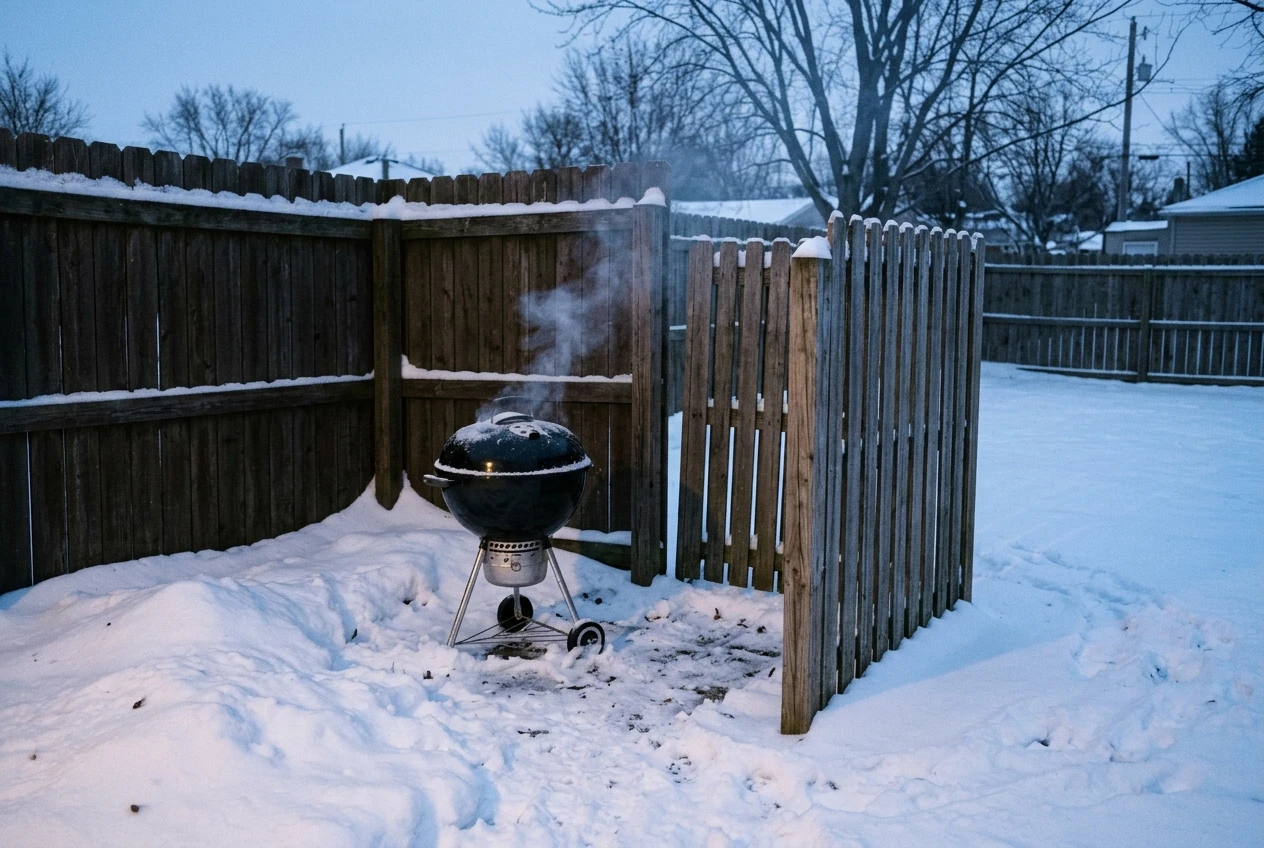
Put the grill where wind cannot hit it directly, because wind pulls heat out of the grill faster than cold air alone. A corner of the yard next to a fence or wall works well. The grill still has to stay in the open air: never move it into a garage, a covered porch with walls, a shed, or under an overhang attached to the house.
A windbreak helps a lot. A freestanding panel or screen on the windward side of the grill blocks gusts. Keep it well back from the grill and leave a gap between the two, so nothing near the fire can catch. Never wall the grill in on all sides.
Gear worth having
-
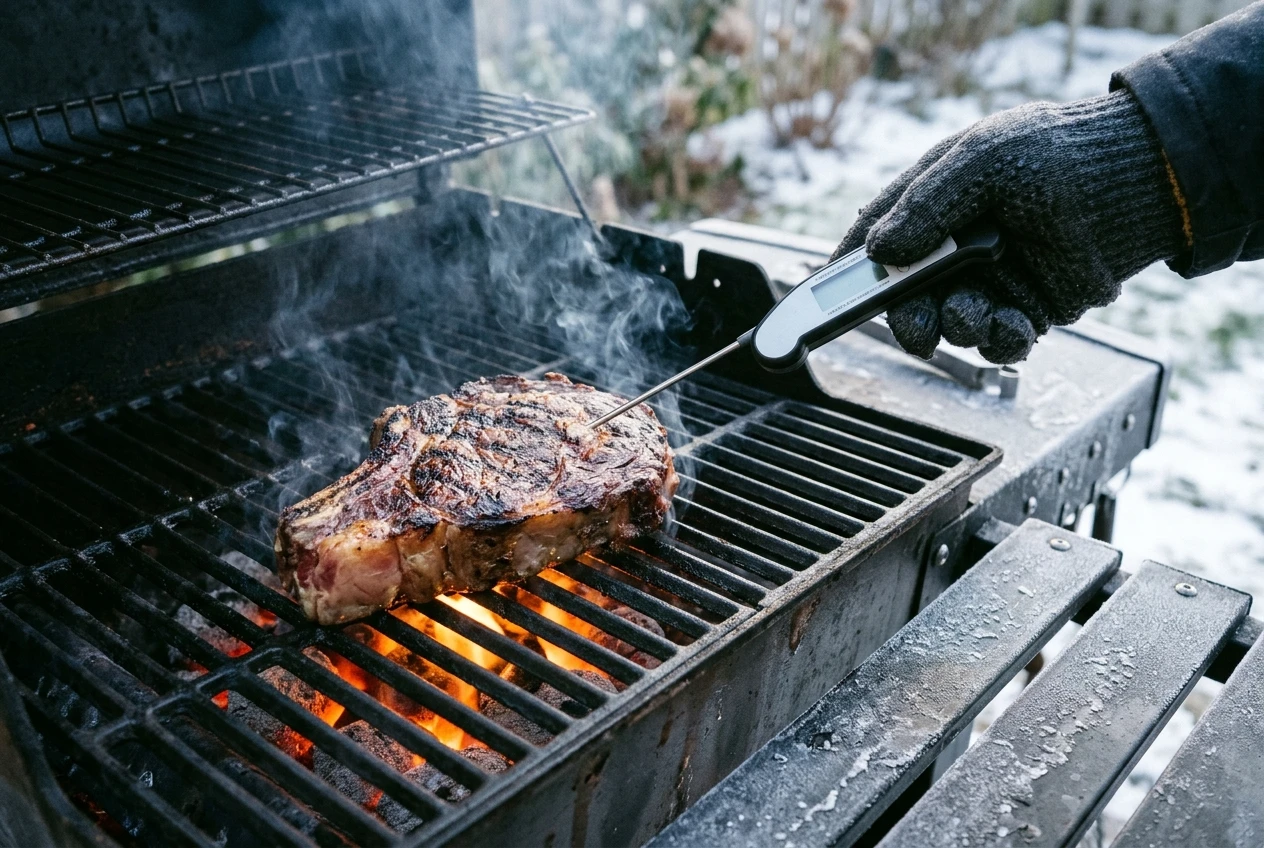
A good probe thermometer. The lid thermometer on most grills reads the air near the top of the dome, not what is happening at the food. If you are choosing one, this thermometer guide explains which type fits how you cook.
-
Insulated, heat-resistant gloves. Thin gloves let your fingers go numb, and numb fingers drop tongs and misjudge heat.
-
A grill light. Winter evenings get dark early, and you will often be cooking after sunset.
-
A fitted grill cover. Use it between cooks to keep snow and sleet out of the burners and off the grates. Let the grill cool completely before you put it on.
Keeping the grill in good shape matters more in cold, wet months, since moisture speeds up rust and clogs burners. The gas grill maintenance guide covers the routine for gas models.
Managing Heat When It’s Cold Out
Cold changes the cook in a few predictable ways. The grill takes longer to preheat, it recovers more slowly after you open the lid, and the food starts colder and finishes later. Plan for all three.
Preheat longer and keep the lid closed
Give the grill extra time to come up to temperature, and let the grates heat fully before food goes on. A grill that reads hot on the dial may still have cold metal in the grates and the body, and that metal pulls heat back out of the food.
Every time you lift the lid, the chamber loses heat that takes a while to rebuild in cold air. Open it only to flip, baste, or check temperature. This is also why a probe thermometer helps: you can read the food without opening the grill at all.
Cook to temperature, not time
Recipe times assume mild weather. In the cold, a steak, chicken thigh, or pork chop can take noticeably longer, and the only reliable way to know when it is done is internal temperature. The USDA’s guidance for safe minimums is:
-
Poultry: 165°F
-
Ground beef and pork: 160°F for ground meats, and 145°F with a rest for whole cuts of pork and steaks
Pull the food when it reaches those numbers, then rest it. Rest it somewhere sheltered, because meat cools quickly outdoors.
Use a two-zone fire
Setting up a hot side and a cooler side gives you room to adjust. You can sear on the hot side, then move food to the cooler side to finish without burning the outside while the center catches up. That is especially useful with thick cuts in cold weather. The two-zone fire guide for gas grills walks through the setup, and direct grilling techniques covers the high-heat side of the process.
Adjust the fuel, not the lid
If the grill is struggling to hold temperature, turn the burners up a little or add more charcoal and open the vents slightly. Make small changes and wait a few minutes before changing again. Large swings in cold weather are harder to correct than they are in summer.
Choose cuts that forgive long cooks
Thick steaks, bone-in chicken, pork shoulder, and whole roasts handle the extra time well. Thin, lean cuts such as skinny chops or fish fillets dry out fast if the grill is struggling. Vegetables can take longer than you expect when the grill is cool, so cutting them smaller or giving them a head start in a kitchen oven helps.
If you smoke food, remember that a cold cooker burns more fuel to hold temperature, and long smokes need extra fuel and regular checks.
Safety on Cold, Icy Ground
Most winter grilling accidents come from slipping, from fire, and from carbon monoxide. All three are easy to prevent.
Clear your path and standing area
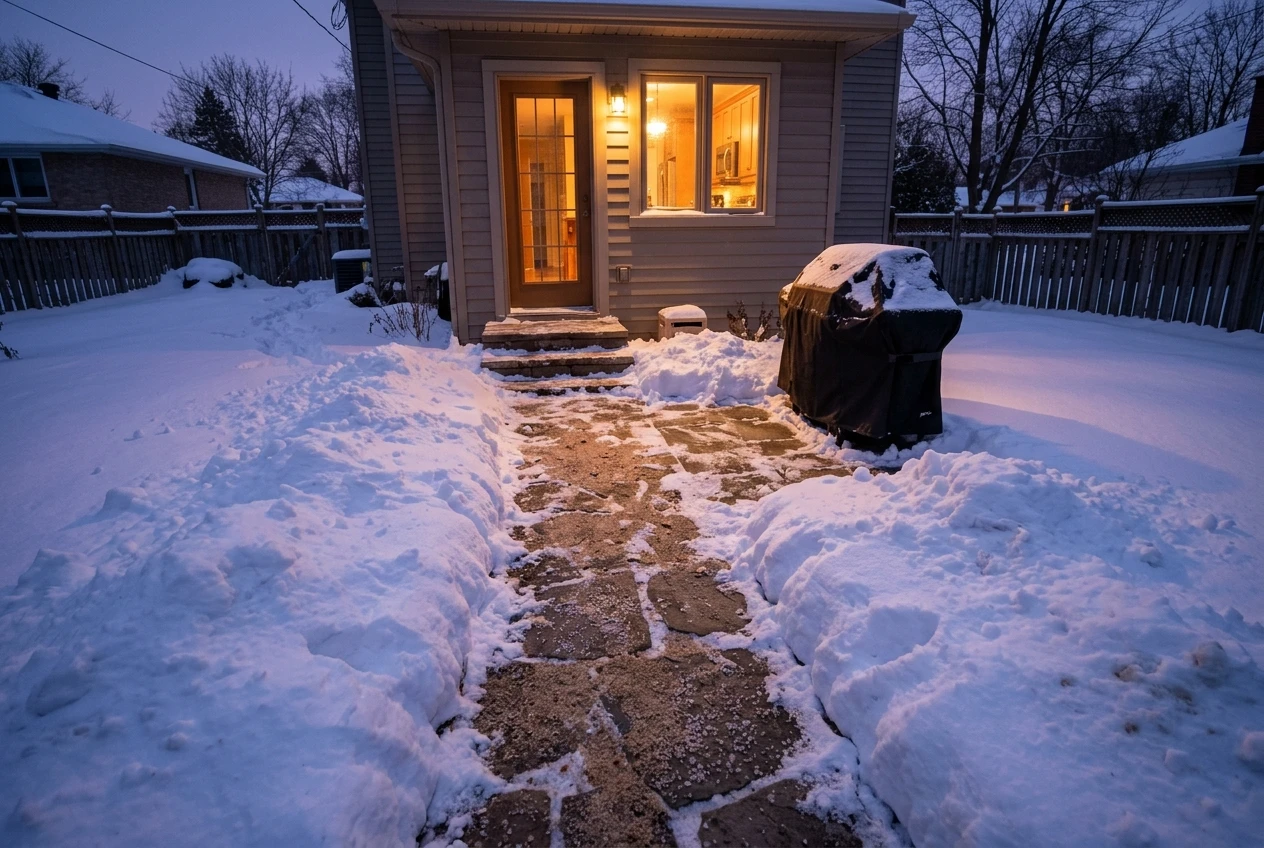
Shovel the route from the door to the grill and the ground around it. Put down ice melt or sand where you will be standing. Carrying a tray of raw or hot food over ice is where most people fall, so make sure the whole route is clear before you light anything.
Dress for the heat and the cold
Wear warm layers, but avoid loose sleeves, dangling scarves, or drawstrings that could drift over a burner or hot grate. Wear gloves that cover your wrists, and use long-handled tools to keep your hands away from the flame.
Keep the grill outdoors and away from the house
Carbon monoxide builds up in enclosed spaces, and gas and charcoal grills produce it. Never use a grill in a garage, tent, or any enclosed area, even with the door open. Keep it several feet from walls, railings, eaves, and anything flammable. A common recommendation is at least 10 feet from the house.
Watch the grill while it’s lit
It is tempting to walk away from a grill in the cold and go inside, but grease fires start quickly. Stay nearby while the grill is lit, keep the lid closed except when needed, and have a way to shut off the gas or close the vents if flames flare up.
Clean up before the next cook
Let the grill cool, then scrape the grates and empty the grease tray. Built-up grease is a fire hazard in any season. Snow and ice can also hide spilled grease and clog drain paths, so check the tray before you store the grill.
Winter Recipe Ideas and Pairings
Winter food suits the grill well. Hearty cuts and root vegetables cook well over a steady fire, and slow, rich dishes taste better when you are standing outside in the cold.
Vegetables that hold up
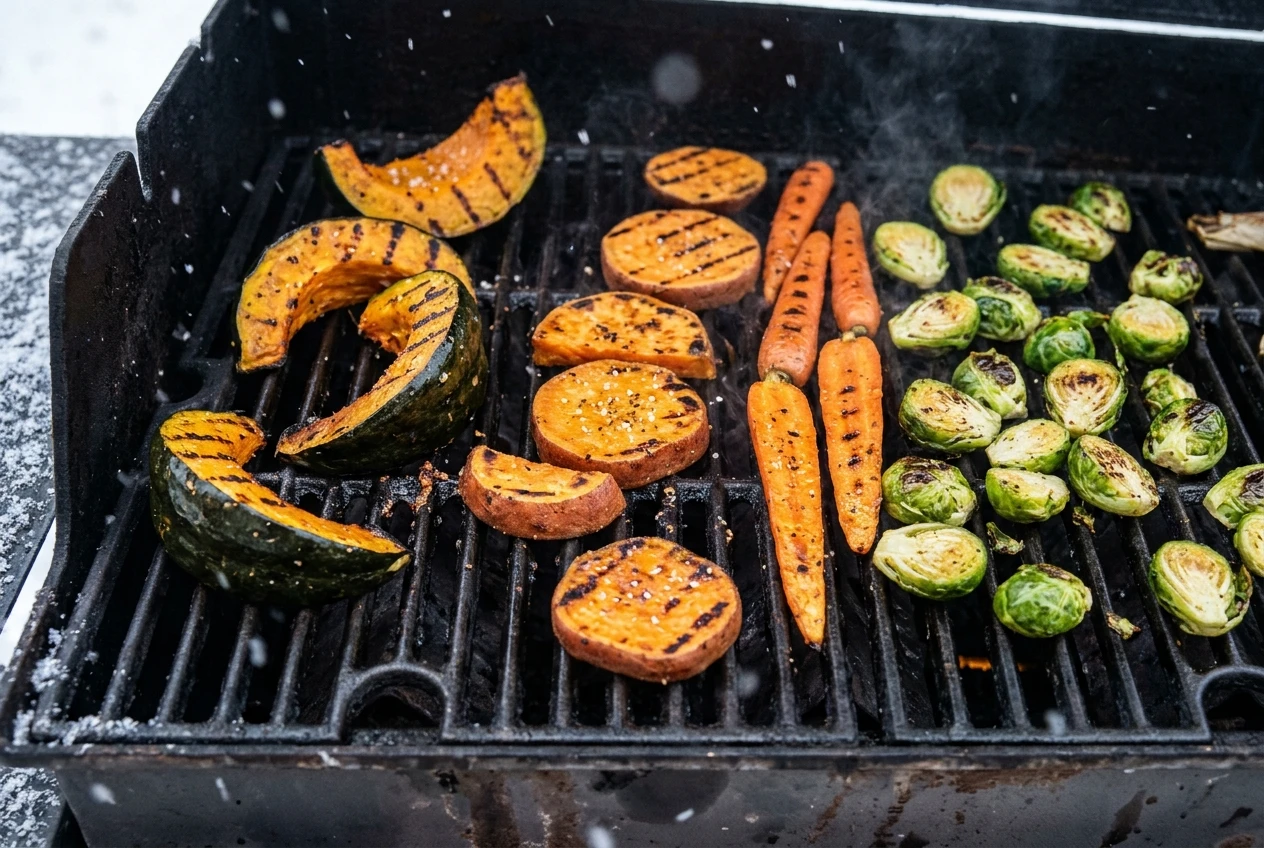
Brussels sprouts, carrots, parsnips, sweet potatoes, and winter squash all take well to the grill. Cut them into even pieces, toss them in oil and salt, and cook them on the cooler side of the grill until tender, then move them over direct heat for a last bit of char. Squash wedges and sweet potato slices are especially forgiving.
Meats that suit the cold
Thick cuts are good winter choices because they have time to take on smoke and a good crust. Thick pork chops work well with a sear followed by a gentler finish, and low and slow ribs make a good project for a day when you will be around the grill anyway. If you want a method to follow, the tender ribs recipe is a good place to start.
Rubs, glazes, and sauces
Cold weather suits bolder flavors. Smoked paprika, black pepper, garlic, and brown sugar make a warm rub. A bourbon glaze brushed on in the last few minutes adds a sticky, caramelized finish. Because sugar burns quickly, apply glazes near the end of the cook, when the food is almost at temperature.
Something warm to finish
Grilled pears or apples, cut in half and cooked cut-side down until browned, make an easy dessert, especially with a scoop of ice cream. Hot cocoa or mulled cider keeps everyone warm while the food rests. Keep drinks and the cooking area separate, and keep anything alcoholic away from the grill itself while you are working over an open flame.