

Weber and Traeger are the two names most weekend barbecuers end up comparing, and they solve different problems. Weber built its reputation on the charcoal kettle and its gas grills. Traeger built its on the wood pellet grill, which feeds small pellets of compressed hardwood into a fire so a controller can hold a set temperature. This comparison covers construction, performance, price and how to decide, so you can match a grill to the way you cook.
Where Each Brand Comes From
Weber introduced its kettle grill in 1952, and the round, lidded design is still the template for backyard charcoal cooking. The company now sells charcoal, gas and electric grills, and it has also made pellet models, so check the current lineup before you shop.
Traeger is tied to the pellet grill. Joe Traeger developed the design in the 1980s, and the company has built its range around it ever since. A Traeger works more like an outdoor oven that burns wood than like a fire you tend by hand.
That difference in origin explains most of what follows. Weber is built around fire you manage yourself, or the fast, familiar heat of propane. Traeger is built around a machine that manages the fire for you.
Grill Construction and Design
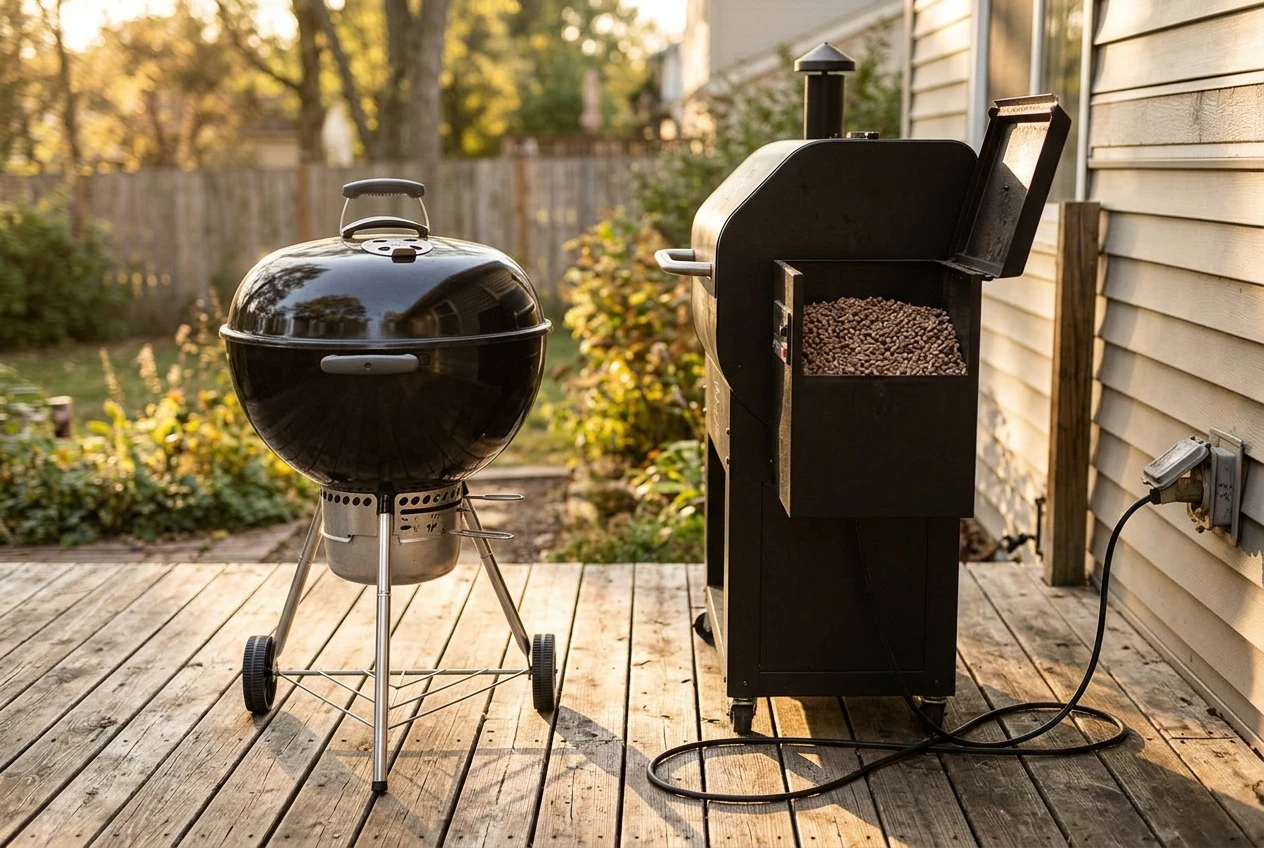
Weber’s charcoal kettles are simple: a steel bowl, a lid, vents and a cooking grate. Fewer parts means fewer things to fail, and nothing needs power. Its gas grills add burners, a propane tank, an ignition and usually side tables, but they are still mechanical at heart.
A Traeger has more systems. There is a hopper for pellets, an auger that moves them to the fire pot, a fan, an igniter and a digital controller. The grill needs an electrical outlet, and each of those parts is something that can need attention over the years.
Materials and Finish
Weber has long used porcelain-enameled lids and bowls on many models, a coating that resists rust and wipes clean. Traeger grills are generally painted or powder-coated steel. Either finish lasts longer with a cover and regular cleaning. Material details and grate types differ from model to model, so read the spec list for the exact grill you are considering instead of assuming a brand-wide answer.
Size, Portability and Setup
A small Weber kettle or portable gas grill fits a tiny patio and travels easily. Traeger makes compact tabletop pellet grills as well, but a full-size pellet grill is heavy, needs power, and needs somewhere to keep the pellets dry.
Assembly depends on the model. A kettle goes together quickly. Gas grills and pellet grills have more parts and take longer, so set aside an afternoon for either one.
Cleaning and Upkeep
Every grill needs its grates brushed and its grease cleared out. Charcoal grills add ash removal. Pellet grills need the fire pot and the grease path cleaned regularly, and the hopper needs emptying if the grill will sit unused, because pellets swell and crumble when they take on moisture. Gas grills need burner and grease tray checks. Plan on a short routine after each cook and a deeper clean every so often, whichever grill you pick.
Performance and Cooking Capabilities
What Weber Does Best
A Weber charcoal kettle sears well because charcoal can burn very hot. It also handles indirect cooking: pile the coals on one side, put the meat on the other, close the lid and adjust the vents. That setup works for chicken pieces, ribs and roasts, and you can add wood chunks for smoke flavor.
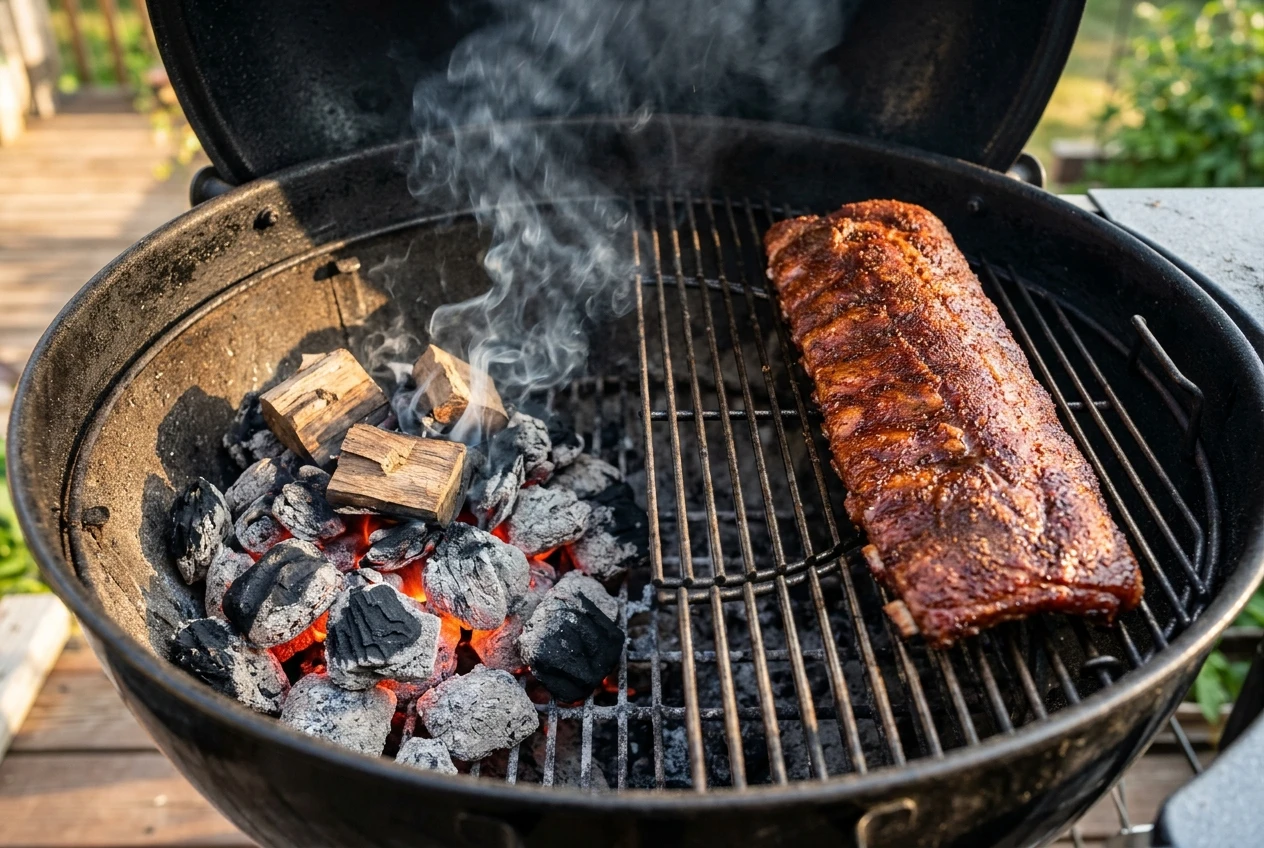
The trade-off is attention. You light the fire, watch the temperature and make small vent adjustments through the cook. If you enjoy that, it is part of the appeal. If you would rather watch the game, it is a chore.
Weber’s gas grills start quickly and give you a dial for heat, which suits weeknight burgers, sausages and vegetables. A gas grill is not limited to direct heat, either. Our guide to setting up a two-zone fire on your gas grill shows how to cook larger cuts without burning the outside.
What Traeger Does Best
A pellet grill excels at long, steady cooks. You set a temperature on the controller, and the grill feeds pellets and runs the fan to hold it. For brisket, pork shoulder, ribs and whole chickens, that means you can leave the grill alone for stretches that would be risky on a charcoal fire.
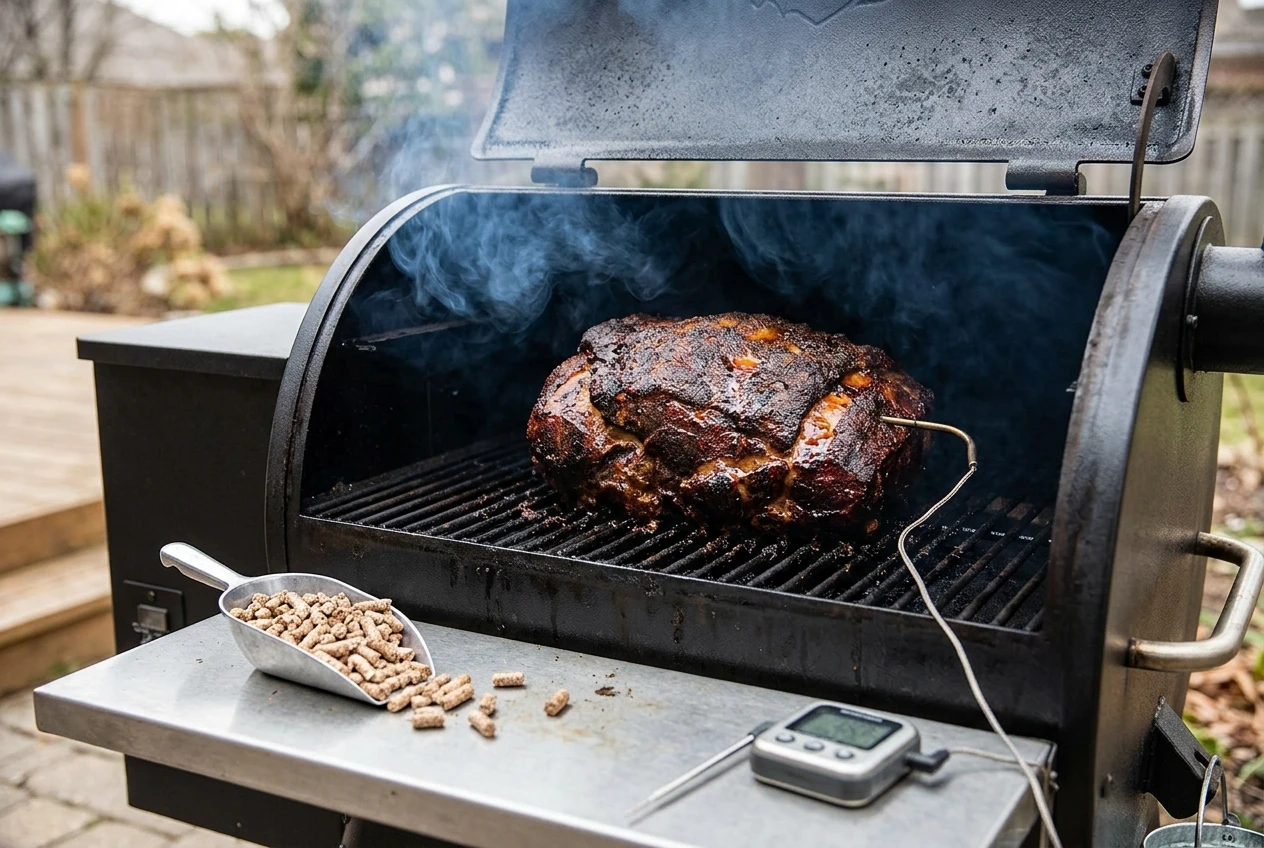
Smoke flavor comes from the wood pellets, and different woods give different results. Pellet grills generally run cooler than a charcoal fire at their top setting, so searing a steak is usually less dramatic than on a kettle. Many owners finish steaks on a separate hot surface, or use whatever searing feature the specific model offers.
Many pellet grills also bake and roast, so they can handle things like pizzas, casseroles and bread. The results depend on the model and the temperature it can reach.
How the Fuel Changes the Cook
-
Charcoal: strong grill flavor, high heat, most hands-on work.
-
Gas: fastest start, easiest control, lightest smoke character unless you add a smoker box.
-
Wood pellets: the most automatic smoking, with flavor set by the pellet type, and a lower ceiling for hard searing.
If you are still weighing fuel types in general, our comparison of a gas grill vs pellet smoker goes through how each one fits a typical weekend.
Durability and Warranty
Neither brand’s longevity can be judged from a brand name alone. Warranty terms differ by product line and by part, and they change over time. Before you buy, read the warranty on the exact model’s product page, and note what it covers on the firebox, the burners and the electronics, since those are the parts that wear out first.
Price, Value for Money and What to Check in Reviews
Price Ranges
Weber covers a wide range. A basic charcoal kettle is one of the least expensive ways to get a real grill, and its gas models climb from entry level to premium. Pellet grills carry electronics, a hopper and an auger, so Traeger models generally cost more than a basic kettle. Prices move with sales and model changes, so compare current listings instead of relying on a number from an article.
If a pellet grill is your direction, our roundup of the best pellet smokers under $1000 for weekend beginners shows what that budget buys.
What Value Looks Like
Value depends on what you will cook. A grill that sits in the garage because it is a hassle to light costs more per cook than a cheaper one you use every Saturday. Ask yourself:
-
Will you cook on weeknights, or mostly on weekends?
-
Do you want to smoke large cuts for hours?
-
How much work are you willing to do tending a fire?
-
Do you have an outdoor outlet and a dry spot for pellets?
Add the running costs to the purchase price. Charcoal, propane and pellets all cost money per cook, and the amounts vary by region and brand.
Reading Customer Reviews
Reviews are most useful when you read them for patterns instead of star counts. Look for repeated comments about temperature swings, parts that wore out, how long assembly took and how responsive customer support was. Check how recent the reviews are, because manufacturers change designs between model years. Reviews from people who cook the same way you do tell you the most.
Which One Fits You
Choose a Weber if:
-
you want a lower purchase price and a simple machine;
-
you like tending a fire and want strong searing;
-
you cook mostly quick meals like burgers, steaks and chicken, or you want gas for speed;
-
you have limited space and no outlet.
Choose a Traeger if:
-
you want to set a temperature and let the grill hold it;
-
long smoked cooks like brisket and pork shoulder are the goal;
-
you have the space and outlet a pellet grill needs;
-
you are willing to pay more for the automation.
Some weekend cooks end up owning both: a kettle or gas grill for fast, hot cooks and a pellet grill for low and slow. If you can only buy one, pick the style of cooking you plan to do most often and buy for that.
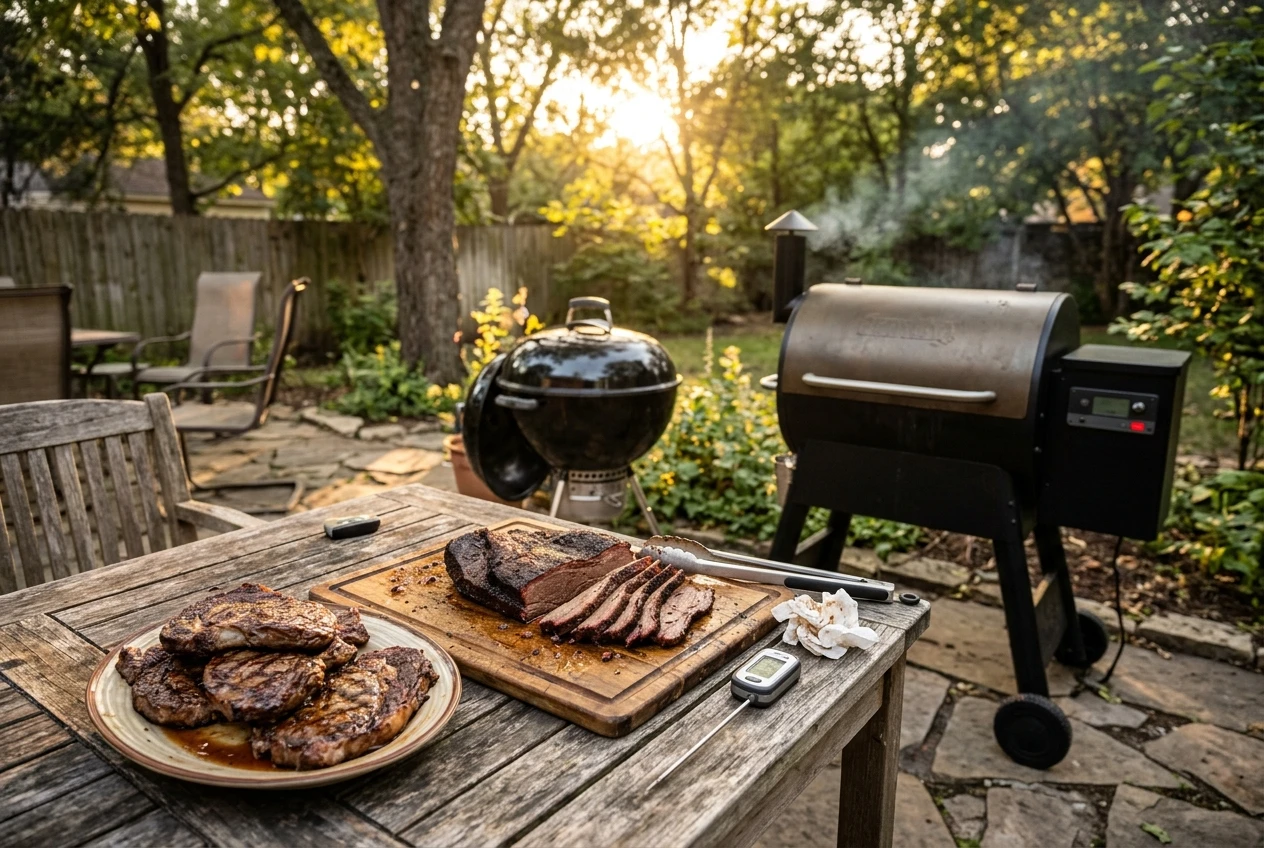
Whichever grill you pick, pair it with a good thermometer. Meat is done at a temperature, not at a time on the clock, and that holds for every grill discussed here.