

TL;DR
– Sauce style decides whether your meat tastes sweet, sharp, smoky or hot.
– This guide covers five regional sauce styles worth keeping in your rotation.
– Sweet tomato-based (Kansas City, Memphis) is the crowd-pleaser for ribs, pulled pork, chicken thighs and burgers.
– Each section covers what defines the style, what to cook it on, and how to make it your own.
BBQ sauce does more than finish a plate. It sets the flavor of the whole cookout, and the style you pick decides whether the meat tastes sweet, sharp, smoky or hot. Regional traditions across the American South produced very different sauces, and each one suits certain cuts and cooking methods better than others.
These are five sauce styles worth keeping in your rotation as a weekend griller. Each section covers what defines the style, what to cook it on, and how to make it your own.
1. Sweet Tomato-Based Sauce: The Crowd-Pleaser
This is the sauce most people picture when they hear “BBQ sauce.” Kansas City style is thick, sweet and tomato-heavy, usually built on tomato, vinegar, brown sugar or molasses, and a little smoke flavor. Memphis-style sauces are also tomato-based but tend to run thinner and tangier.
It works best on ribs, pulled pork, chicken thighs and burgers. The thickness lets it cling to the meat and build a sticky glaze. It is also good on grilled vegetables such as corn, onions and peppers, where the sugar caramelizes at the edges.
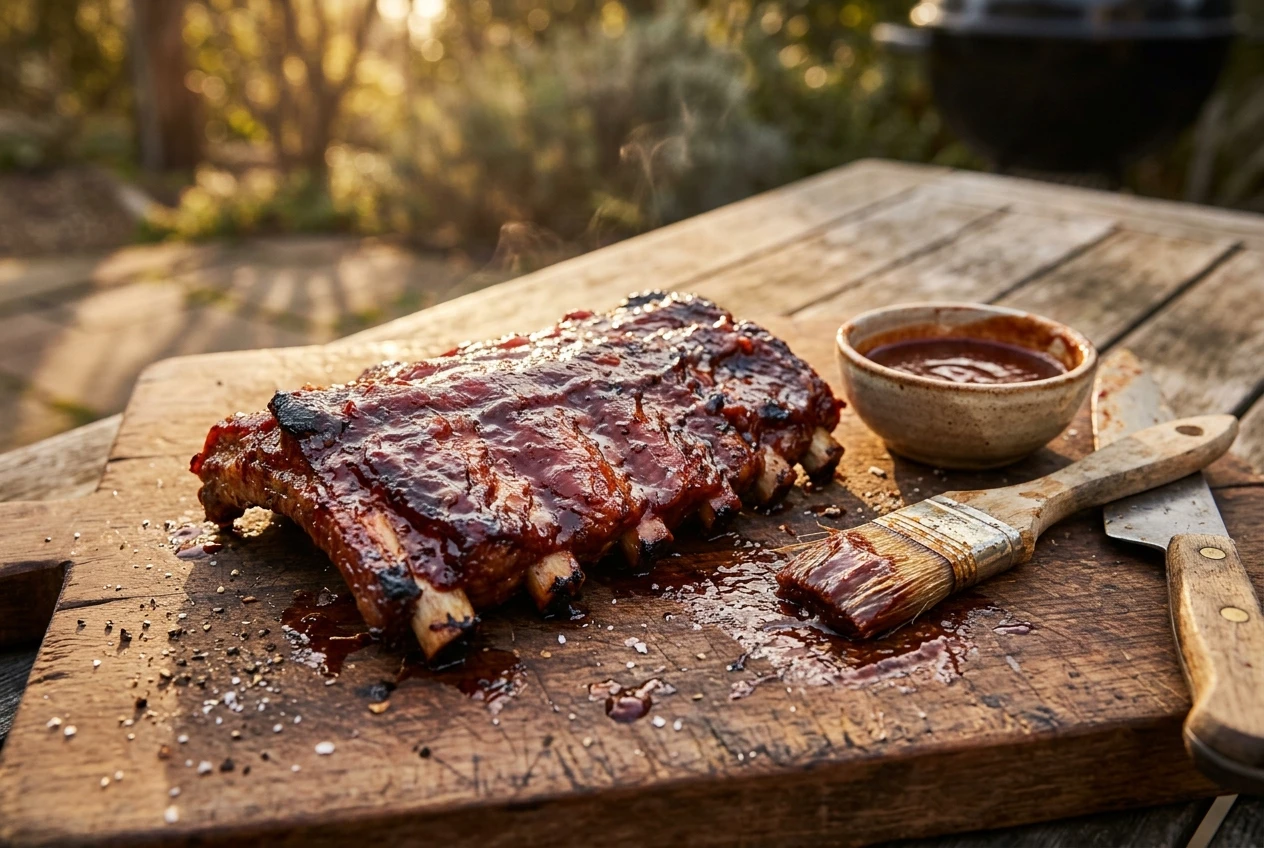
Plenty of store-bought options in this style are sold in most supermarkets, and Sweet Baby Ray’s and Stubb’s are two familiar names. Making your own is not hard. Simmer ketchup or tomato sauce with vinegar, brown sugar, mustard, garlic powder and smoked paprika for about 20 minutes, then taste and adjust. More vinegar makes it tangier, and more sugar makes it sweeter.
If ribs are on your list, the best tender ribs recipe is a good place to try a tomato-based sauce.
2. Carolina Vinegar Sauce: Thin, Sharp and Peppery
Eastern North Carolina sauce has no tomato at all. It is vinegar, red pepper flakes, salt, black pepper and often a small amount of sugar. It is thin enough to pour, and it is meant to soak into the meat instead of coating it.
The sharp acidity cuts through fatty cuts, which is why it is traditional on pulled pork. Mix it into shredded pork right after the meat comes off the grill, and put the bottle on the table so people can add more. It also works on pork shoulder, chicken and smoked sausage.
Because it has almost no sugar, it will not scorch over direct heat the way thick, sweet sauces do. That makes it easy to use as a mop or a finishing splash. A basic version takes five minutes: stir cider vinegar, crushed red pepper, salt, pepper and a spoonful of sugar together, then let it sit for an hour so the flavors blend.
3. South Carolina Mustard Sauce: Golden and Tangy
In parts of South Carolina, the local sauce is mustard-based, often called Carolina Gold. It combines yellow mustard, vinegar, sugar and spices into a bright, tangy sauce with a little sweetness behind it.
Pork is the classic partner, but the sauce is also good on grilled chicken, bratwurst and smoked sausage. The mustard flavor stands up to rich, fatty meats and keeps them from tasting heavy. Spread it on pulled pork sandwiches, or brush it on chicken during the last few minutes of grilling.
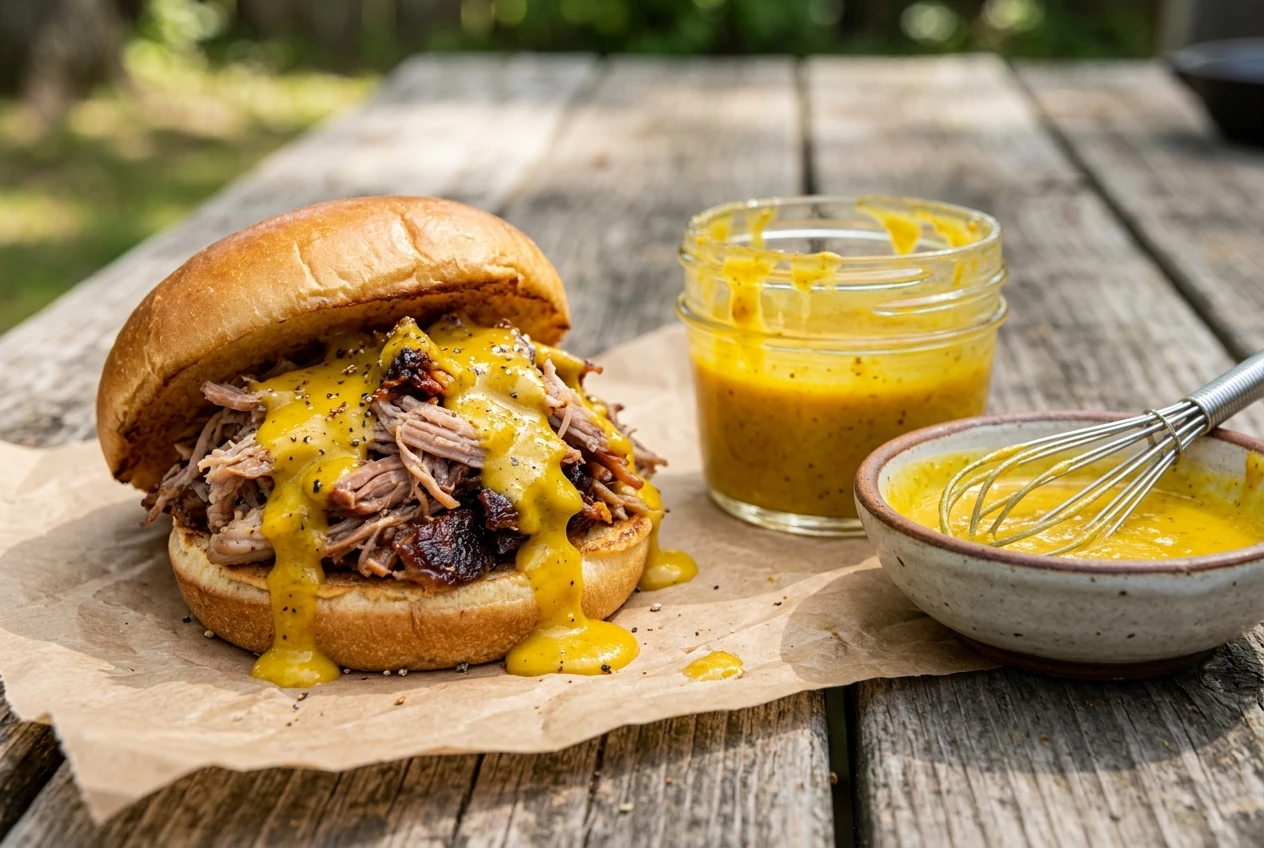
This is also an easy style to make at home with pantry staples. Whisk yellow mustard with cider vinegar, brown sugar or honey, a little hot sauce and black pepper. Simmer it briefly, then taste it. If it is too sharp, add sugar. If it is too sweet, add vinegar.
4. Alabama White Sauce: The Surprise on the Chicken
Alabama white sauce is mayonnaise-based, thinned with vinegar and seasoned with black pepper, and some versions add horseradish or lemon. It looks nothing like other BBQ sauces, and the first taste surprises many people. It is creamy, tangy and peppery, not sweet.
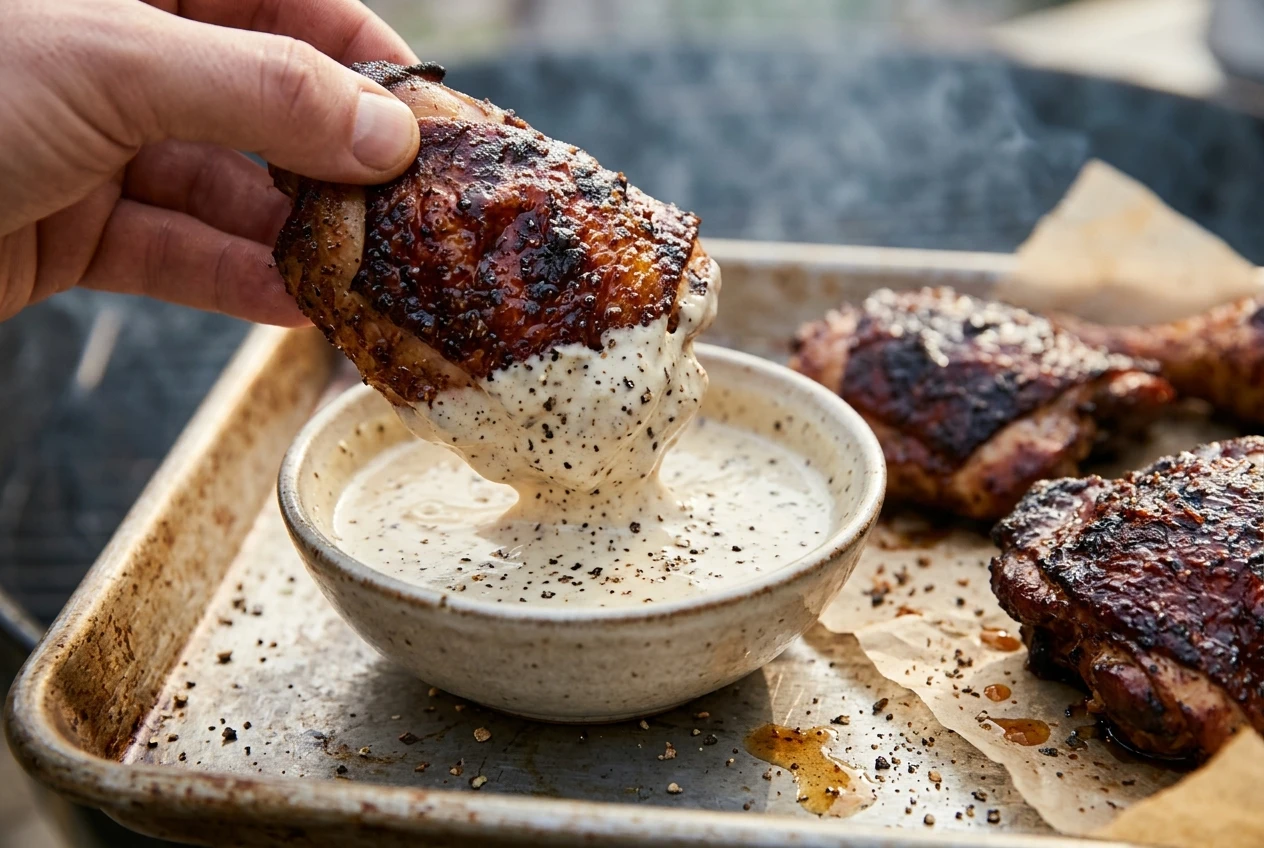
Chicken is the traditional match. Smoked or grilled chicken is often dipped in it or tossed in it after cooking, and the creamy tang balances the smoky skin. It also works on turkey, pork and as a dipping sauce for grilled potatoes.
Use it as a finishing sauce or a dip, not as a glaze on the grill. A mayonnaise-based sauce will break down and turn greasy over high heat, so add it once the meat is off the fire. Keep it refrigerated, and do not reuse any that has touched raw meat.
5. Spicy and Fruit-Forward Sauces: Heat and Sweetness Together
This category covers a wide range, from habanero-spiked sauces to fruit-based ones with pineapple, cherry or peach. Both approaches pair sweetness with something sharp or hot, and both are where home cooks tend to experiment most.
Building Heat
The pepper you choose sets the heat level. Jalapeños give mild heat, habaneros give much more, and ghost peppers are for people who want a serious burn. Each also has its own flavor: jalapeños are grassy, habaneros are fruity, and ghost peppers carry a slow, lingering heat.
Heat is easiest to manage when sweetness is built in. Honey, molasses or brown sugar softens the burn without removing it, so the sauce stays balanced instead of turning into a dare. Add peppers a little at a time, because the heat deepens as the sauce simmers and sits.
Cooking With Fruit
Fruit-based sauces suit lighter meats. Pineapple works well on chicken and pork, cherry on duck and pork, and peach on chicken and ribs. The natural acidity tenderizes slightly and brightens the flavor, and the sugars brown nicely at the end of cooking.
A splash of bourbon or whiskey adds a smoky, rich background note to a fruit or tomato sauce, and it pairs well with brisket and short ribs. Simmer the sauce long enough to cook off the harsh alcohol taste. Soy sauce, ginger and sesame oil can also turn a fruit sauce into an Asian-inspired glaze that suits pork and beef.
How to Apply Sauce Without Burning It
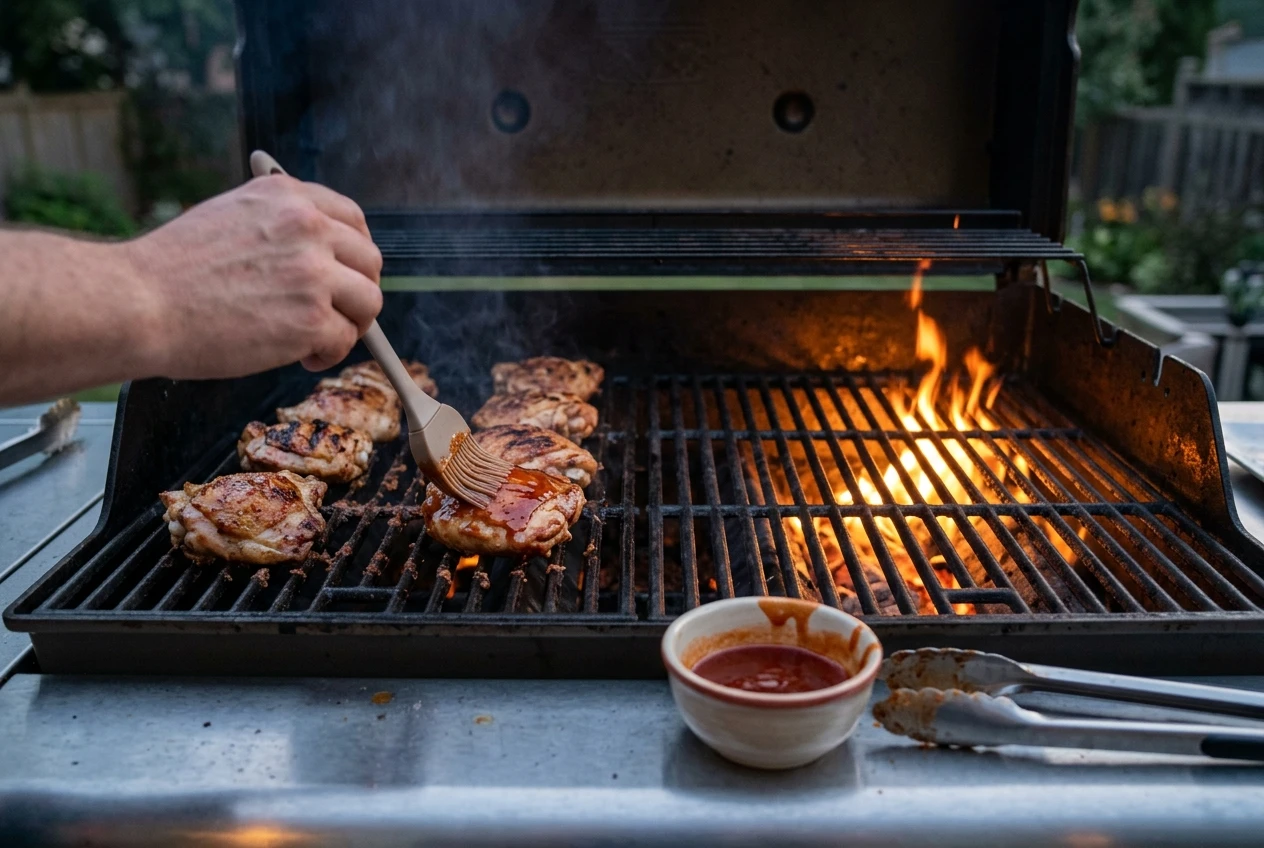
Most sauces with sugar in them burn easily. Brush them on at the start of a long cook and you will end up with a blackened, bitter crust. The fix is timing.
-
Cook the meat first. Let it come close to done before any sugary sauce touches it.
-
Add sauce in the last 10 to 15 minutes. Brush on a thin coat, let it set, then add a second coat if you want a thicker glaze.
-
Move to gentler heat. If your grill has a cooler side, finish saucing there. Setting up indirect heat grilling on a gas grill gives you a place to glaze without scorching.
-
Reserve sauce for serving. Pour out some sauce into a separate bowl before you start brushing. Do not dip a brush that has touched raw meat back into the main bottle.
-
Keep thin and creamy sauces for the end. Vinegar mops, mustard sauces and white sauces are best used as finishers or dips.
Choosing Your Starting Point
If you only buy one bottle, a sweet tomato-based sauce is the safest choice for a mixed crowd. If you cook a lot of pork shoulder, add a vinegar or mustard sauce. If chicken is your regular, try the Alabama white sauce at least once.
Taste a sauce on its own before you use it, so you know whether it is sweet, tangy or hot. Then match it to the meat: rich, fatty cuts want acidity, lean cuts want sweetness or moisture, and anything cooked over high heat should be sauced late. Once you know which of these five styles you like, you can start adjusting recipes to suit your own cookouts.