

TL;DR
– Buy a whole packer if you want both the lean flat and the richer point. A flat on its own dries out more easily.
– Look for good marbling, an even fat cap and a cut that bends easily when you lift it.
– Season it, then hold the smoker at a steady temperature the whole cook.
– Cook until it is tender, not until a timer rings, and leave room for it to run long.
– Let the meat rest before you slice.
A good brisket comes down to a few decisions made in order: which cut you buy, how you season it, how steadily you hold the smoker’s temperature, and how long you let the meat rest. Each one is easy to get right once you know what it does. This guide covers all of them for weekend barbecuers who want a tender, juicy brisket without guesswork.
Plan for a long day. A brisket cooks until it is tender, not until a timer rings, so start early and leave room in the schedule for it to run long.
Choosing the Right Brisket
A whole brisket, often sold as a “packer” cut, is made of two muscles: the flat and the point. The flat is the leaner, more uniform side, and it slices into neat, even pieces. The point sits on top of it, carries more fat, and is the richer, more forgiving part of the cook. If you want both, buy the whole packer. If you only want clean slices, a flat on its own will do, but it has less fat to protect it and dries out more easily.
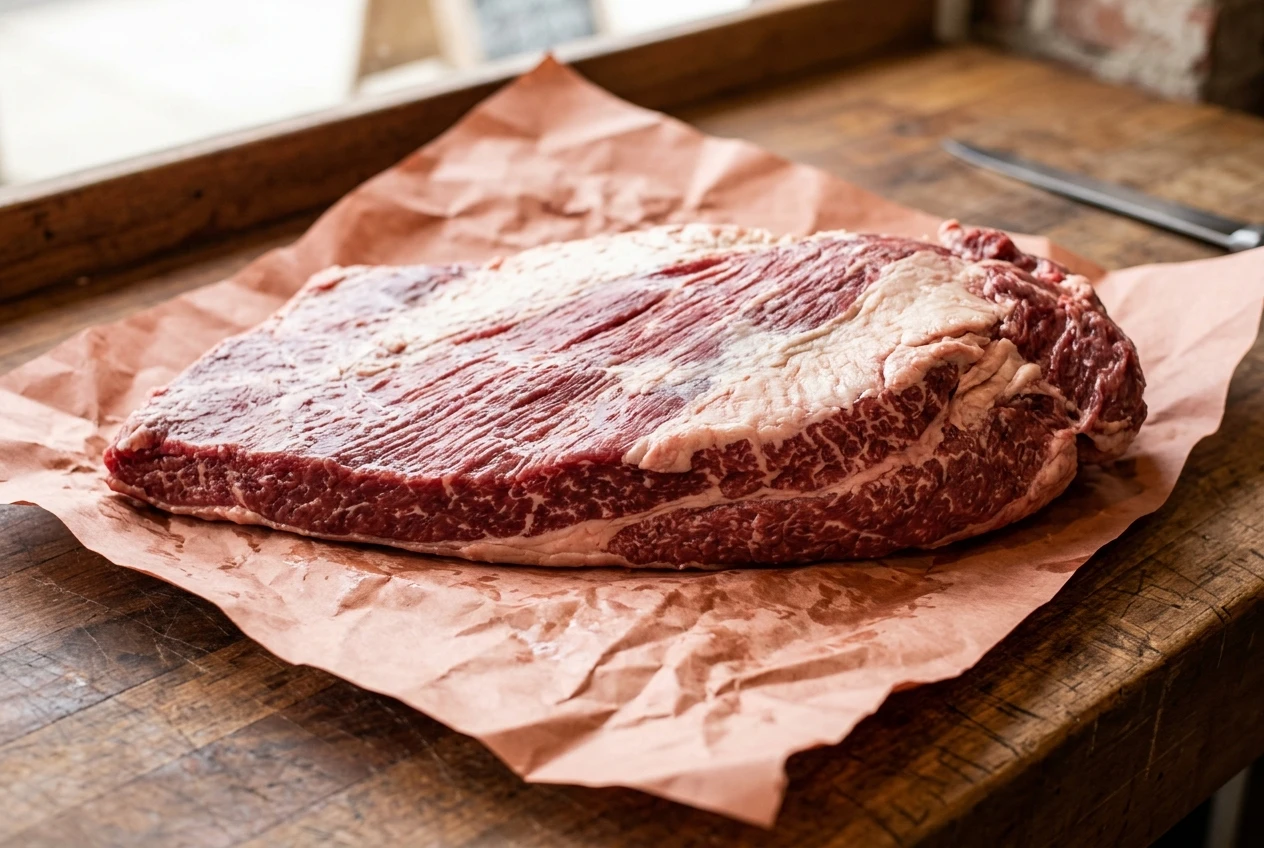
What to look for at the counter
-
Marbling: These are the thin streaks of fat running through the meat. More marbling means more flavor and a moister result after a long cook. Grades such as Choice and Prime usually indicate more marbling than Select.
-
Fat cap: A layer of fat on one side should be present and fairly even. You will trim it down before cooking, so you want enough to work with.
-
Flexibility: Pick the brisket up from the middle. A cut that bends easily is generally more tender than one that stays stiff.
-
Size: Many whole briskets weigh somewhere between 10 and 16 pounds. A mid-sized one is easier to fit on a backyard smoker and easier to manage over a long cook.
Where to buy and what to ask
A butcher counter or a local meat supplier will usually give you better choices than a pre-packed cut on a shelf, and you can ask for a specific weight or a brisket with a thicker flat. Ask what grade the meat is, when it came in, and whether they can trim it for you. Grass-fed and organic briskets exist, but they are often leaner, so check the marbling before you pay extra for the label.
Price tracks quality. A well-marbled whole packer costs more than a lean flat, and the difference shows up in the finished meat. If the budget is tight, a smaller cut or a sale price on a decent grade makes more sense than a large cut of poor quality.
Trimming and Seasoning Your Brisket
Start by trimming the fat cap down to about a quarter inch. That is enough to baste the meat as it cooks, and thin enough that the seasoning and smoke can reach the surface. Also remove any hard, waxy pieces of fat and any silver skin you can get a knife under.
Pat the brisket dry with paper towels before you season it. A dry surface holds the rub better and forms a better crust, known as bark, during the cook.
Building a rub
A simple rub works well on a cut this large. Coarse salt and coarse black pepper are the traditional base, and many cooks stop there. If you want more, add paprika for color, garlic powder, and onion powder. A little brown sugar adds sweetness, but it can darken too much over many hours, so use a light hand.
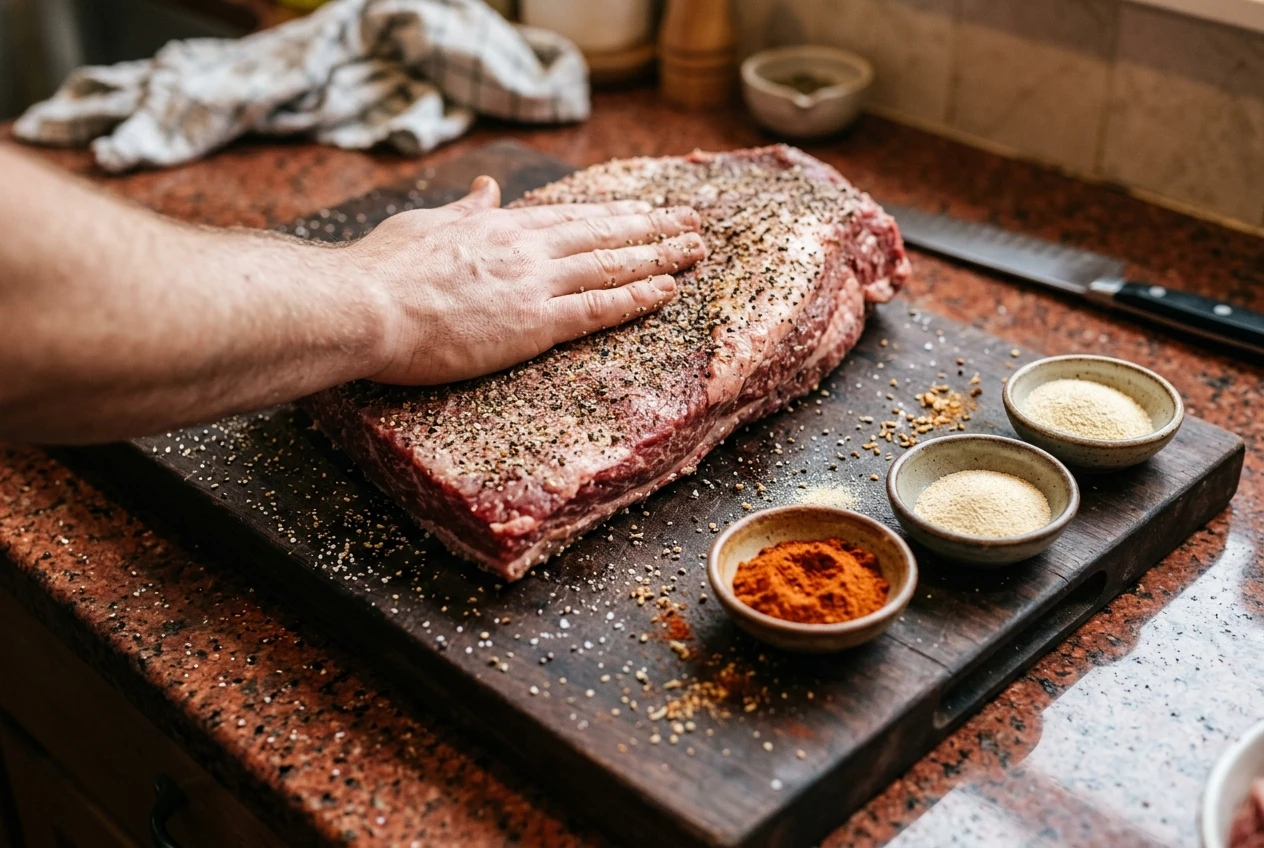
Cover every side, including the edges, and press the rub in with your hands so it stays on when you move the meat. You can season right before cooking, or season the night before and leave the brisket uncovered in the fridge. Salt has more time to work into the meat that way, and the surface dries out a little more, which helps the bark.
Marinades and injections
A marinade can add flavor, though it will not penetrate deep into a thick cut. If you use one, olive oil, vinegar or citrus juice, and spices are a workable mix. Keep the brisket refrigerated at 40°F or below the whole time, and pat it dry again before it goes on the smoker.
Smoking the Brisket Low and Slow
Hold the smoker between 225°F and 250°F. At that range, the tough connective tissue in the brisket has time to break down into gelatin, which is what makes the meat tender and moist. Cooking much hotter shortens the time but tends to give you a drier, chewier result.
Steady heat matters more than hitting an exact number. Set up the smoker, let the temperature settle, and then put the meat on. Avoid opening the lid more than you need to, because each time you do, heat escapes and the temperature takes time to recover.
If you are using a gas grill as a smoker, the fire layout is what makes this possible. The guide on indirect heat grilling on a gas grill explains how to set up one hot side and one cool side so the brisket cooks away from the flame.
Picking your wood
Wood sets the flavor of the smoke. Hickory gives a strong, classic barbecue taste. Oak is a little milder and is a common choice for brisket. Cherry and apple are lighter and sweeter, and they add color to the bark. A common approach is to use a main wood like oak or hickory and mix in a fruitwood for sweetness.
Use enough wood for steady smoke early in the cook. Meat takes on most of its smoke flavor in the first few hours, and too much smoke later can leave a bitter taste.
Watching temperature
Use two thermometers: one to track the temperature inside the smoker at the level of the meat, and one probe in the brisket itself. The built-in lid thermometer on many smokers can read off by a good margin. If you need help choosing one, the article on the best meat thermometer for grilling covers the options by how you cook.
Place the probe in the thickest part of the flat, away from fat pockets and bone-free areas that read differently. The brisket is typically ready somewhere around 195°F to 205°F, but the real test is feel. Slide the probe in: it should go in with almost no resistance, like pushing into soft butter. If it still grabs, give it more time and check again in 30 minutes.
The stall and wrapping
At some point, usually when the internal temperature is in the 150°F to 170°F range, the reading stops climbing for a long stretch. This is the stall. Moisture is evaporating from the surface of the meat and cooling it, much as sweat cools skin. It is normal, and it passes on its own.
You can wait it out, which gives you the firmest bark. Or you can wrap the brisket in foil or butcher paper once the bark has set and the color is a deep mahogany. Wrapping holds in moisture and moves the cook along faster. Foil traps the most steam and softens the bark. Butcher paper lets some steam escape, so the bark stays firmer.
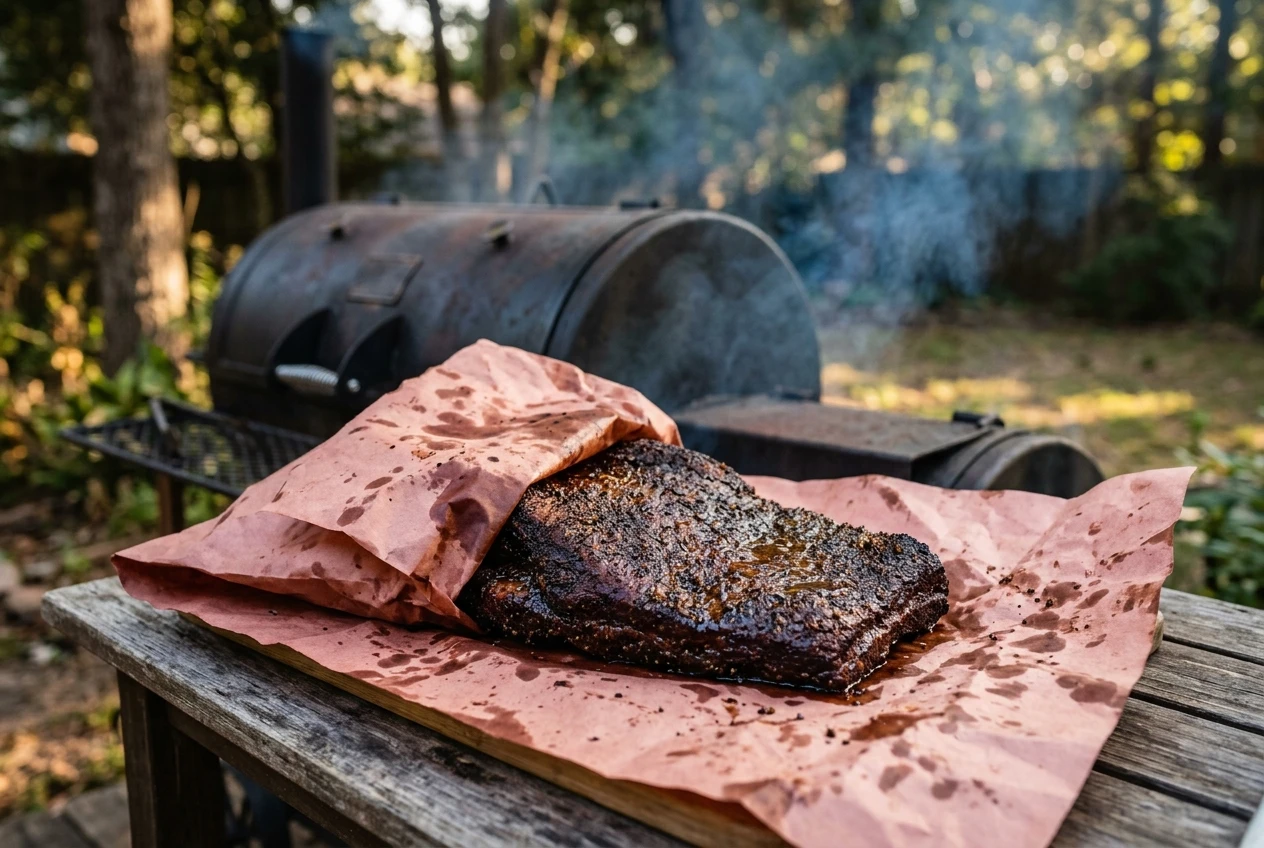
Spritzing
If you leave the brisket unwrapped, a light spritz every hour or so helps keep the surface from drying out. Apple juice, apple cider vinegar, or plain water in a spray bottle all work. Spray lightly and close the lid quickly.
Resting the Brisket
Resting is the step most beginners skip, and it makes a clear difference. When the brisket comes off the smoker, the juices are still moving around inside the meat. If you cut it right away, much of that liquid runs onto the board.
Keep the brisket wrapped, or wrap it now if you have not already, and place it in an empty cooler or a warm oven turned off. Towels around it help hold the heat. Let it rest for at least one hour, and up to two if your timing allows. The temperature settles, the juices redistribute, and the meat becomes easier to slice.
Slicing and Serving
Use a long, sharp slicing knife. Look at the direction of the muscle fibers in the flat, then cut across them, not along them. Cutting against the grain shortens the fibers, so each slice is more tender when you chew.
The grain in the point runs in a different direction from the flat, so separate the two and slice each on its own. Slices about the thickness of a pencil are a good starting point. A slice should hold together when lifted but bend and pull apart with little effort.
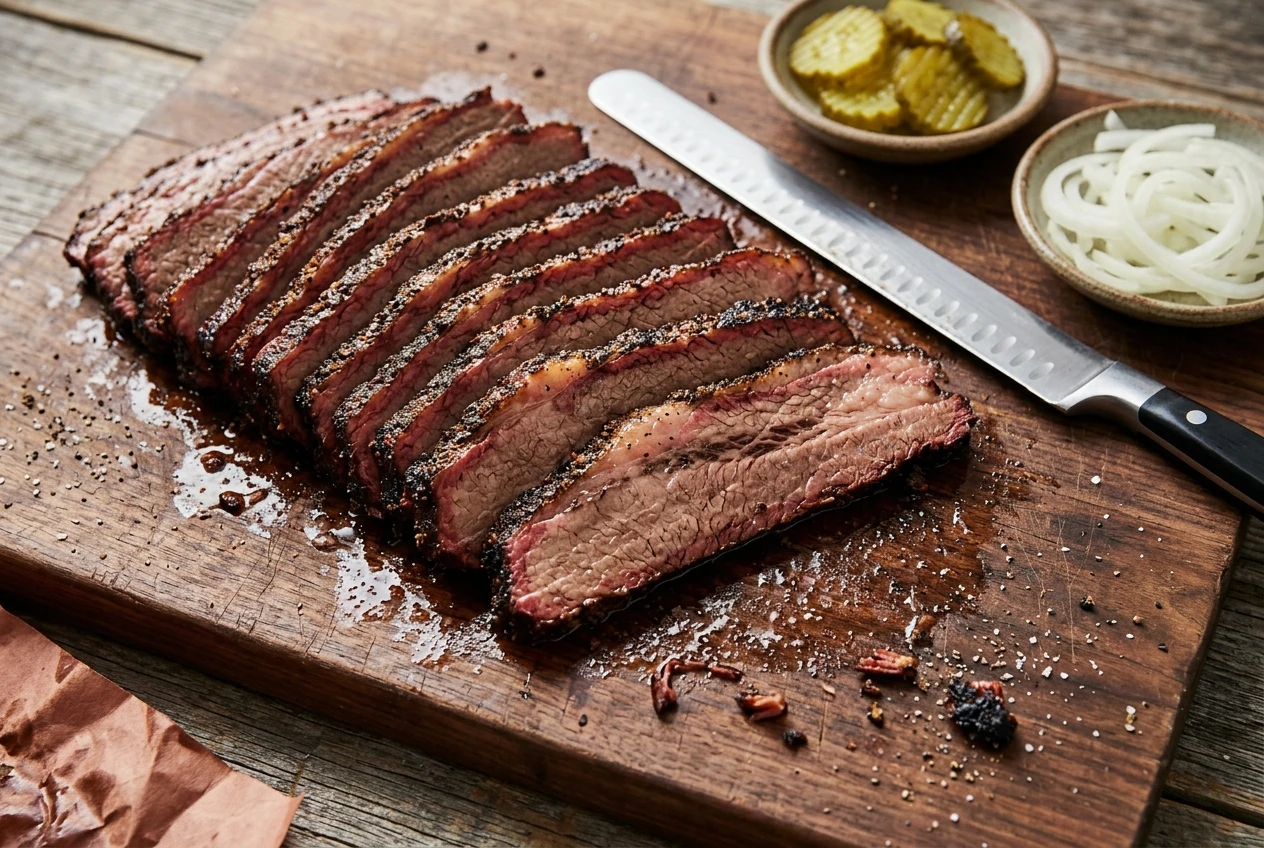
Serving ideas
Lay the slices on a board or platter, slightly overlapping. Keep the juices from the board and spoon a little over the top. Brisket pairs well with classic sides:
-
Creamy coleslaw for a cool, crisp contrast
-
Baked beans with a smoky, sweet flavor
-
Pickles and sliced onions for acidity that cuts through the fat
-
White bread or buns for sandwiches
-
A barbecue sauce served on the side so guests can choose
Storing leftovers
Refrigerate leftovers within two hours of slicing. Wrap them tightly in foil or store them in an airtight container. Brisket keeps in the fridge for three to four days.
When you reheat, do it gently. Add a splash of beef broth or a little sauce, cover the dish, and warm it in a low oven until hot throughout. Heating it uncovered or at high heat dries the slices out quickly.