
The Ninja smoker-grills are electric outdoor cookers built to grill, smoke, roast and bake in one unit. You pick a mode, set a temperature and the unit holds it. A traditional grill, whether charcoal, gas or electric, is built around direct heat that you manage yourself. Both can feed a backyard full of people, but they suit different cooks, different weekends and different budgets.
This guide compares them on flavor, versatility, cost, convenience and space, so you can match one to the way you actually cook. Features vary by model, so check the product listing for the specific unit you are looking at before you buy.
How the Two Cook Differently
A Ninja smoker works in a controlled environment. Heat comes from an electric element, a thermostat keeps the temperature steady, and wood pellets or similar fuel supply the smoke. Because the temperature stays where you set it, you spend less time adjusting vents or burners.
A traditional grill puts food over a live heat source. A charcoal grill burns briquettes or lump charcoal, a gas grill burns propane or natural gas, and an electric grill uses a heating element. You control the heat by moving food between hot and cooler spots, opening or closing vents, or turning knobs.
That difference shapes everything else. The smoker rewards patience and a set-and-check routine. The grill rewards attention and a hot surface.
Ease of use
Setup on an electric smoker is mostly plugging it in, choosing a cooking mode and loading the fuel it calls for. Preset temperatures help beginners get consistent results on the first try.
Traditional grills ask more of you at the start:
-
Charcoal: you light the coals, wait for them to ash over and arrange them for the heat zone you want.
-
Gas: you connect and check a propane tank, then preheat and adjust burners as you cook.
-
Electric: you plug in and preheat, which is the simplest of the three, though the heat is usually less intense than charcoal or gas.
Cleanup also differs. Ash from charcoal needs to cool before you dispose of it, and gas grills need their grease trays emptied. Electric smokers still collect drippings and ash or pellet residue, so plan on wiping and emptying them after a cook. Removable parts make this easier, but whether they are dishwasher safe depends on the model.
Flavor and Cooking Quality
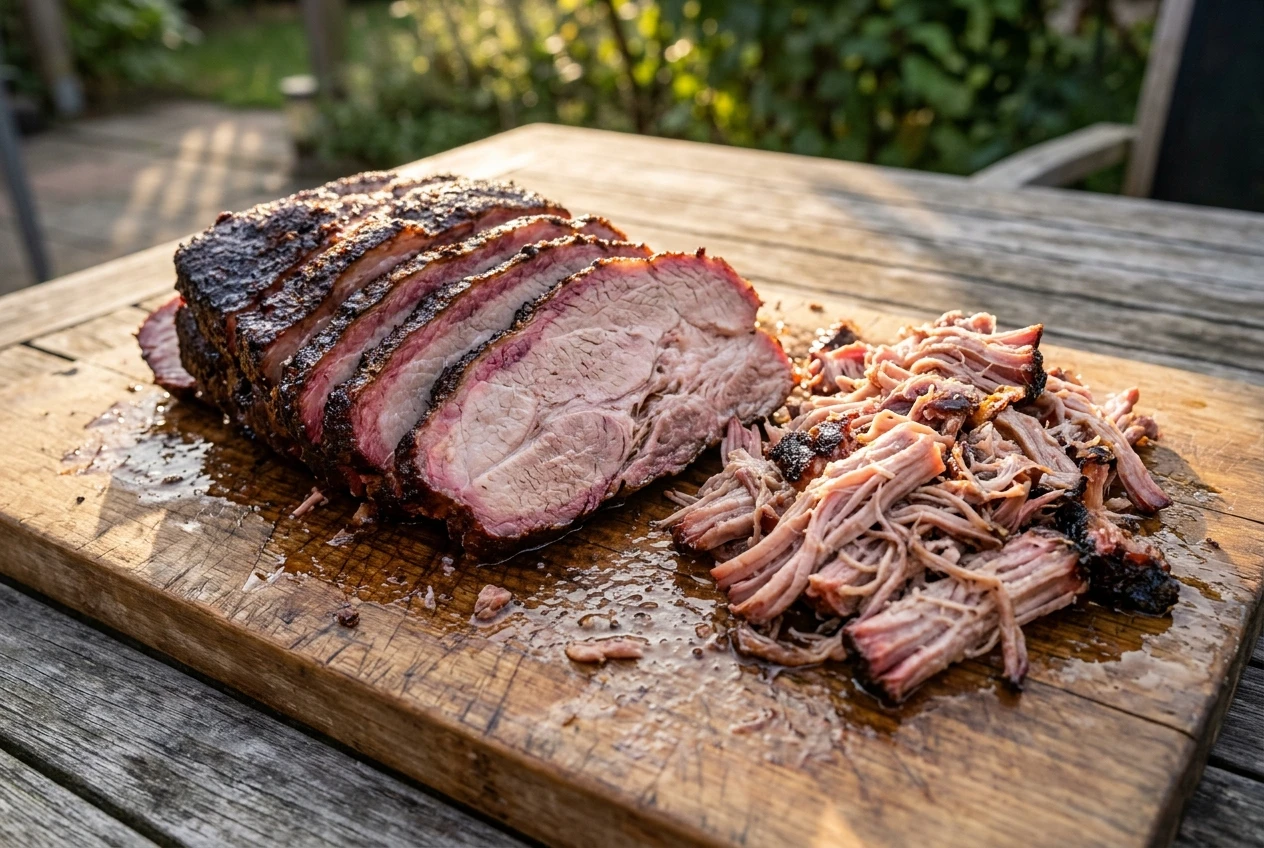
Smoke flavor is the biggest reason to choose a smoker. At low temperatures, meat spends hours exposed to wood smoke, and the flavor goes deeper than a quick grill session can produce. Cuts with plenty of connective tissue, such as brisket, pork shoulder and ribs, break down slowly in that environment and come out tender.
If tender ribs are your goal, our guide on how to cook tender ribs is not the right fit, but our comparison of gas grills and pellet smokers covers how fuel and heat type change results. Read it alongside this one if you are weighing a third option.
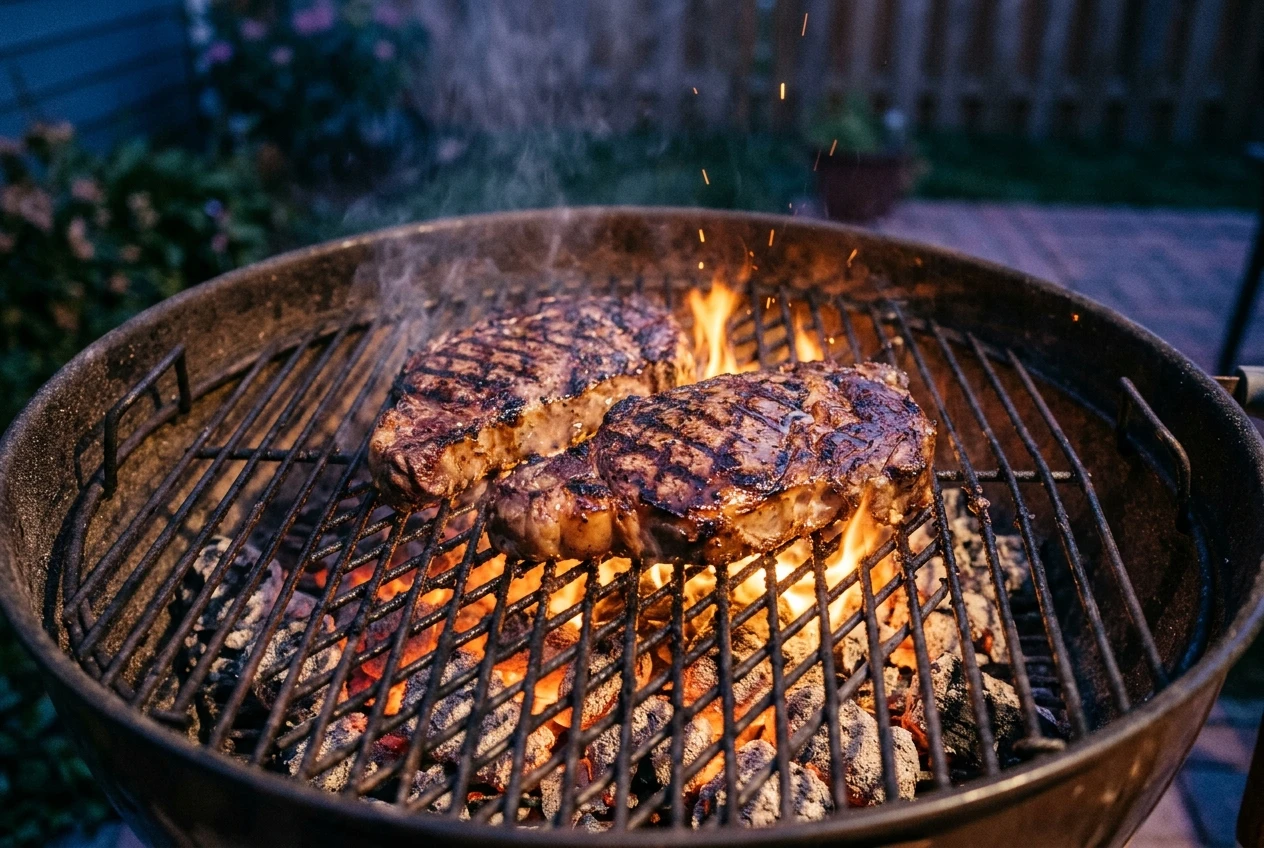
Grilling gives you a different result. High direct heat browns the surface of the food, which builds the crust and char that people associate with a steak or a burger. Charcoal adds a smoky edge, and gas gives you a cleaner heat with fast control.
Here is how common foods tend to land:
|
Food |
Better suited to |
|---|---|
|
Brisket, pork shoulder, ribs |
Smoker |
|
Steaks, burgers, sausages |
Grill |
|
Whole chicken |
Either, depending on the skin and smoke you want |
|
Vegetables |
Either |
|
Fish fillets |
Either, with care on the grill so they do not stick |
Time and flavor
Slow cooking is part of the flavor. A long cook gives fat and collagen time to render, which makes the meat juicier and softer. A grill finishes in minutes, which suits weeknight dinners when you want a good sear without planning ahead.
Versatility and Cooking Options
Ninja’s electric models are multi-function cookers. Depending on the model, modes can include grill, smoke, roast, bake, broil, dehydrate and air fry. That range lets one appliance cover a brisket on Saturday and roasted vegetables or baked sides on Sunday. Check the listing for the exact modes on the model you are considering, because they are not identical across the lineup.
Traditional grills are more flexible than people expect. You can cook foil-wrapped potatoes, pizza on a stone, corn in the husk, skewers and fruit on them. A charcoal grill set up for indirect heat can even handle a modest low and slow cook. Our guide to setting up a two-zone fire on a gas grill shows how a standard gas grill can handle larger cuts without burning them.
Cooking for different diets
Both approaches work for vegetarian and vegan meals. Portobello mushrooms, cauliflower steaks, peppers and onions take smoke well, and the same foods char nicely on a hot grill. If you are cooking for a mixed group, either setup lets you cook plant-based food alongside meat, though it is smart to keep them on separate areas of the cooking surface.
Controls and technology
Electric smokers lean on digital controls and timers. Some models connect to an app so you can monitor the cook from your phone, but that is not a feature of every unit, so verify before you assume it. Traditional grills mostly rely on dials, vents and your own judgment. Plenty of cooks like that hands-on control, and it costs nothing to learn.
Whichever you choose, a meat thermometer does more for your results than any extra feature. Doneness is about internal temperature, not cooking time.
Cost, Convenience, and Suitability
Upfront price is the first thing most buyers compare. Multi-function electric smokers generally cost more than a basic charcoal kettle or a simple gas grill, though prices vary widely by model and retailer, so compare current listings rather than relying on a general rule. A fair way to judge value is to count how many jobs the cooker replaces. If a smoker takes over duties from your oven or another appliance, the extra cost buys more.
Ongoing costs differ too:
-
Electric smoker: electricity plus whatever wood fuel the unit uses for smoke.
-
Charcoal grill: a steady supply of briquettes or lump charcoal, plus lighter fluid or a chimney starter.
-
Gas grill: propane refills or a natural gas line.
-
Accessories: covers, tools, thermometers and cleaning supplies apply to all of them.
If you are leaning toward a pellet-fueled option and have a budget in mind, our roundup of the best pellet smokers under $1000 gives you models to compare.
Space and storage
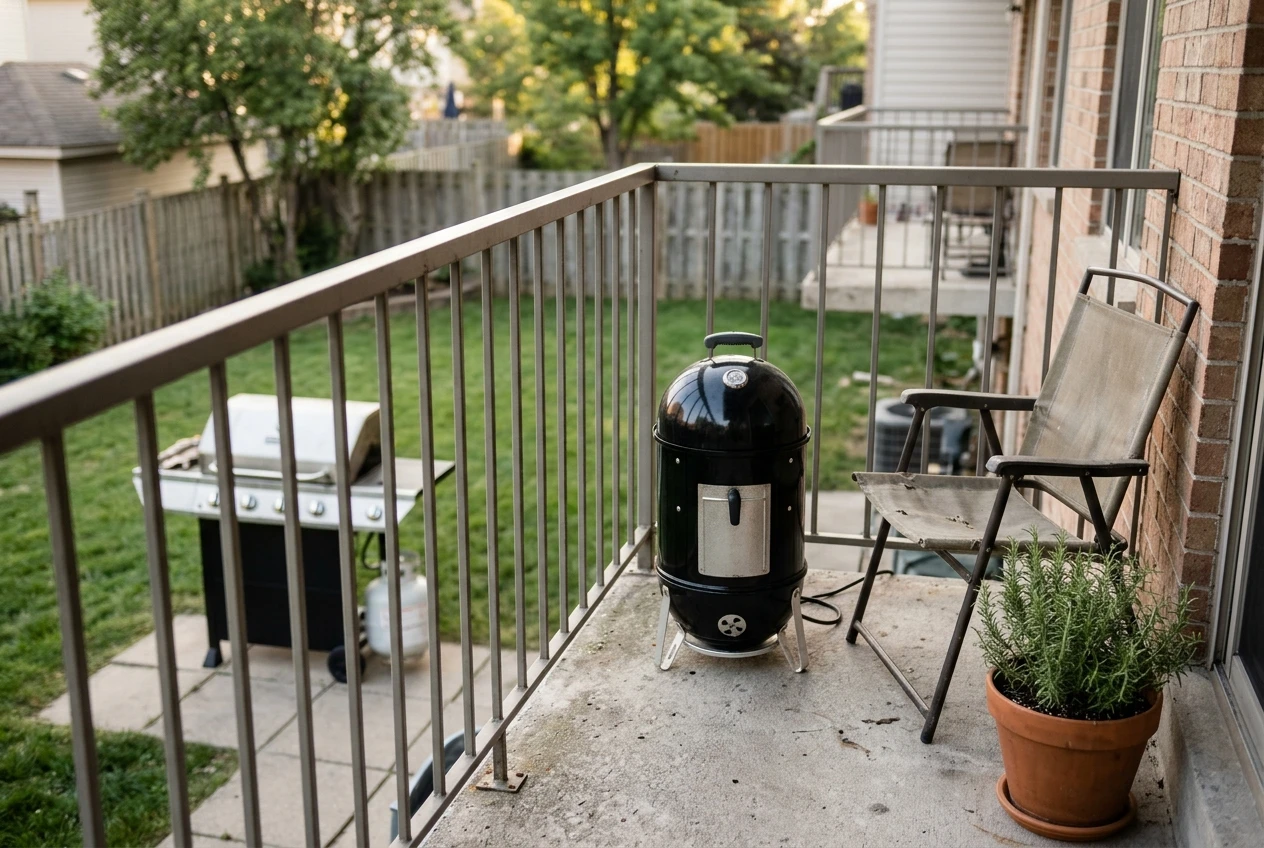
Space matters more than most buyers expect. A compact electric unit fits on a small patio or balcony, provided your building and local rules allow it. Large gas grills and charcoal drums need more room, and storing propane tanks or bags of charcoal takes space too. Measure your spot first, and leave clearance around any cooker according to the manufacturer’s instructions.
Power and rules
An electric smoker needs a nearby outlet, and extension cords are a poor substitute for a properly rated outdoor outlet. If you live in an apartment or a community with an HOA, check the rules on open flame, charcoal and propane. Those rules can decide the question for you before flavor or price comes into it.
Safety
Any outdoor cooker needs a level spot away from walls, railings and overhanging branches, and hot surfaces stay hot after you finish cooking. Keep children and pets back from all of them. Read the manual for the model you buy and follow its placement guidance.
Which One Fits Your Weekends?
Choose a Ninja-style electric smoker if:
-
You want steady temperatures with little babysitting.
-
You like long cooks such as brisket, ribs and pork shoulder.
-
You have limited space or want one appliance for several cooking methods.
-
You prefer preset modes and digital controls.
Choose a traditional grill if:
-
Searing steaks, burgers and chops is your main goal.
-
You like managing the fire yourself.
-
You cook quick meals for a crowd and want fast preheating.
-
You prefer a lower upfront cost and simple controls.
Plenty of weekend barbecuers end up with both, using the grill for fast dinners and the smoker for the long Saturday project. If you can only buy one, pick the cooker that matches what you cook most often, and be realistic about how much time you will spend at it.
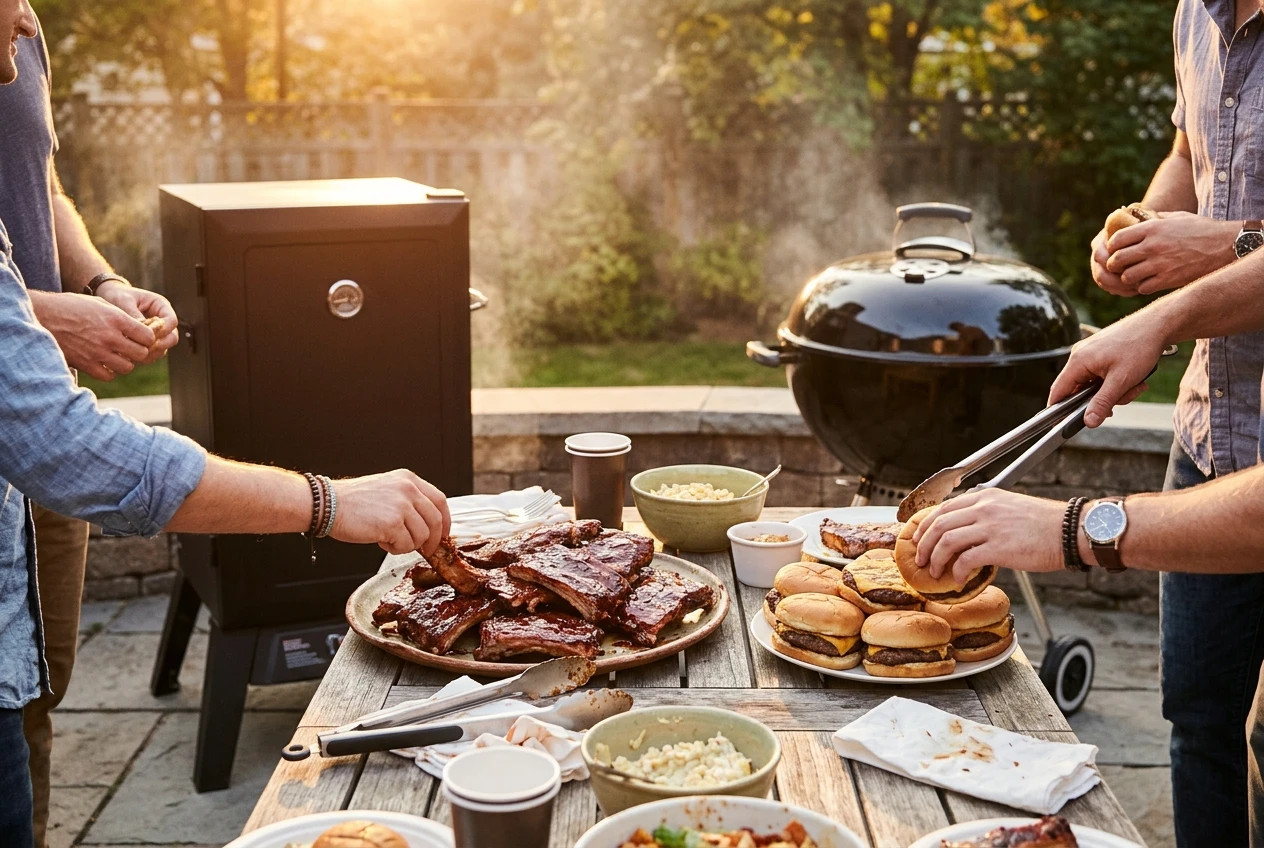
If you are still stuck between a gas grill and a pellet-style smoker, our comparison of gas grill vs pellet smoker walks through how each fits different weekend routines.