

Good barbecue results depend on two things: having the right equipment and keeping it in working order. This guide covers the gear a weekend setup needs, then the maintenance habits that keep a BBQ cooking evenly, safe to use and in service for years. The cleaning and storage advice applies to gas, charcoal and electric models, with notes where they differ.
The Essential Equipment for Your BBQ Setup
The grill itself
Gas, charcoal and electric grills each suit a different cook. Gas BBQs light quickly and hold a steady temperature, which suits weeknight cooking. Charcoal BBQs give a smokier flavour but take longer to heat and need more attention while you cook. Electric BBQs work well on balconies and small patios where open flame or gas cylinders are not allowed. If space is tight, the ideas in Outdoor Kitchen Design Ideas for Small Patios may help you plan the layout.
Fuel
Gas models need a propane tank, and it should be full before guests arrive. Charcoal models need a dry supply of good quality charcoal, because damp briquettes light poorly and burn unevenly. Electric models need a reliable outlet. If you use an extension cord, choose one rated for outdoor use and check it for damage before each session.
Utensils
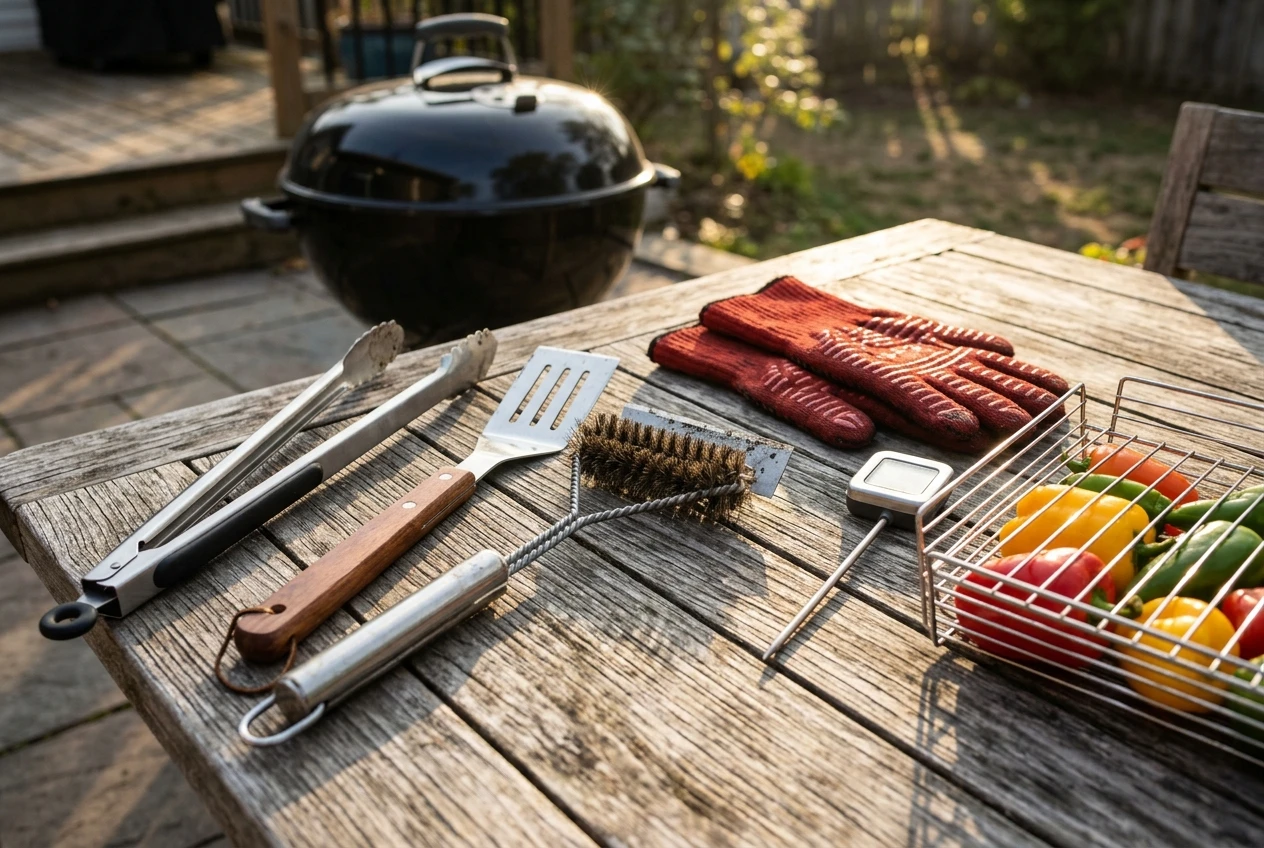
Tongs, a spatula and a grill brush are the basic set. Long handles keep your hands away from the heat, and sturdy tongs let you turn food without piercing it and losing juices. Keep these tools together in one place so you are not hunting for them with food on the grill.
Safety gear
Heat-resistant gloves protect your hands when you adjust grates or move hot parts. Keep a fire extinguisher rated for grease fires within reach, and never throw water on a grease fire. A meat thermometer tells you when food is safely cooked, which is more reliable than judging by colour. If you are choosing one, the right grilling thermometer for the way you cook walks through the options.
Accessories
Grill baskets keep vegetables and small items from falling through the grates. Smoker boxes hold wood chips on a gas grill so you can add smoke flavour. None of these is necessary on day one, so add them as your cooking calls for them.
How to Keep Your Built-In BBQ Clean and Functional
A clean BBQ heats more evenly, lasts longer and is safer to cook on, because built-up grease is what feeds most flare-ups. A routine you can repeat is easier to keep than an occasional big scrub.
Set a cleaning schedule
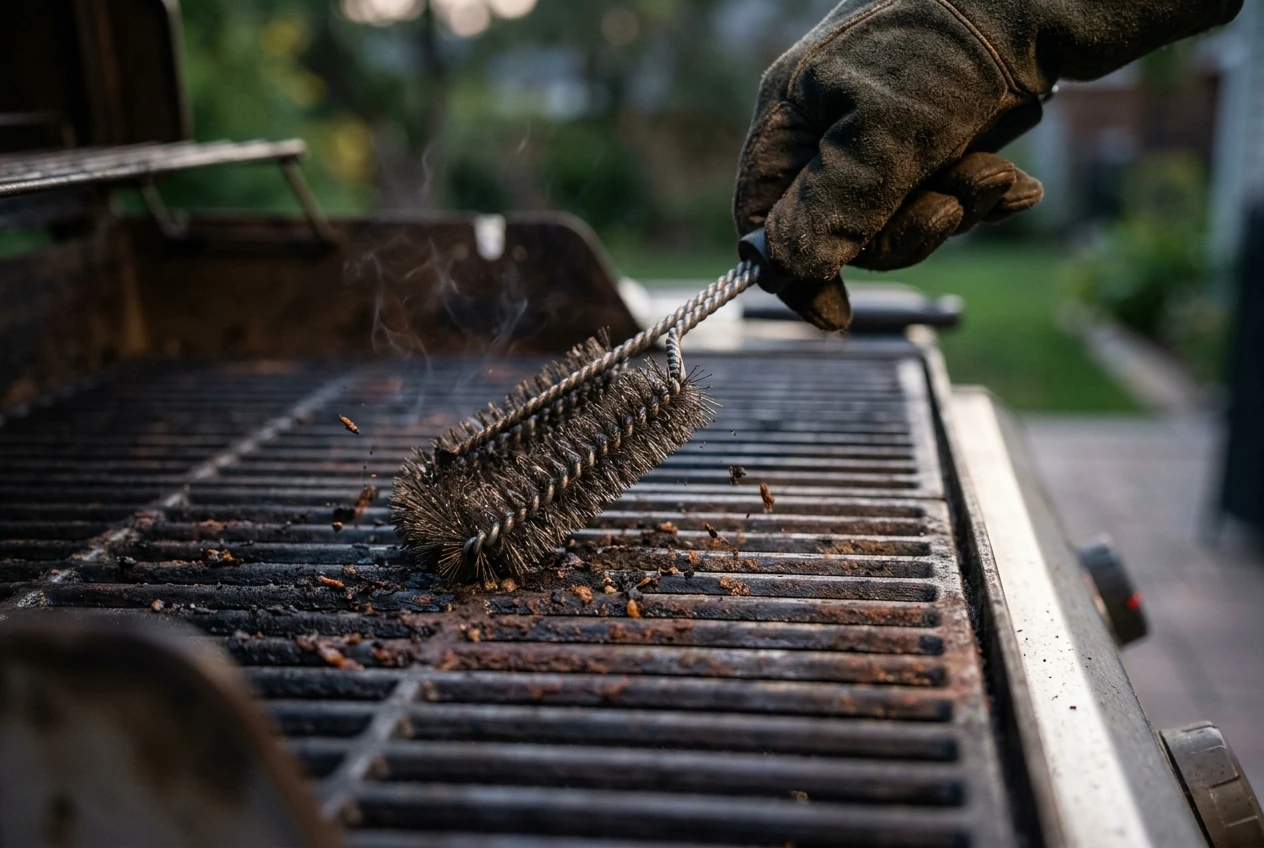
Scrape the grates with a grill brush before and after every cook. Heated grates release stuck-on food most easily, so brush them while they are still warm. Once a month, give the grill a deeper clean: remove the grates, wash them in warm soapy water, and let them dry completely before putting them back. Wet grates rust.
Choose suitable cleaning products
Dish soap and warm water handle most surfaces. For baked-on grease, a cleaner made for BBQs works better. Stainless steel cleaner restores the finish on the exterior panels, and you should always wipe with the grain of the metal. Check the label to make sure any product is safe for the surfaces you are cleaning, especially anywhere food touches.
Empty the drip tray
The drip tray collects grease, and grease that builds up in it can ignite. Empty it regularly, and wipe it out each time you do. If you use disposable liners, replace them rather than letting them fill.
Check the burners
On a gas grill, look over the burners every few weeks. Clogged ports produce uneven flames, which show up as hot and cold patches on the cooking surface. Clear the ports with a wire brush or the tool your manufacturer recommends, and make sure the grill is cold and the gas is off first. The full routine is covered in the gas grill maintenance guide.
Wipe the exterior
Dust and grease on the outside attract moisture, which leads to rust. Wipe the exterior with a soft cloth and a mild cleaner suited to the material of your grill, whether that is stainless steel, enamel or painted metal.
Avoid abrasive tools
Steel wool and harsh abrasives scratch finishes, and scratches are where rust starts. Stick with the brushes, cloths and non-scratch pads designed for BBQ care. Replace a grill brush when the bristles loosen or wear down, because stray bristles can end up in food.
Prolonging the Life of Your Barbecue Equipment
A barbecue is a sizeable purchase, and a few checks each season protect it. Most problems are cheap to fix when found early and expensive when ignored.
Inspect parts regularly
Look at the grates, burners, igniters and hoses for wear. Rust flakes, cracks in the metal and igniters that click without lighting all point to parts that need replacing. A cracked burner or a corroded grate affects both performance and safety, so replace it promptly rather than waiting until the end of the season.
Check gas connections for leaks
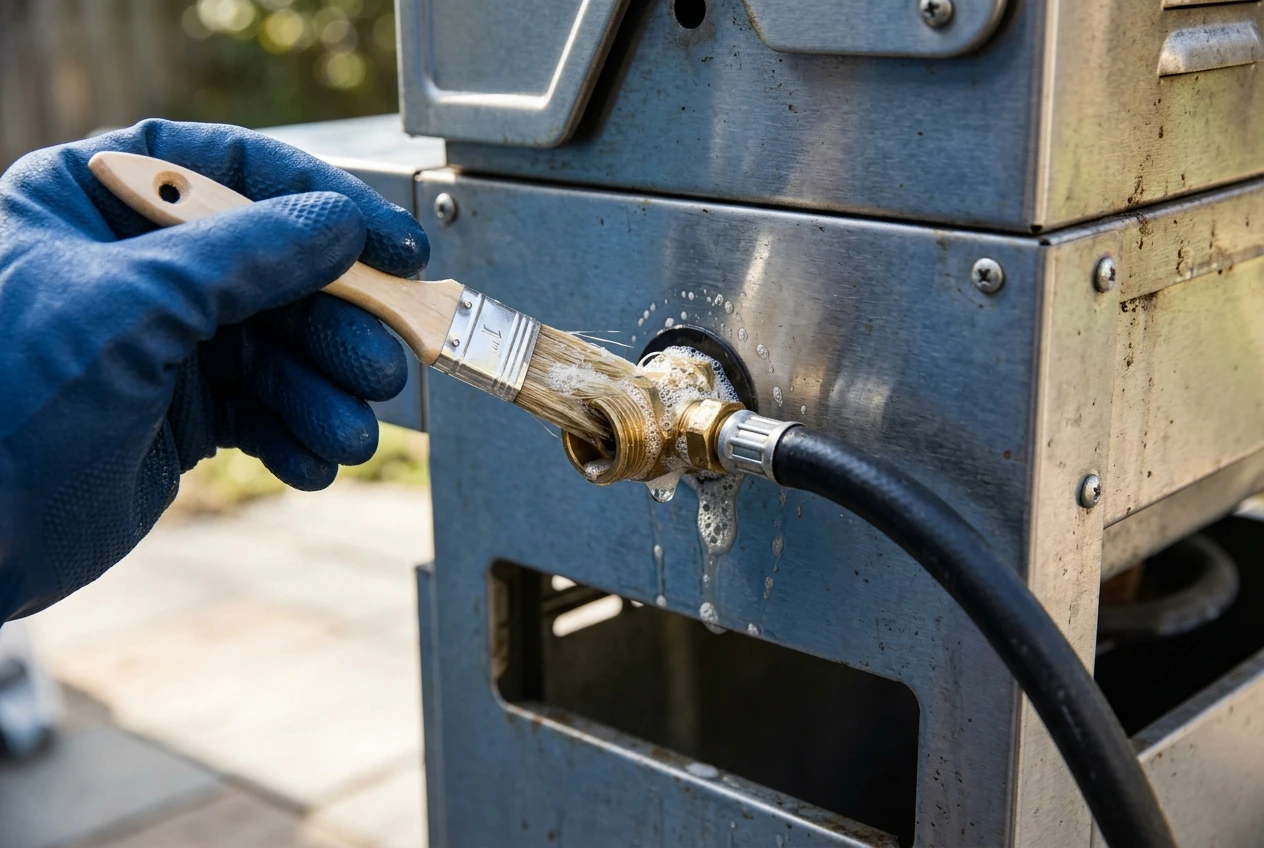
On propane grills, test the hose and connections with a solution of soapy water. Brush it onto the joints with the gas turned on. Bubbles that form or grow mean gas is escaping. Turn the gas off, tighten the connection, and test again. If bubbles persist, replace the part before you use the grill. Do this at the start of the season and any time you change a tank.
Tighten hardware
Heat and repeated use loosen screws, bolts and handles. A few minutes with a screwdriver or wrench once a month keeps lids, shelves and handles secure.
Store the grill properly for the off-season
Clean it thoroughly before putting it away for winter, and make sure every part is completely dry, since trapped moisture causes rust and mold. Store it in a cool, dry place if you have one. If it has to stay outside, use a weather-resistant cover that fits the grill well and let the grill cool completely before covering it.
Use a cover all year
A fitted cover protects against rain, dust and UV exposure during the cooking season too. It means less grime to clean off before each cook and slows rust on the exterior. Check underneath the cover now and then, because a damp cover can trap moisture against the grill.
Keep fuel in good condition
Never store a propane tank indoors, including in a garage or shed attached to your house. Keep it upright, outdoors, in a shaded, ventilated spot away from heat sources. Store charcoal in a sealed container or bag in a dry place so it lights easily when you need it.
Expert Tips for Optimal BBQ Performance
Preheat before cooking
Give the grill time to reach the temperature you need before food goes on. A properly heated grate sears food, helps it release cleanly, and leaves the grill marks people like. Cooking on a cold grate makes food stick and cook unevenly. For more on cooking over high heat, see direct grilling techniques.
Set up heat zones
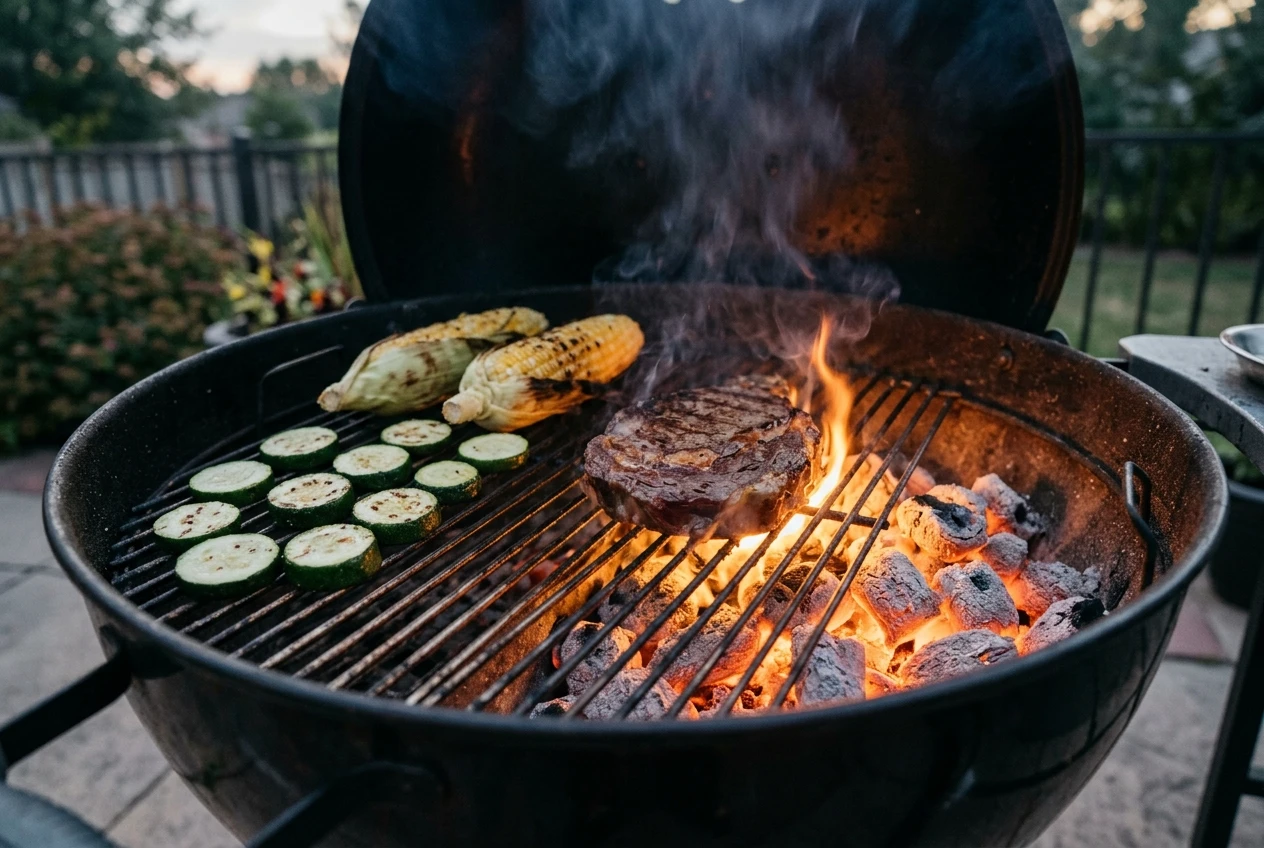
Control comes from having a hot side and a cooler side. On a charcoal grill, pile the coals to one side so one half of the grate is over direct heat and the other is not. On a gas grill with several burners, turn some up and leave others low or off. You can then sear a steak on the hot side while thicker cuts or vegetables cook gently on the other, and move food away from flare-ups without losing your place in the cook.
Add smoke with wood
For smoky flavour, use a smoker box on a gas grill or add wood chips or chunks to charcoal. Hickory, apple and mesquite each give a different character: hickory is strong, apple is milder and sweeter, and mesquite is the most intense. Use a small amount at first, because too much smoke makes food bitter.
Clean up while the grill is warm
After the meal, brush the grates while they are still warm, since residue comes off easily. Empty the grease trap if it needs it, and wipe down the exterior once it has cooled. Ten minutes of cleanup after each cook means the monthly deep clean takes far less work.
Check food temperature, not the clock
Cooking times vary with grill temperature, thickness of the food and the weather. A thermometer gives you an actual reading, so you avoid both undercooked and overcooked food. Insert it into the thickest part of the meat, away from bone.
Looking after your equipment pays off every time you light the grill, with steadier heat, fewer flare-ups and gear that works when guests arrive.