
Great BBQ burgers come from a handful of decisions made in the right order: the meat you buy, how gently you shape it, how you set up the fire, and when you take the patty off. None of it requires special equipment. This guide walks through each decision so your next weekend cookout produces burgers that are juicy inside and browned outside.
Choosing the Right Ingredients
Start with the Meat
Ground chuck is the best all-round choice for burgers. It has enough fat to stay juicy over high heat and a rich, beefy flavor. Some cooks blend in ground brisket for extra depth, and a butcher will often grind a chuck and brisket mix for you if you ask.
Buy the meat as fresh as you can and keep it cold until you shape it. Fat that stays firm distributes through the patty instead of smearing into the meat, which gives you a better texture.
Look for a blend of about 80% lean and 20% fat. Leaner beef tends to dry out on a grill, and much fattier beef can cause flare-ups and leave the burger greasy. The 80/20 ratio is forgiving, which is useful when you are managing a fire and a crowd at the same time.
Pick a Bun That Holds Up
A burger bun has two jobs: it must be soft enough to bite through easily, and sturdy enough not to fall apart under juicy meat and toppings. Brioche does both well, and its slight sweetness and buttery taste pair nicely with smoky, charred beef. Potato rolls are another good option.
Buy buns the day you cook if possible. A stale bun turns dry and crumbly, and toasting will not fully fix it. If your buns are a day or two old, a light brush of butter before toasting helps.
Think About Condiments Before You Light the Grill
Decide what goes on the burger before you start cooking so everything is ready when the patties come off. Pick one or two strong flavors and keep the rest simple. Chili mayo adds heat, caramelized onions add sweetness, and pickles add acid that cuts through the richness of the beef.
If the sauce is bold, use a lighter hand with other toppings. If you want the beef to be the main flavor, stay with ketchup, mustard, and a slice of tomato.
Shaping the Perfect Patty
Handle the Meat Gently
Mix any seasonings into the meat with your hands, and keep it quick. Overworked ground beef packs together tightly and cooks up dense and chewy. Form the patty with just enough pressure to hold it together.
If you are cooking more than a couple of burgers, weigh the portions on a kitchen scale so every patty is the same size. Equal patties finish at the same time, which matters when you are flipping eight of them at once.
Aim for Even Thickness
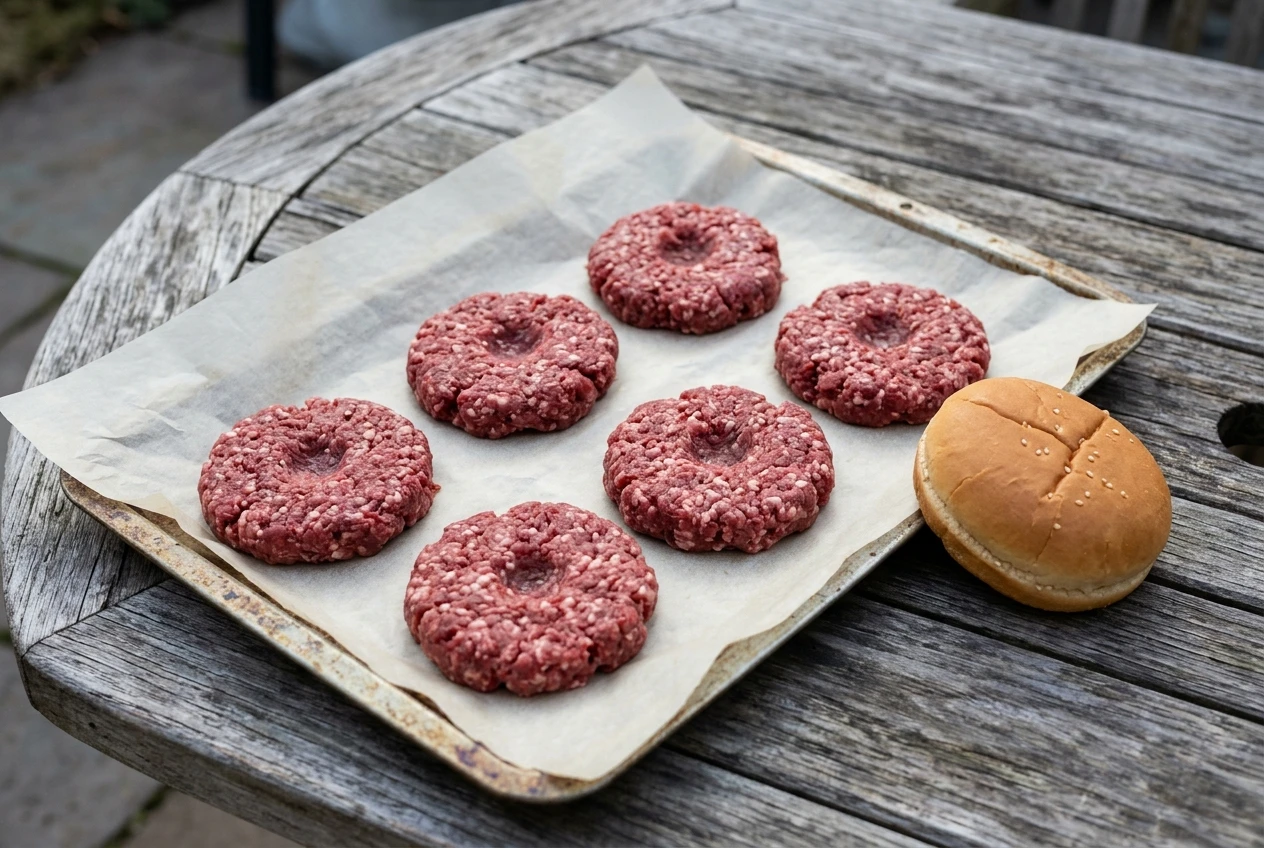
A patty about three-quarters of an inch thick is thick enough to stay juicy inside and thin enough to develop a crust before the center overcooks. Make the patties slightly wider than your buns, because they shrink as the fat renders.
Press a shallow dimple into the center of each patty with your thumb. Patties tend to puff up in the middle as they cook, and the dimple keeps them flat so toppings sit properly.
Season at the Right Time
Salt draws moisture out of ground beef and changes its texture, so mixing it in early can make the burger firmer and drier. Season the outside of the patties just before they go on the grill with salt and black pepper. Garlic powder and smoked paprika are good additions if you want more flavor.
Chill Before Cooking
Put the shaped patties on a tray in the refrigerator for 15 to 30 minutes. Cold patties hold their shape better when you move them to the grill, and the fat stays firm longer once the heat hits. This is an easy step to skip, and it makes a noticeable difference in how well the patties hold together.
Try a Stuffed Patty
If you want something different, form a stuffed burger by sandwiching cheese or diced jalapeño between two thin patties and pinching the edges closed. Seal the edges well so the filling does not leak into the fire. Stuffed patties are thicker and take longer to cook, so check them with a thermometer instead of judging by time.
Grilling Your Burgers
Charcoal or Gas
Charcoal gives burgers a smokier flavor and burns hotter, which helps with searing. Gas lights quickly and lets you adjust the temperature with a knob. Both make excellent burgers, so use whichever you have and cook it well.
If you are deciding between types of grills more broadly, this comparison of a gas grill vs pellet smoker may help you match a grill to how you cook on weekends.
Set Up Two Heat Zones
Build a hot side and a cooler side on your grill. On charcoal, pile the lit coals on one half of the grill. On gas, turn the burners on one side to high and leave the other side low or off. If you are working with a gas grill, this guide to setting up a two-zone fire on a gas grill explains the setup in detail.
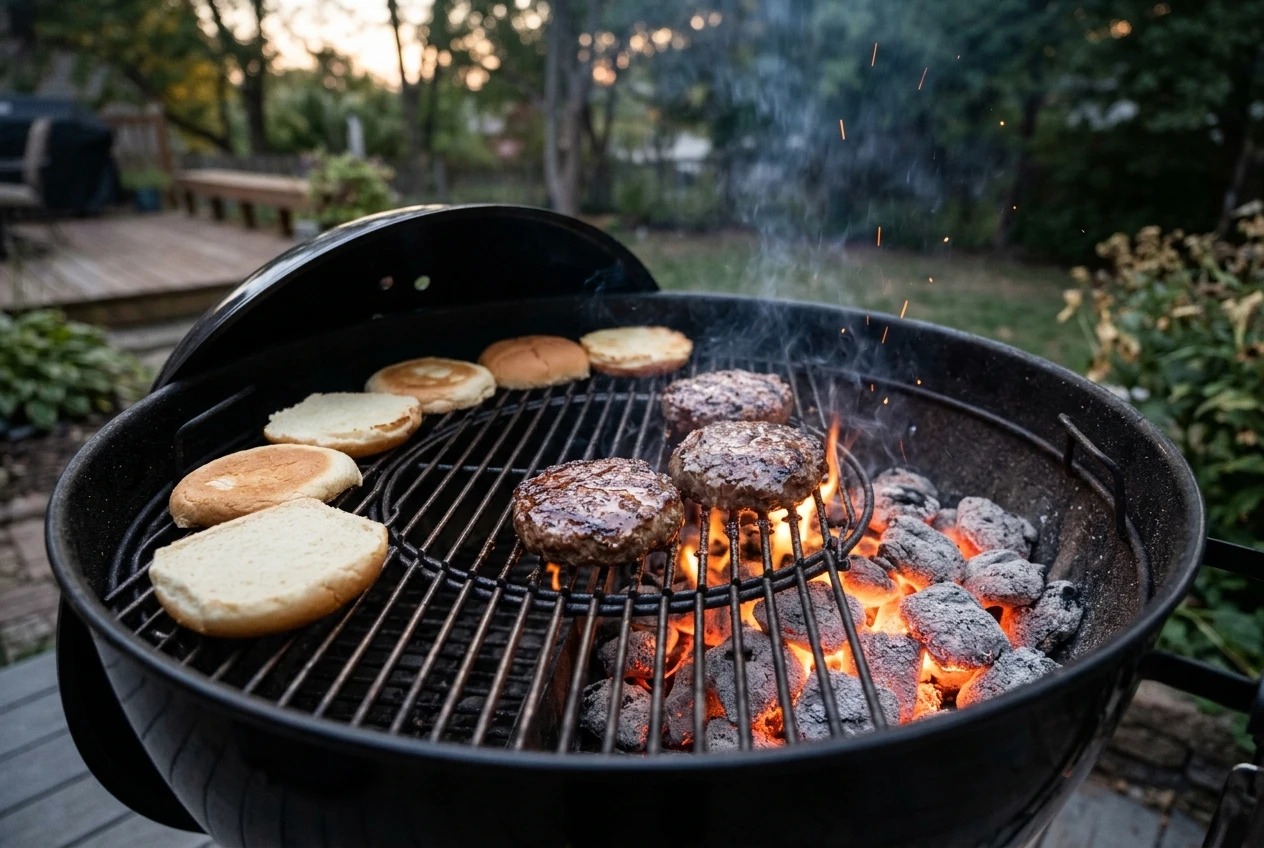
The hot zone is for searing the patties and building a crust. The cooler zone is where you move a patty if flames flare up, where you finish stuffed or thick patties, and where you toast the buns without burning them.
Sear and Flip
Preheat the grill with the lid closed and clean the grates. Put the patties on the hot side and leave them alone. You should hear a sizzle right away; if you do not, the grill is not hot enough.
Do not press down on the patties with a spatula. That squeezes out the juices and fat that make the burger good. Flip once, when the patty releases easily from the grates. If it sticks, give it another minute. For a patty three-quarters of an inch thick over high heat, expect roughly three to four minutes per side, but grill temperatures vary, so use that only as a starting guide.
Cook to Temperature
A thermometer is the most reliable way to know when a burger is done. Insert the probe through the side of the patty into the center. The USDA recommends cooking ground beef to an internal temperature of 160°F, so use that as your safe target.
If you have not picked one out yet, this article on choosing a grilling thermometer covers what to look for based on how you cook.
Add Cheese and Toast the Buns
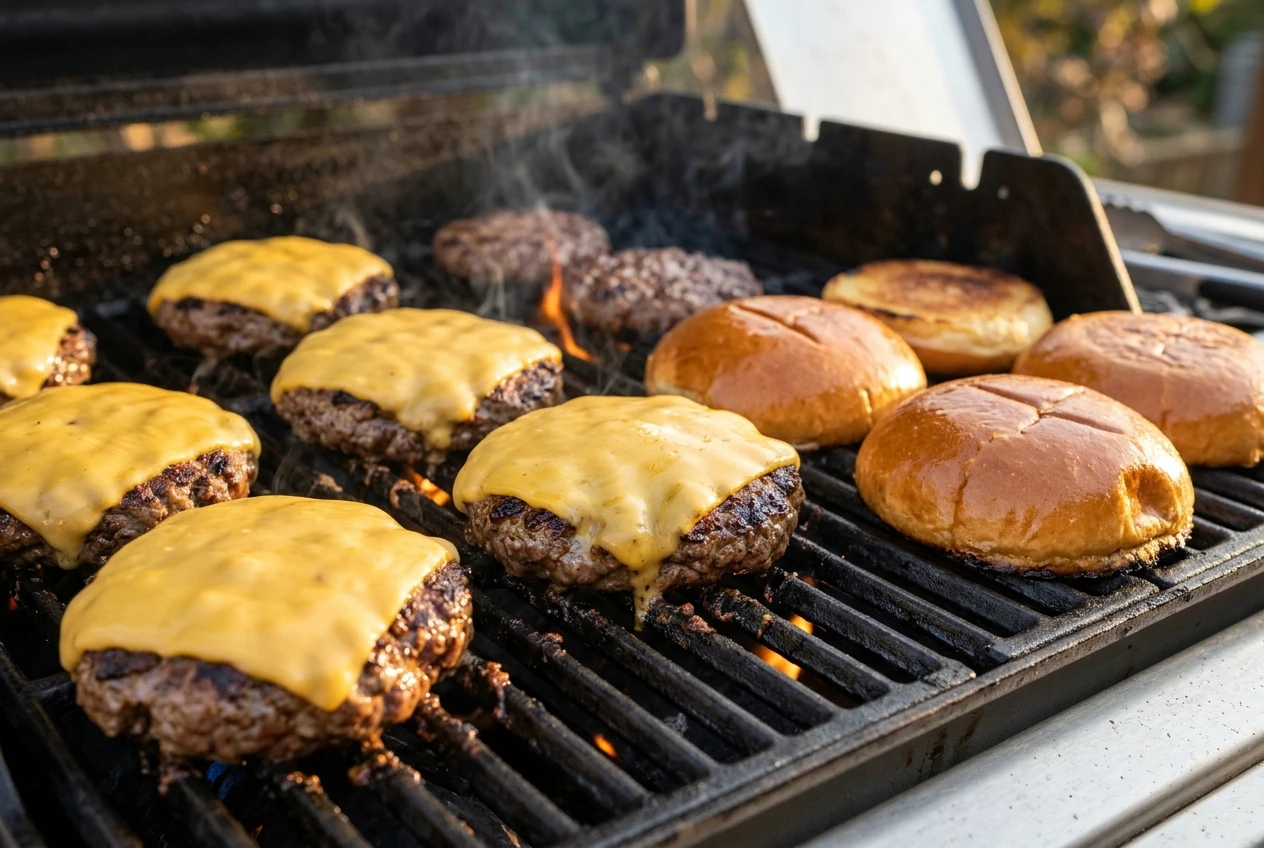
When the patties are close to done, lay a slice of cheese on each and close the lid for about a minute so it melts. While that happens, place the buns cut side down on the cooler zone for a short toast. Toasting gives the bun a firmer surface so it does not soak through with juice.
Move the finished patties to a plate and let them rest for a few minutes before assembling. Resting lets the juices settle back into the meat instead of running onto the bun.
Assembling the Burger
Build in the Right Order
Layering affects how the burger eats. Put the sauce on the bottom bun to keep it from going soggy, then the patty with melted cheese, then the toppings that need to stay crisp, like lettuce, tomato, and pickles. Place the lettuce between the patty and the tomato, or under the top bun, so wet tomato slices do not wilt it. Add sauce to the top bun last.
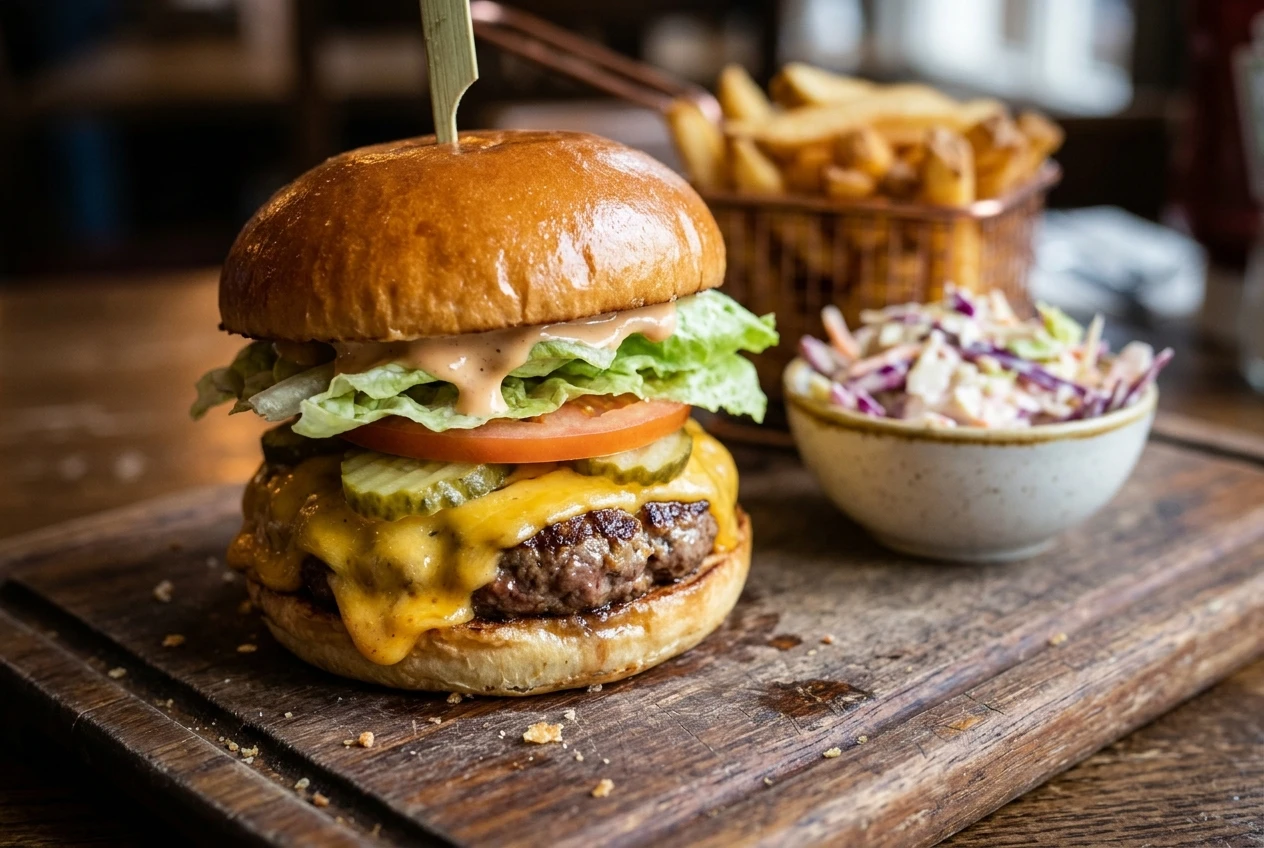
Warm toppings such as caramelized onions or fried onions go directly on the patty, where the heat keeps them soft.
Keep Sauces in Proportion
A smoky BBQ sauce or a tangy garlic aioli can improve a burger, but too much makes the bun slide apart and covers the flavor of the meat. A tablespoon or so is usually enough. If you want more, serve extra on the side for dipping.
Serve It Whole
A tall burger can topple on the way to the table. Push a wooden skewer or a large toothpick down through the center to hold the layers together. Remove it before eating.
Choose Sides That Add Contrast
Burgers are rich and savory, so sides that are crisp or tangy work best. Coleslaw adds crunch and acidity, and homemade fries or oven-baked potato wedges add a crispy, salty texture. A simple cucumber salad also balances the meal without much effort.
Putting It All Together
On cookout day, work in this order: chill the patties, light the grill and set up your zones, season the patties, sear, flip once, add cheese, toast the buns, rest the burgers, and assemble. Having the toppings and sauces prepped before the grill is hot means nothing waits on you while the patties cook.
With a consistent method, you can make small changes each time, such as a different cheese, a new sauce, or a stuffed patty, and know the results come from the change you made. That is the most reliable way to turn good burgers into your signature burger.