

Choosing between a gas and a charcoal grill comes down to how you like to cook, how much time you have, and what you want the food to taste like. Both types cook good food, and each has costs that are easier to accept once you know them in advance.
This guide covers what each type does well, where each falls short, how the flavour compares, and how to match a grill to the way you cook on a weekend.
Advantages Of Gas BBQs: Efficiency And Convenience
Gas grills are the easier option to start and run. You turn the knob, press the ignition button, and the grill is ready to cook after a few minutes of preheating. On a weeknight when you want burgers on the table quickly, that matters.
Temperature control is the other big strength. The burner knobs let you raise or lower the heat in small steps, and many models have several burners, so you can run one side hot and the other low. That helps when a single meal includes steaks that want high heat, vegetables that want medium heat, and fish that is easy to overcook. If you are shopping for a model with multiple burners, our guide to the best 3 burner gas barbecue for 2026 is a good place to compare options.
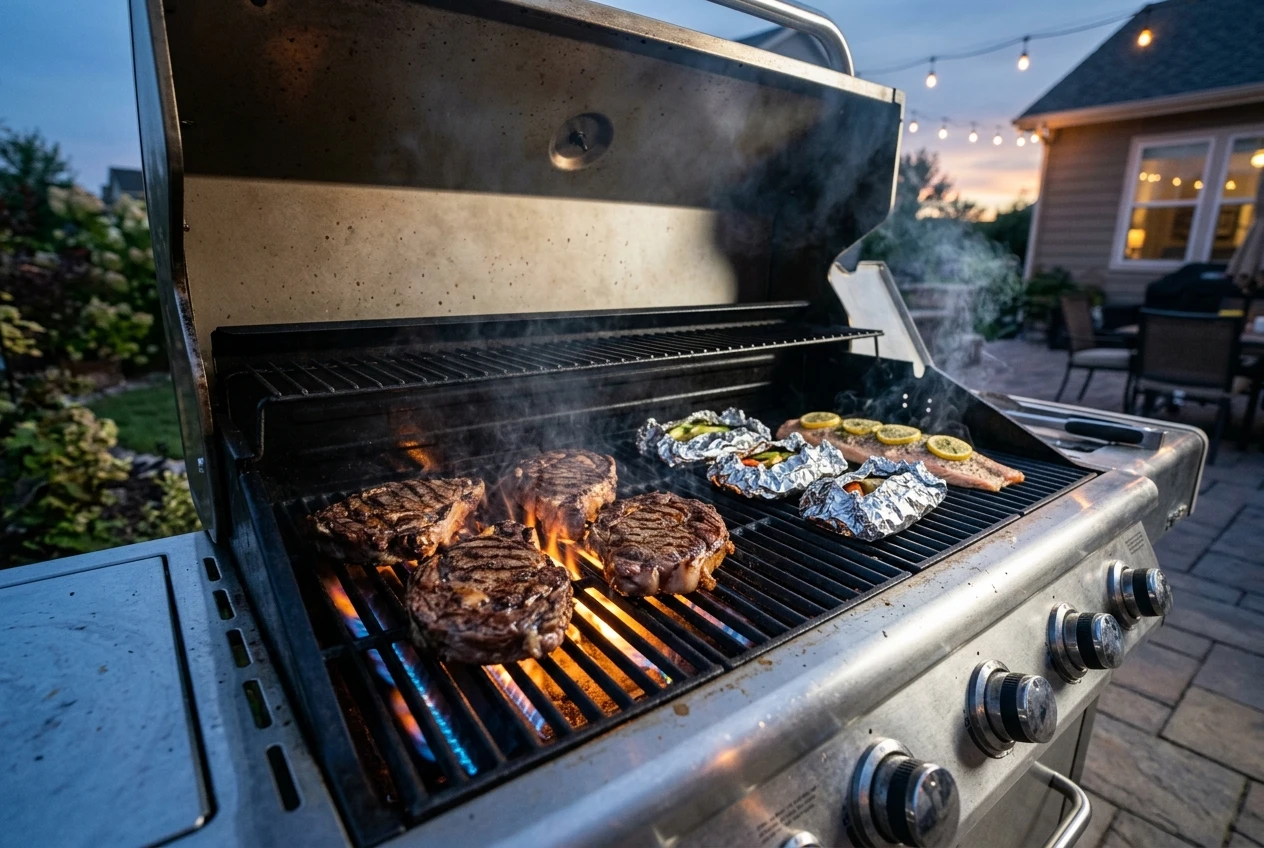
Cleanup is shorter too. There is no ash to dispose of and no spent coals to wait on. Turn off the burners, brush the grates while they are still warm, and the job is mostly done. A little regular upkeep keeps the grill working well for longer, and our gas grill maintenance guide covers what to check and when.
Fuel is straightforward as well:
-
Propane cylinders are sold widely and are easy to store.
-
If your home has a natural gas line and your grill supports it, you can connect directly and never run out mid-cook.
-
Over many cookouts, gas is often cheaper per session than buying bag after bag of charcoal, although the figure depends on what you pay for each fuel locally.
Advantages Of Charcoal BBQs: Flavour And Tradition
Charcoal is the choice for people who want a smoky taste. Burning charcoal produces smoke, and fat dripping onto hot coals adds more, so the food picks up a flavour that is hard to get from a standard gas burner.
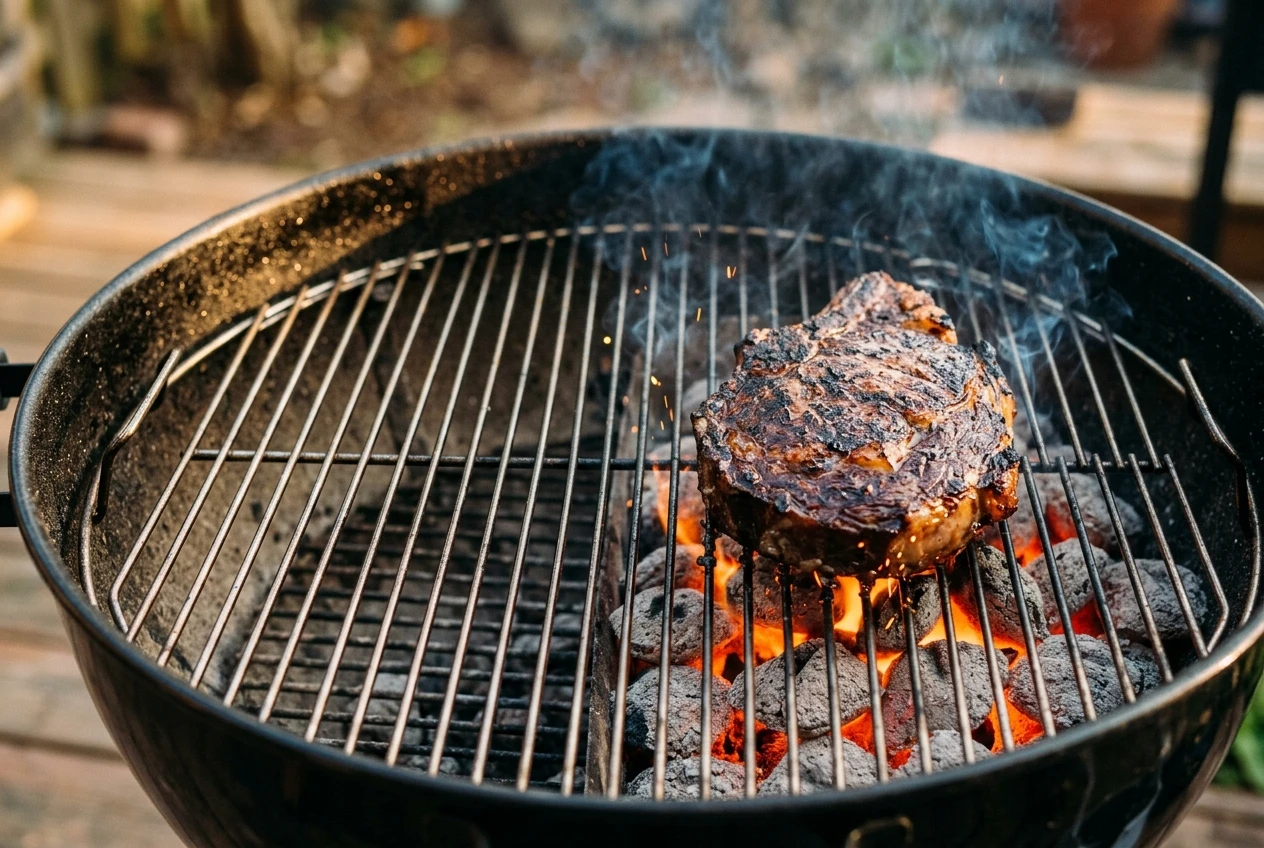
Charcoal grills can also reach very high surface temperatures, which suits searing. A properly lit charcoal fire gives steaks and burgers a deep brown crust while the inside stays juicy. Gas grills can sear well too, but charcoal tends to reach that intensity more easily.
Charcoal grills are versatile once you learn to arrange the coals:
-
Direct grilling: pile the coals under the food for fast, hot cooking. Our article on direct grilling techniques walks through this method.
-
Indirect cooking: bank the coals to one side and cook the food on the other, with the lid down, for larger cuts that need longer.
-
Smoking: add wood chunks to the coals and keep the temperature low for slow cooking.
Charcoal is also hands-on. You manage the fire by adjusting the vents and moving the coals, and many barbecuers enjoy that process as part of the cook. If you like the idea of slow, low cooking, a recipe such as our best tender ribs recipe suits that style.
Finally, many charcoal grills are portable and inexpensive. They need no gas hookup and no propane cylinder, so a small kettle or tabletop model can go to a campsite, a park, or the far end of the garden.
Disadvantages Of Gas And Charcoal BBQs
Each type has drawbacks, and the ones that matter depend on how you cook.
Gas grill drawbacks
-
Price: Gas grills usually cost more than basic charcoal grills, and larger models with extra burners and features cost considerably more.
-
Flavour: A standard gas grill produces less smoky flavour than charcoal. Smoker boxes and wood chips can add some, but the result is usually milder.
-
Safety and upkeep: Gas hoses, connections, and cylinders need an occasional check for leaks and wear. Problems are uncommon when the grill is looked after, but they are worth taking seriously.
-
Size and weight: Larger gas grills are heavy and need a permanent spot, which can be a problem on a small patio.
Charcoal grill drawbacks
-
Time: Charcoal takes longer to light and come up to cooking temperature than gas, so you need to plan ahead.
-
Cleanup: You have to wait for the coals to burn out and cool, then dispose of the ash.
-
Temperature control: Adjusting heat means opening or closing vents and moving coals. That takes practice, and early attempts often run too hot or too cool.
-
Smoke: Charcoal produces more smoke than gas, which may matter if you have close neighbours or a small seating area.
Environment and health
Charcoal fires produce more smoke and particles than gas flames. Gas burns cleaner at the grill, but it is still a fossil fuel, and disposable propane canisters add waste. Whichever you use, grill outdoors in an open, ventilated area and keep the grill away from walls, fences, and overhanging branches.
Once you know which of these drawbacks would bother you most, the choice often becomes clear.
Taste Test: Does Charcoal Or Gas BBQ Taste Better?
Charcoal usually wins on smoky flavour. Fat and juices drip onto the hot coals and vaporise, and the smoke rises back onto the food. Lump charcoal, briquettes, and added wood chunks each give a slightly different result, and that variety is part of the appeal.
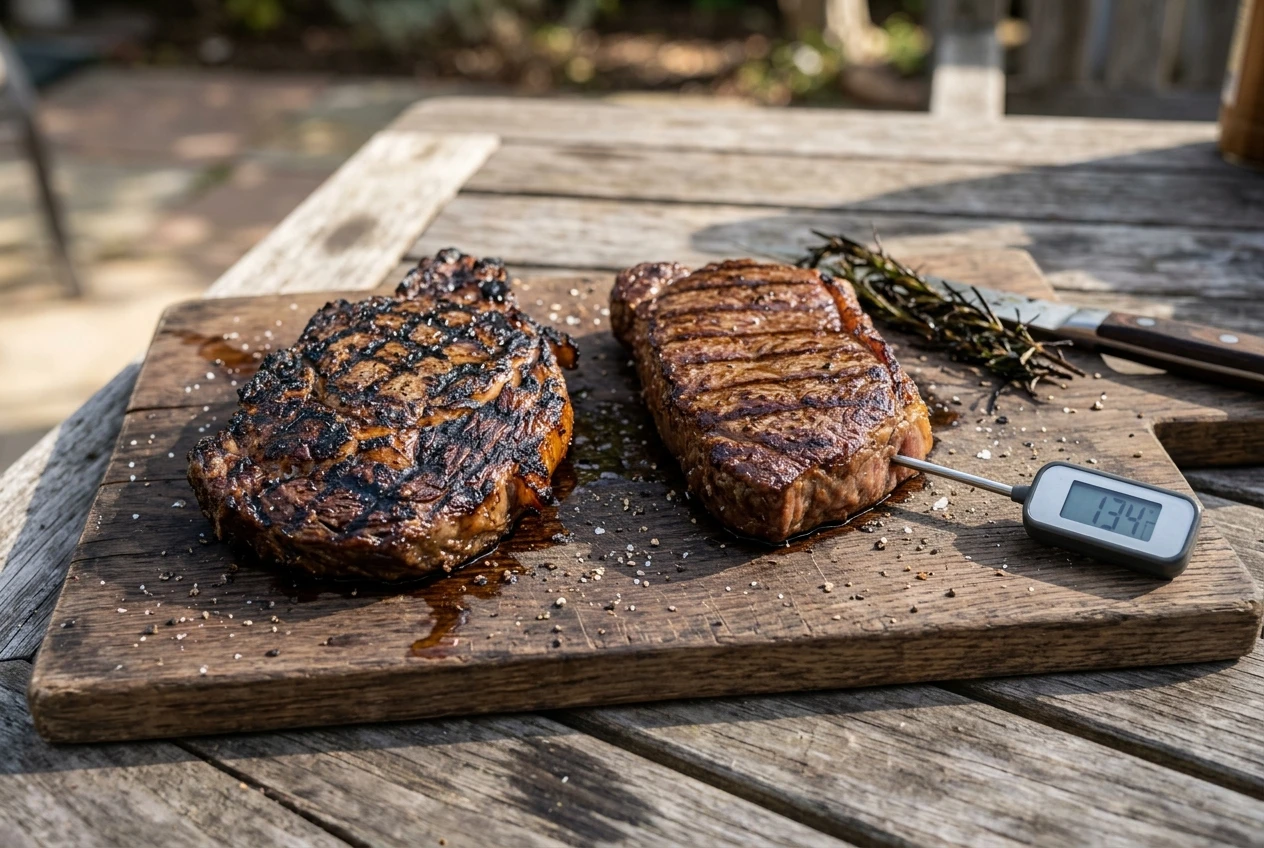
Gas grills cook food well, but the flavour is cleaner and less smoky. What gas gives you is consistency: steady, controllable heat makes it easier to cook chicken through without burning the outside, or to hold the same temperature for a whole batch of burgers. Many people find that a well-seasoned, properly cooked steak from a gas grill tastes excellent.
How you cook matters at least as much as the fuel. Food cooked to the right internal temperature tastes better on either grill than food that is overcooked. A reliable thermometer takes out the guesswork, and our guide to the best meat thermometer for grilling explains how to choose one for the way you cook.
Taste is also personal. Some people want a strong smoky character and enjoy the extra effort. Others would rather have an easy cook and a quick cleanup, and are happy with a milder flavour.
Which Grill Fits How You Cook
Start with the questions that decide most purchases:
-
How much time do you have on a typical cookout? If you often grill after work or with little notice, gas fits better. If your cookouts are leisurely weekend affairs, charcoal’s longer setup is less of a problem.
-
How important is smoky flavour? If it is the main reason you want to grill, choose charcoal.
-
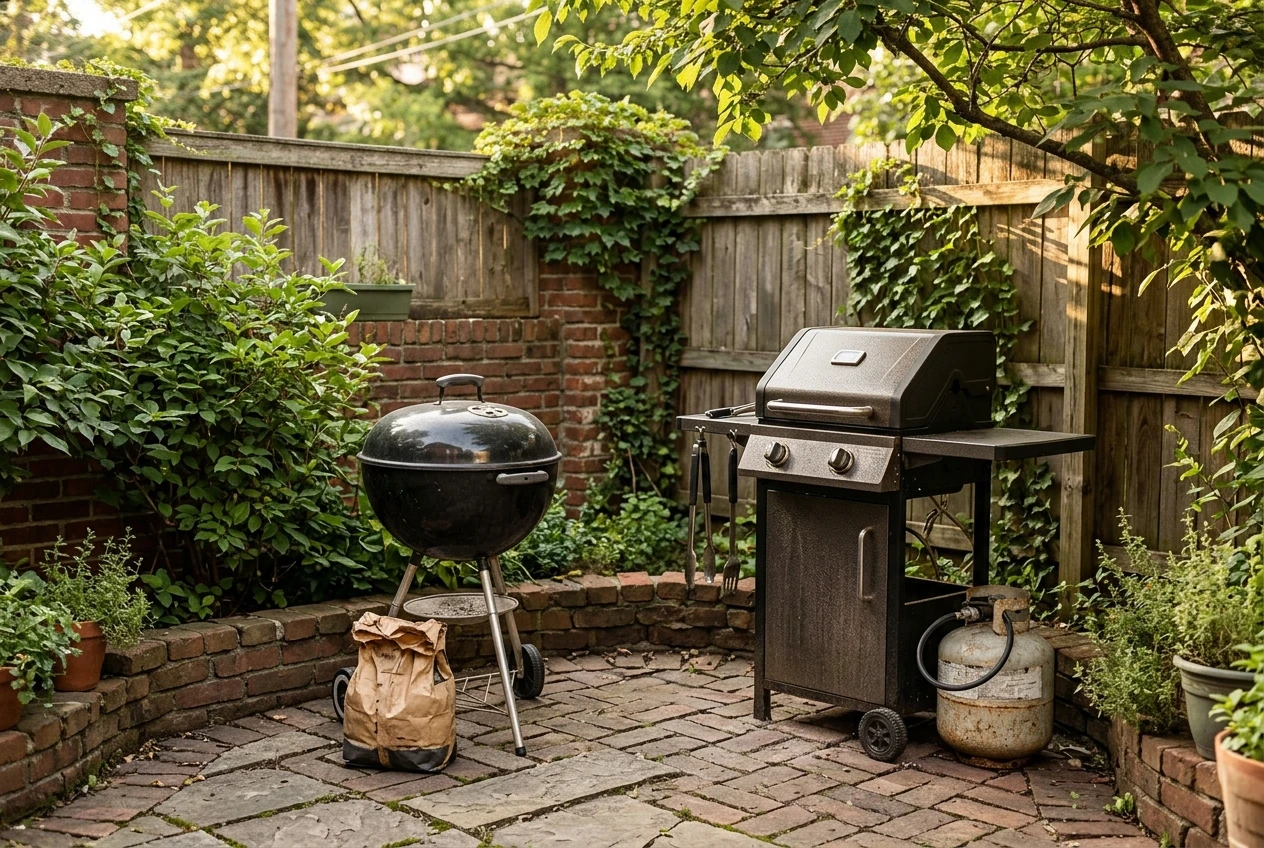
What kind of space do you have? A small patio may suit a compact charcoal kettle or a smaller gas model. Our ideas for a small patio outdoor kitchen show how to fit a grill into a tight layout.
-
What is your budget? Charcoal grills generally cost less to buy. Gas grills cost more up front and are easier to run.
-
Do you want to learn fire management? Charcoal rewards practice. Gas rewards simplicity.
If you want speed and ease, choose gas. If you want smoke, high heat, and a hands-on cook, choose charcoal. If you are leaning toward gas, our roundup of the best gas grills for 2026 is a good next read.