

These four pellet grill recipes suit a first cookout: smoked chicken thighs, grilled vegetables, smoked cheeseburgers and grilled pineapple. Each lists ingredients, settings and steps. The sections after them cover how the grill works, the gear to own and what to do when something goes wrong. If you are still choosing a grill, start with the guide to best pellet smokers under $1000.
Beginner-Friendly Pellet Grill Recipes
Preheat the grill with the lid closed for 10 to 15 minutes before any cook, so the temperature has settled when the food goes on.
Smoked Chicken Thighs
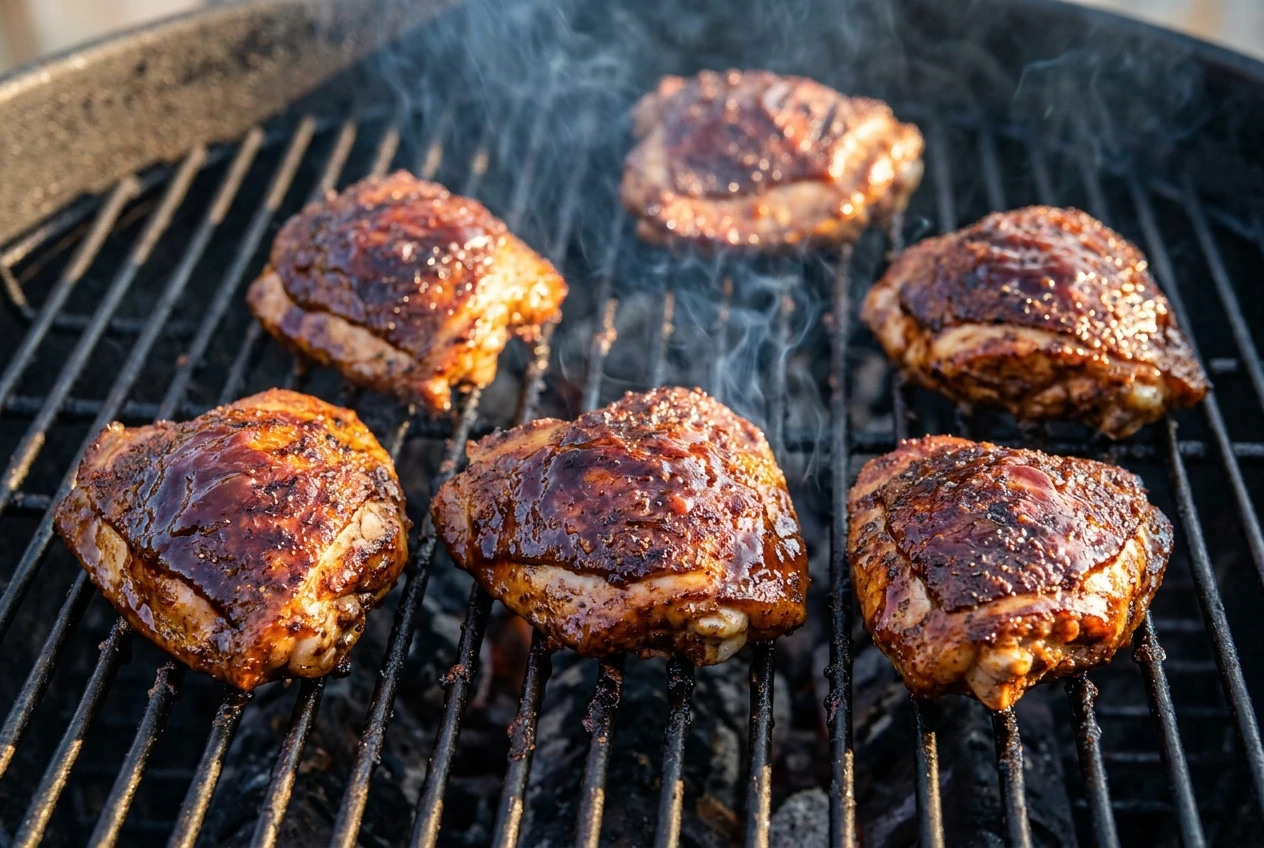
Bone-in, skin-on thighs stay juicy at steady heat, which makes them forgiving for a first smoke.
Ingredients
-
6 bone-in, skin-on chicken thighs
-
2 tablespoons olive oil
-
3 tablespoons chicken or all-purpose BBQ rub
-
1/2 cup BBQ sauce
-
Apple or hickory pellets
Steps
-
Set the grill to 325°F.
-
Pat the thighs dry, coat them with oil, then press the rub onto all sides.
-
Place the thighs skin side up on the grates and close the lid.
-
Cook for about an hour, until a thermometer in the thickest part reads at least 165°F. Thighs taste better when they reach 175°F or a little above.
-
Brush on the sauce for the last 10 minutes.
-
Rest the chicken for 5 to 10 minutes before serving.
Grilled Vegetables
Peppers, onions and zucchini go with nearly any main dish and cook in the time it takes the meat to rest.
Ingredients
-
2 bell peppers, cut into wide strips
-
1 large onion, cut into thick wedges
-
2 zucchini, sliced lengthwise into planks
-
3 tablespoons olive oil
-
2 cloves garlic, minced
-
1 teaspoon dried herbs (Italian blend or thyme)
-
Salt and pepper
Steps
-
Set the grill to 400°F.
-
Toss the vegetables with the oil, garlic, herbs, salt and pepper.
-
Spread them in a grill basket, or lay the pieces across the grates so they cannot fall through.
-
Cook for 15 to 20 minutes, turning once, until tender with browned edges.
Smoked Cheeseburgers
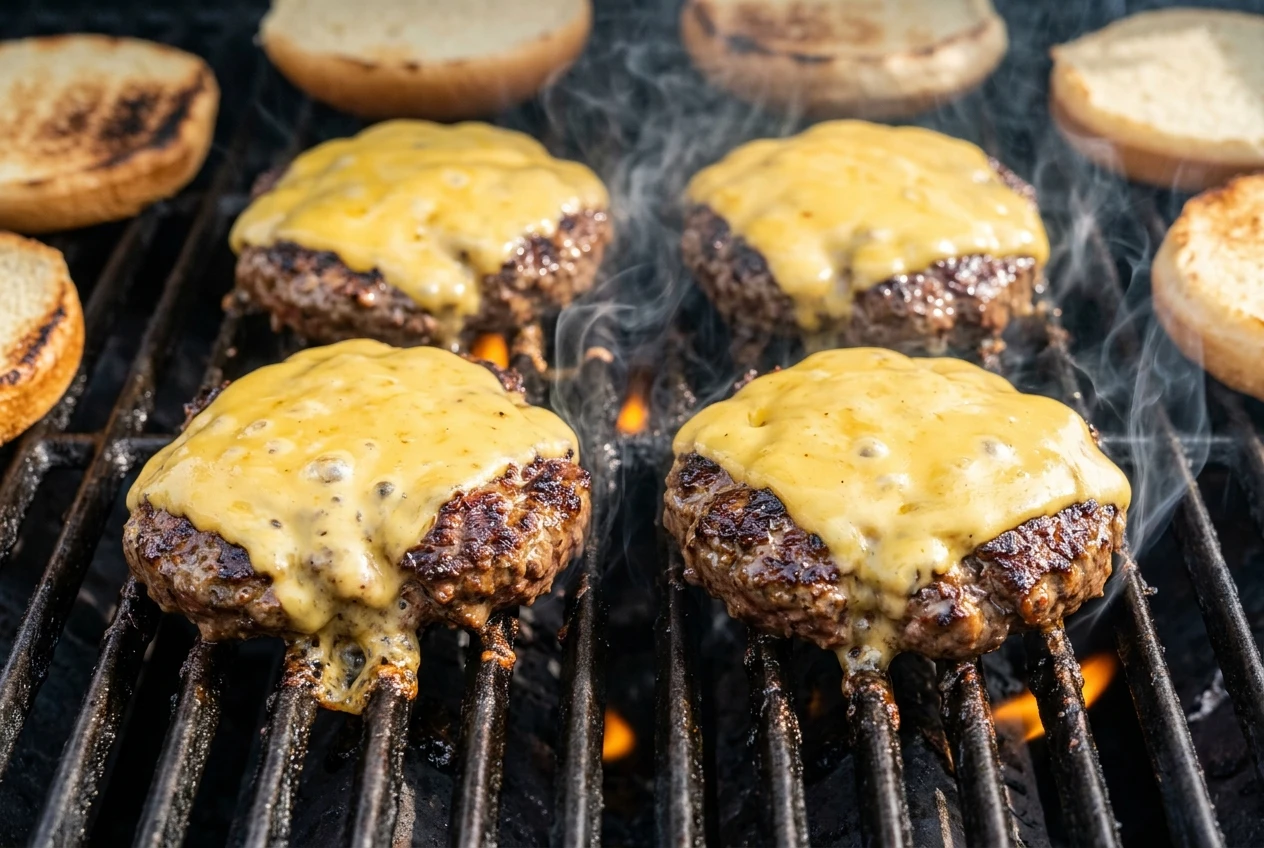
Hickory pellets give a plain burger a stronger smoke flavor than a gas grill can.
Ingredients
-
1.5 pounds ground beef, 80/20
-
1 teaspoon salt
-
1/2 teaspoon black pepper
-
1/2 teaspoon garlic powder
-
4 slices cheese
-
4 buns
-
Hickory pellets
Steps
-
Mix the seasoning into the beef gently. Overworking the meat makes dense patties.
-
Shape four patties slightly wider than the buns and press a shallow dimple into the center of each.
-
Set the grill to 400°F and place the patties on the grates.
-
Cook for about 6 to 8 minutes per side, until the center reaches 160°F.
-
Lay the cheese on top for the last minute or two, until it melts.
-
Toast the buns on the grates for a minute and serve.
Grilled Pineapple Rings
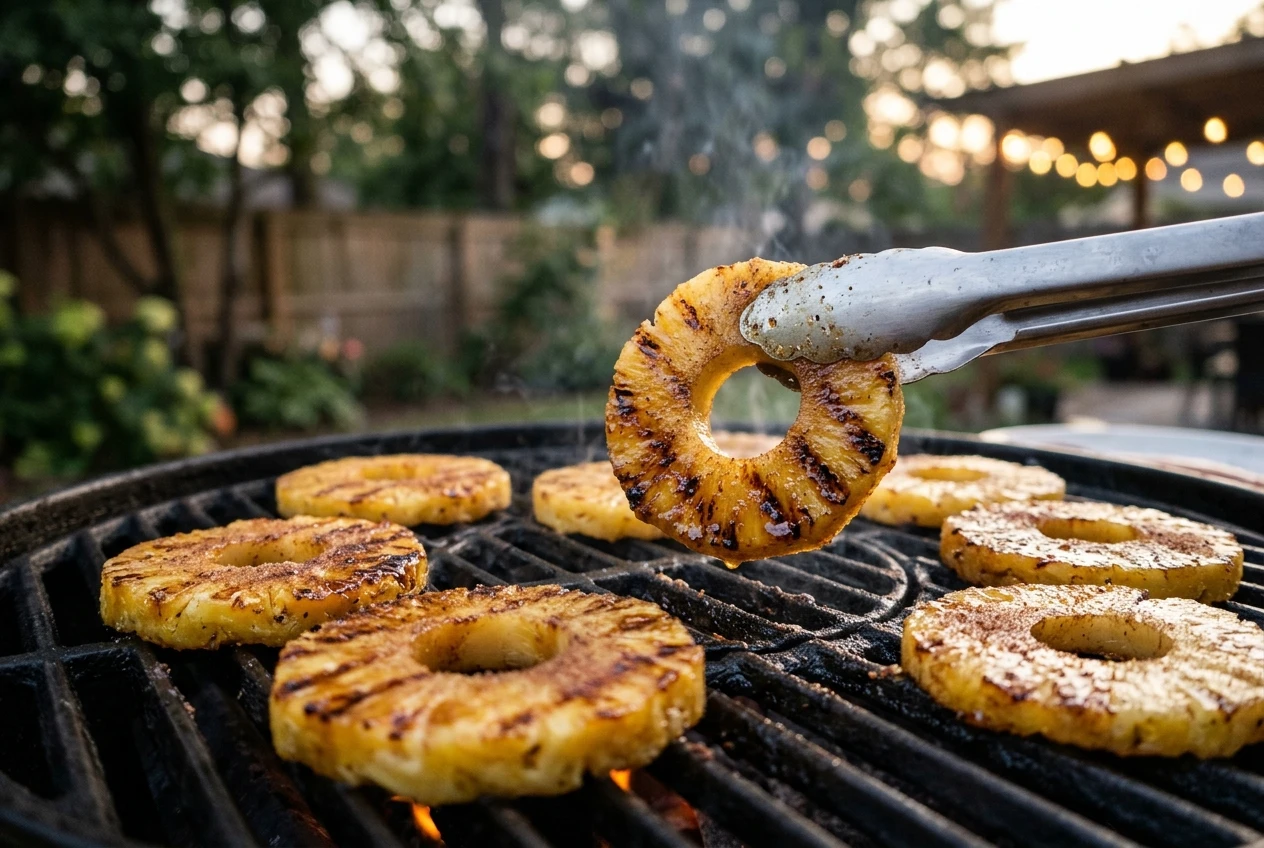
This is the easiest dessert on a pellet grill, and it uses the heat left over from dinner.
Ingredients
-
1 fresh pineapple, peeled, cored and cut into rings
-
3 tablespoons brown sugar
-
1 teaspoon cinnamon
-
1 tablespoon melted butter (optional)
Steps
-
Set the grill to 375°F.
-
Mix the sugar and cinnamon, brush the rings with butter if you are using it, and sprinkle the mixture over both sides.
-
Grill for 4 to 5 minutes per side, until caramelized with visible grill marks.
-
Serve warm, on their own or over vanilla ice cream.
How a Pellet Grill Works
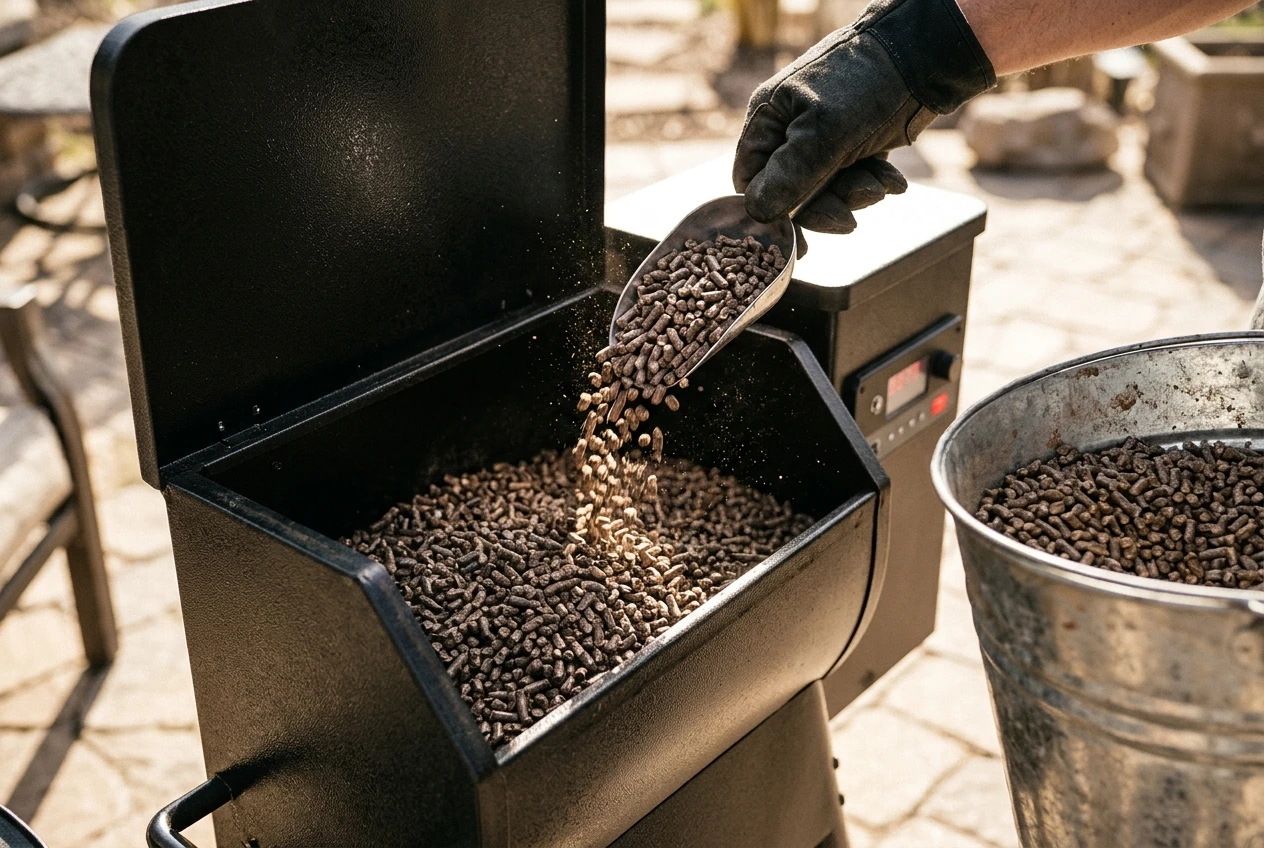
Knowing the parts makes every recipe above easier to repeat.
-
Hopper: the bin on the side that holds the wood pellets.
-
Auger: a rotating screw that moves pellets from the hopper into the fire pot.
-
Fire pot: where the pellets burn and make heat and smoke.
-
Controller: the dial or screen where you set a temperature. It speeds up or slows down the auger to hold that number.
Because the controller feeds pellets for you, you do not manage coals or vents. You set a temperature and check the food.
Choosing Pellets
Pellet flavor changes the taste of the meal, so match it to the food:
-
Hickory: a bold, smoky taste that suits burgers, pork and beef.
-
Apple: a milder, slightly sweet smoke that suits chicken and pork.
-
Oak: a medium, rounded smoke that works with almost anything.
Many brands sell blends of these woods, which is an easy way to try combinations. Buy pellets made for cooking, not heating, and keep them in a dry container, because damp pellets swell and cause feeding problems.
Safety Basics
-
Place the grill on level ground, on a heat-resistant mat if it sits on a deck or patio.
-
Keep it well away from walls, fences, overhangs and anything that burns.
-
Clean grease and ash out regularly, because built-up grease is what causes flare-ups.
-
Keep a fire extinguisher within reach.
If you are weighing a pellet grill against a gas model, the comparison of gas grill vs pellet smoker covers how each fits a weekend cooking routine.
Essential Supplies and Techniques for First-Time Pellet Grill Cooks
A Meat Thermometer
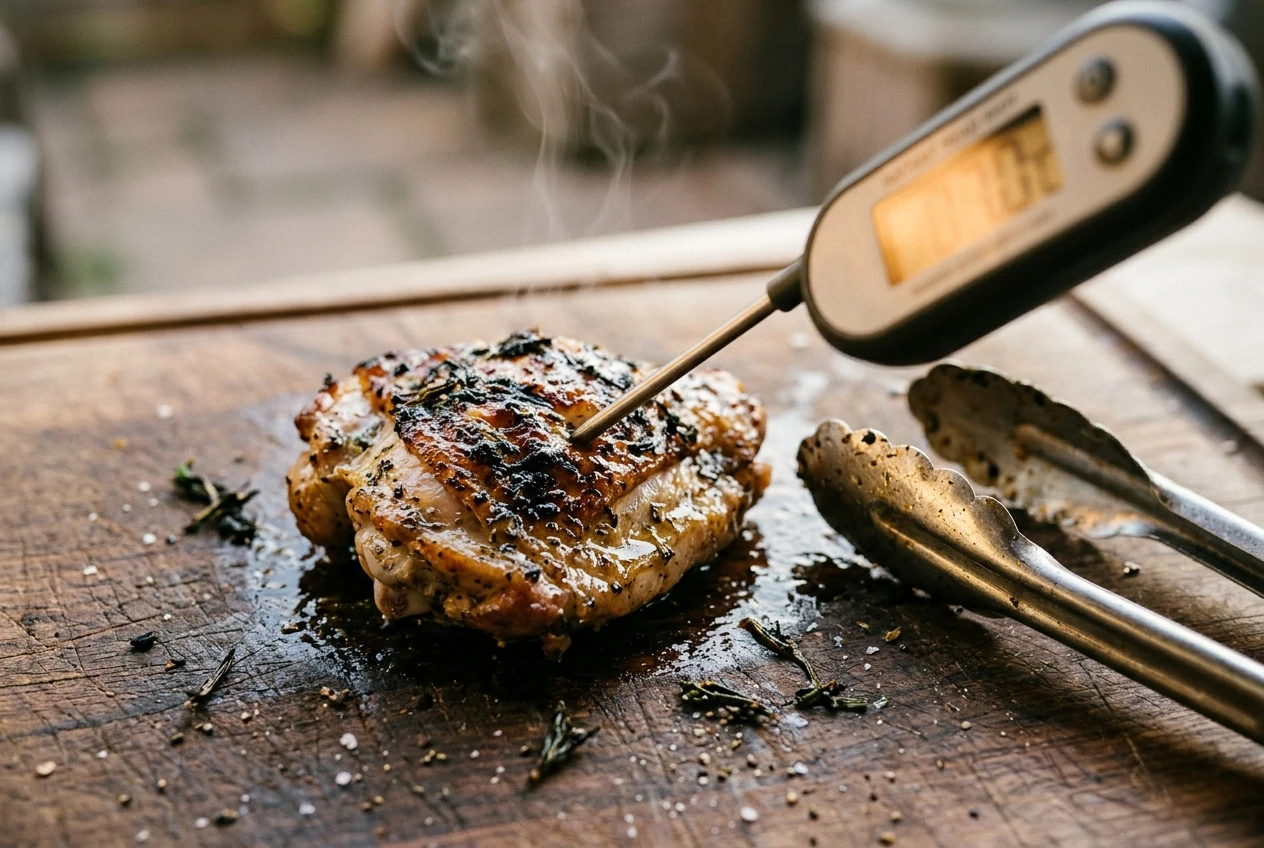
Time estimates in recipes are a guide. The thermometer tells you when the food is done. An instant-read thermometer for checking the thickest part of the meat is the most useful tool you can buy for this grill. Safe internal temperatures to know: 165°F for chicken and 160°F for ground beef.
Direct and Indirect Heat
Direct heat cooks food right over the fire, which suits searing. Indirect heat cooks food beside or away from the fire and suits slow cooking. On many pellet grills the fire pot sits under a metal plate, so food cooks mostly with indirect heat. That is why they excel at smoked chicken and ribs, and why a steak may not get the same sear it would on a gas grill unless your model has a direct-flame option.
Steady Temperature
Opening the lid lets heat out, and the grill needs several minutes to recover. Check the food with a thermometer instead of lifting the lid to look. Also check the pellet level in the hopper before each cook. If the hopper runs empty mid-cook, the fire goes out and the temperature drops.
Cleaning
Brush the grates while they are still warm. Scrape ash out of the fire pot and wipe grease from the drip tray every few cooks. Clean grates stop old residue from burning onto new food, and a clean fire pot lights more reliably.
Troubleshooting Common Pellet Grill Issues
Pellets stop feeding. Damp pellets swell and jam the auger. Turn the grill off, unplug it, let it cool, then clear the jam and replace the pellets with dry ones. Storing pellets in a sealed container prevents most jams.
The temperature swings. Wind and cold make the grill work harder to hold its setting. Move it out of direct wind or set up a windbreak a safe distance away, never close enough to catch heat. In cold weather, expect longer cook times and rely on the thermometer.
The smoke is weak or the grill will not light. Ash buildup in the fire pot is a common cause. Clean it out and try again.
The food tastes bitter. Heavy smoke from a dirty grill, or a rub with too much sugar burning at high heat, can both cause this. Clean the grill and add sugary sauces near the end of the cook.
The meat is dry. Cooking past the target temperature is the usual reason. Pull the meat when the thermometer reads done, and let it rest before cutting.
Improving Your Results
Marinating meat overnight adds flavor and can help tenderness. Once you are comfortable with one type of pellet, try a blend or switch woods between cooks and note which you prefer. Local BBQ clubs and online grilling forums are good places to ask questions about your specific grill model.