

TL;DR
– Spatchcocking means cutting out the backbone and pressing the chicken flat.
– A flat bird has even thickness, so the breast and thighs finish together.
– More skin faces the heat, so it crisps better.
– It usually cooks faster than the same bird roasted whole, with no trussing needed.
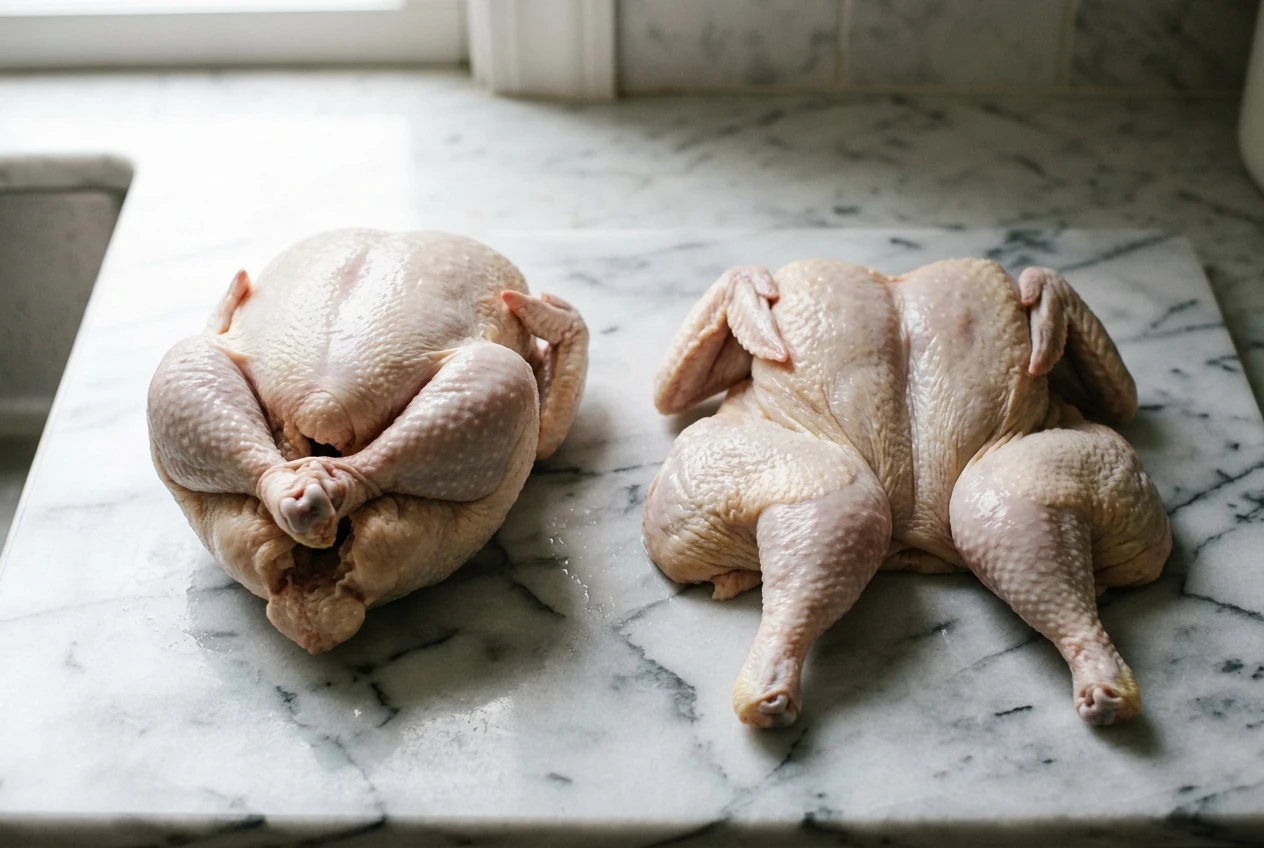
Spatchcocking a chicken means cutting out the backbone and pressing the bird flat, so the whole thing sits at one even thickness. A whole chicken is lumpy: the breast is thick and cooks fast, while the thighs and legs are tucked in and take longer. By the time the thighs are done, the breast is often dry. A flat bird solves this because the breast and legs sit in the same plane, the skin faces the heat, and everything finishes at about the same time.
The technique is also called butterflying. The word “spatchcock” is old, and where it came from is debated, so it is better to focus on what it does for a weekend cook: shorter cooking time, crisper skin, and meat that is juicy from end to end.
Why a Flat Chicken Cooks Better
Three things change when you flatten the bird.
-
Even thickness. Heat reaches the breast and the legs at a similar rate, so you do not have to overcook one part to finish the other.
-
More skin exposed. Skin that faces the heat directly renders its fat and crisps. On a whole roast bird, the skin on the sides and underneath often stays soft.
-
Less time on the heat. A flat chicken usually finishes noticeably faster than the same bird cooked whole, which helps on a weeknight or when guests are waiting.
Compared with trussing, spatchcocking has no string to tie and no cavity to worry about. Compared with roasting whole, it gives you more predictable results, because you are no longer waiting on the deepest, slowest part of the bird. The main trade-off is that you lose the classic upright roast-chicken look at the table. Flat chicken carves easily, though, and the skin looks good.
Tools and Ingredients
You need very little equipment.
-
Poultry shears or strong kitchen scissors. Shears are built for this. Regular scissors can work on a smaller bird, but they struggle with the thicker bones near the thigh.
-
A large cutting board that does not slide. Set a damp towel or a rubber mat under it if it moves.
-
A rimmed baking sheet or a grill. A wire rack set inside the baking sheet lets air move under the bird.
-
An instant-read thermometer. It is the only reliable way to know the chicken is done. If you are shopping for one, the right grilling thermometer for the way you actually cook covers what to look for.
-
Paper towels for drying the skin.
For the chicken, buy a fresh whole bird and check the date on the package. A chicken of about 3.5 to 4.5 pounds is a comfortable size for a home oven or a standard grill. Larger birds take longer and are harder to keep flat.
For seasoning, salt and black pepper do most of the work. Paprika, garlic powder, dried thyme, and rosemary all suit chicken. If you like a marinade, a mix of olive oil, crushed garlic, lemon juice, and herbs works well, and an hour or more in the fridge gives it time to flavor the surface.
How to Spatchcock a Chicken, Step by Step
Take the chicken out of its packaging and pat it dry with paper towels. Dry skin crisps better, and a dry bird is also less slippery to cut. Do not rinse it in the sink: rinsing splashes bacteria around your kitchen and does nothing to make the chicken safer.
-
Position the bird. Place the chicken breast-side down on the board with the legs toward you. The backbone is the ridge running down the center of the back.
-
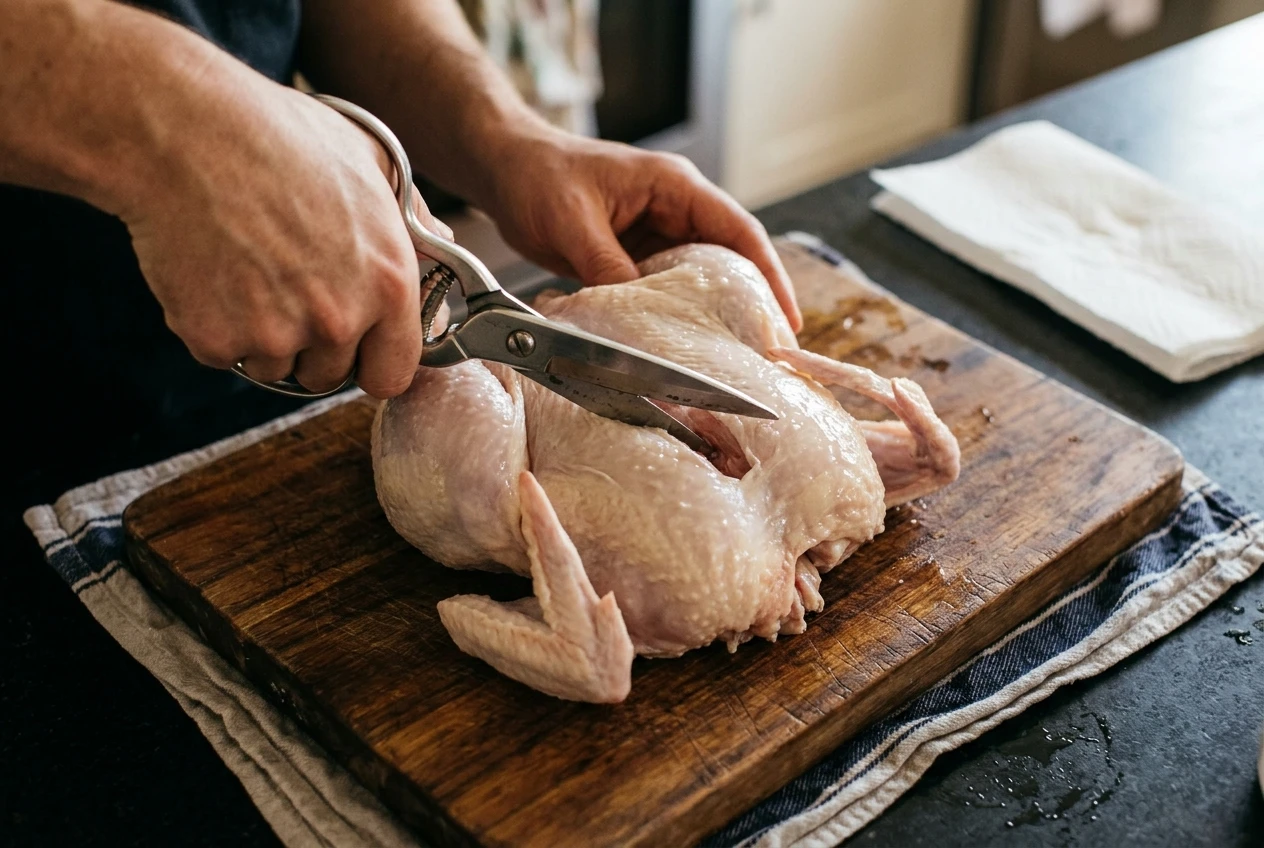
Cut along one side of the backbone. Start at the tail end. Put the shears right next to the spine and cut up toward the neck. Keep your free hand on the bird’s edge, away from the blades. You will feel resistance where the small rib bones meet the spine, so use steady pressure.
-
Cut along the other side. Repeat on the opposite side of the spine and lift the backbone out. Keep it in the freezer for making stock later.
-
Turn the chicken over. Place it breast-side up with the legs pointing toward you and open it out like a book.
-
Flatten it. Set the heel of your hand on the center of the breastbone and press down firmly. You should feel or hear a crack as the bone gives way. If the bird will not lie flat, press again, or make a small cut along the breastbone’s edge.
-
Tuck the wings. Fold the wing tips behind the breast. This keeps them from burning and helps the bird sit compactly.
If a cut goes off line, nothing is ruined. Use a small sharp knife to trim any ragged edges, then press the bird flat and carry on. The result does not need to look perfect to cook evenly.
Wash your hands, the board, and the shears with hot soapy water as soon as you finish, because raw chicken juices spread easily.
Season the Bird
Seasoning is where you can improve the final result most, and you can do it in two ways.
Dry brine. Salt the chicken all over, including under the skin of the breast where you can reach, using about a teaspoon of kosher salt per pound as a starting point. Place it uncovered on a rack in the fridge for several hours or overnight. The salt seasons the meat, and the cold, dry air dries out the skin, which helps it crisp.
Quick seasoning. If you are short on time, salt and season right before cooking. Rub the skin with a little olive oil or melted butter first so the spices stick and the skin browns. Paprika adds color, and a pinch of cayenne gives it some heat.
Avoid sugary rubs and sauces at the start of a hot cook, because the sugar can burn before the chicken is done. Brush sauce on during the last few minutes instead.
Cooking Methods
You can roast, grill, or smoke a spatchcocked chicken. Whichever you choose, cook to temperature rather than to the clock. The USDA’s safe minimum for poultry is 165°F. Check the thickest part of the breast and the thigh without touching bone. Many cooks let the thighs climb a bit higher, toward 175°F, because dark meat has more connective tissue and tastes better when it cooks a little longer.
Oven roasting
Heat the oven to about 425°F. Set the chicken, skin-side up, on a rack inside a rimmed baking sheet, or directly on the sheet if you do not have a rack. Roast until the breast reaches 165°F and the thighs are done. A bird of 4 pounds or so commonly takes well under an hour, and the temperature will tell you for certain. Leave space around the chicken so hot air can circulate.
Grilling
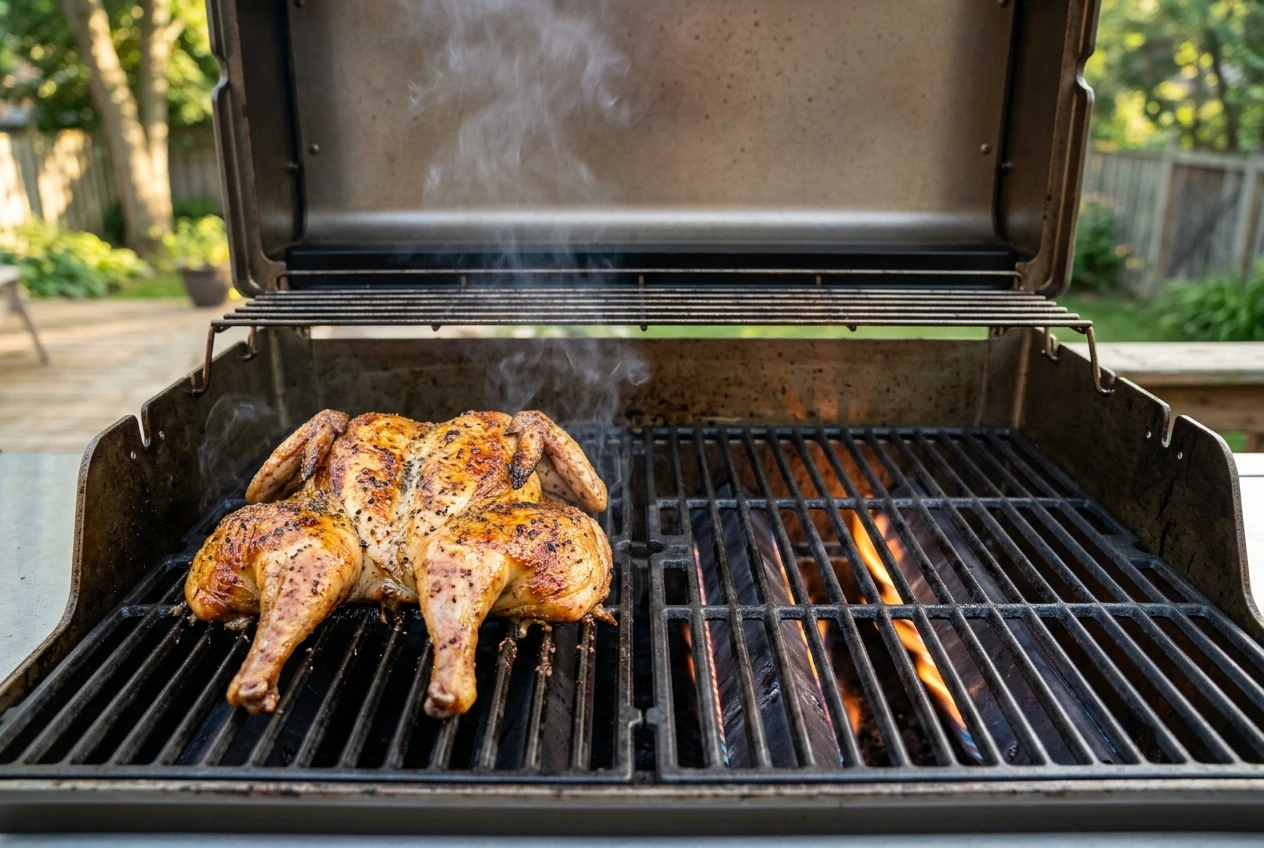
Spatchcocked chicken is a good fit for the grill, but it needs indirect heat. Direct flame on a whole flat chicken causes flare-ups from the dripping fat and burns the skin before the meat is cooked. On a gas grill, light the burners on one side only and leave the other side off. Our guide to indirect heat grilling on a gas grill explains the setup in detail.
Place the chicken bone-side down on the cool side, close the lid, and cook until the breast approaches 160°F. Then move it over the hot side, skin-side down, for a couple of minutes to crisp and char the skin. Watch it closely at this stage, because skin can go from golden to burnt quickly.
Smoking
For a smoker, set the temperature around 250°F for a slower cook, or higher if you want crisper skin. Many cooks choose a range of 275°F to 325°F for chicken because lower temperatures can leave the skin rubbery. Mild woods like apple or cherry suit poultry, and stronger ones like hickory can overpower it if you use too much. Smoked chicken takes longer, so plan ahead and rely on your thermometer.
Rest, Carve, and Serve
Let the chicken rest for about 10 minutes after it comes off the heat. During that time the juices settle back into the meat instead of running onto the board when you cut it.
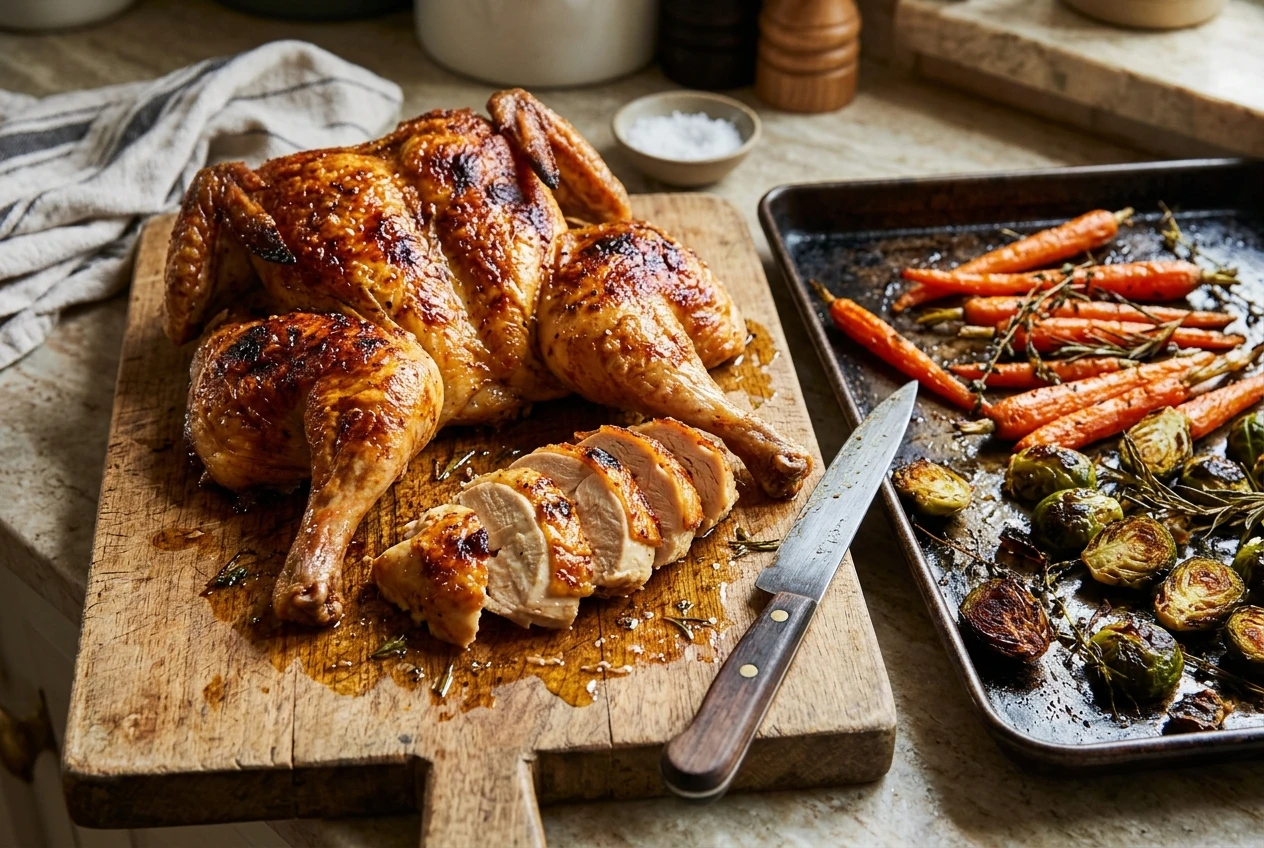
To carve a flat chicken, cut off each leg-and-thigh piece at the joint, then slice the breast away from the bone. Cut the breast across the grain into slices, or leave the halves whole for a casual meal.
For sides, roasted carrots or Brussels sprouts can share the oven. A crisp salad with a sharp vinaigrette balances the richness of the skin. Potato salad or grilled corn suit a backyard meal. For drinks, a dry white wine or a light lager goes well with roast chicken.
Common Problems and Fixes
-
The skin is soft. The chicken was probably damp, or the oven or grill was too cool. Dry the skin well, dry brine if you have time, and raise the heat toward the end.
-
The breast is dry and the thighs are done. Check the temperature earlier, and pull the bird when the breast hits 165°F. On the grill, position the legs closer to the hotter side.
-
The skin burned on the grill. Move the chicken to the cool side, close the lid, and avoid sugary sauces until the final minutes.
-
The bird will not lie flat. Press harder on the breastbone, and check that you removed the backbone cleanly from end to end.
-
The shears feel like too much work. Use sharper ones. A dull blade makes the job harder and less safe.
Once you have done it a couple of times, the whole prep takes only a few minutes. After that, the best way to get better is to change one thing per cook, such as the seasoning, the heat, or the cooking method, and compare how the chicken turns out.