

Clean a Blackstone griddle while it is still warm: scrape off the food, wipe the surface down, and rub on a thin coat of oil. The routine takes a few minutes after each cook. Heavier buildup and rust need a deeper clean, and both are covered below, along with the tools to have on hand and what to keep off the cooktop.
What You Need
Most of the gear is cheap, and you may already own some of it.
-
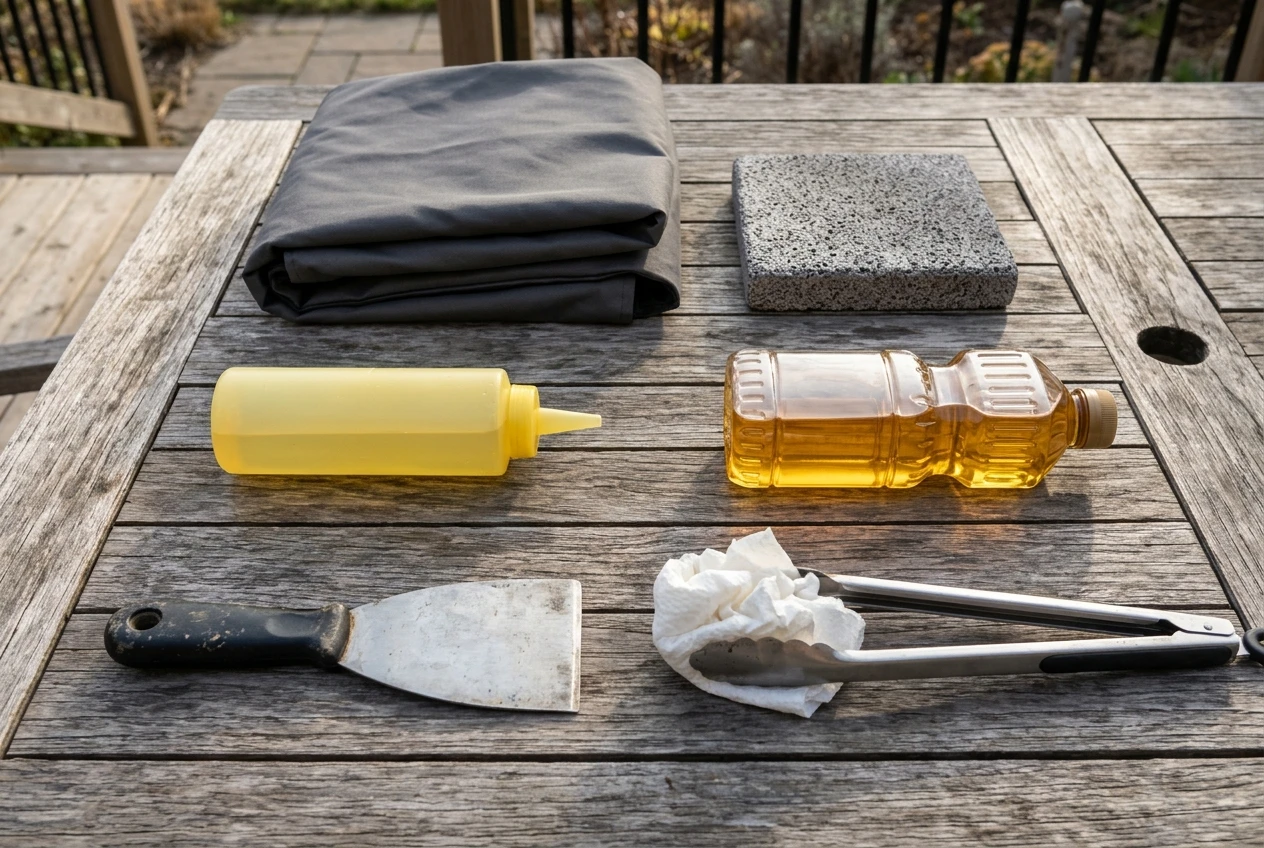
A flat-edge metal scraper. A sturdy one with a straight edge pushes food and grease across the surface without gouging it.
-
A squeeze bottle for water. It lets you put water exactly where the stuck-on bits are.
-
Paper towels or clean cloths. Use paper towels for the cleanup after a cook. Keep cloths for drying and oiling.
-
Cooking oil. Choose a neutral oil that tolerates high heat, such as canola or vegetable oil.
-
A grill stone or pumice block. This is for carbonized spots and light rust.
-
Tongs. They hold the paper towels so your hand stays away from the hot steel.
-
Mild dish soap. Keep it for occasional deep cleans only.
-
A fitted cover. It protects the cooktop between cooks.
Cleaning After Every Cook
This is the routine that keeps the cooktop in good shape. Do it when you finish cooking, while the surface is warm but no longer at full cooking heat.
-
Lower the heat. Turn the burners down to low or off. The steel should stay warm enough that grease is still liquid. Hot surfaces cause steam burns, so keep your hands clear of the surface.
-
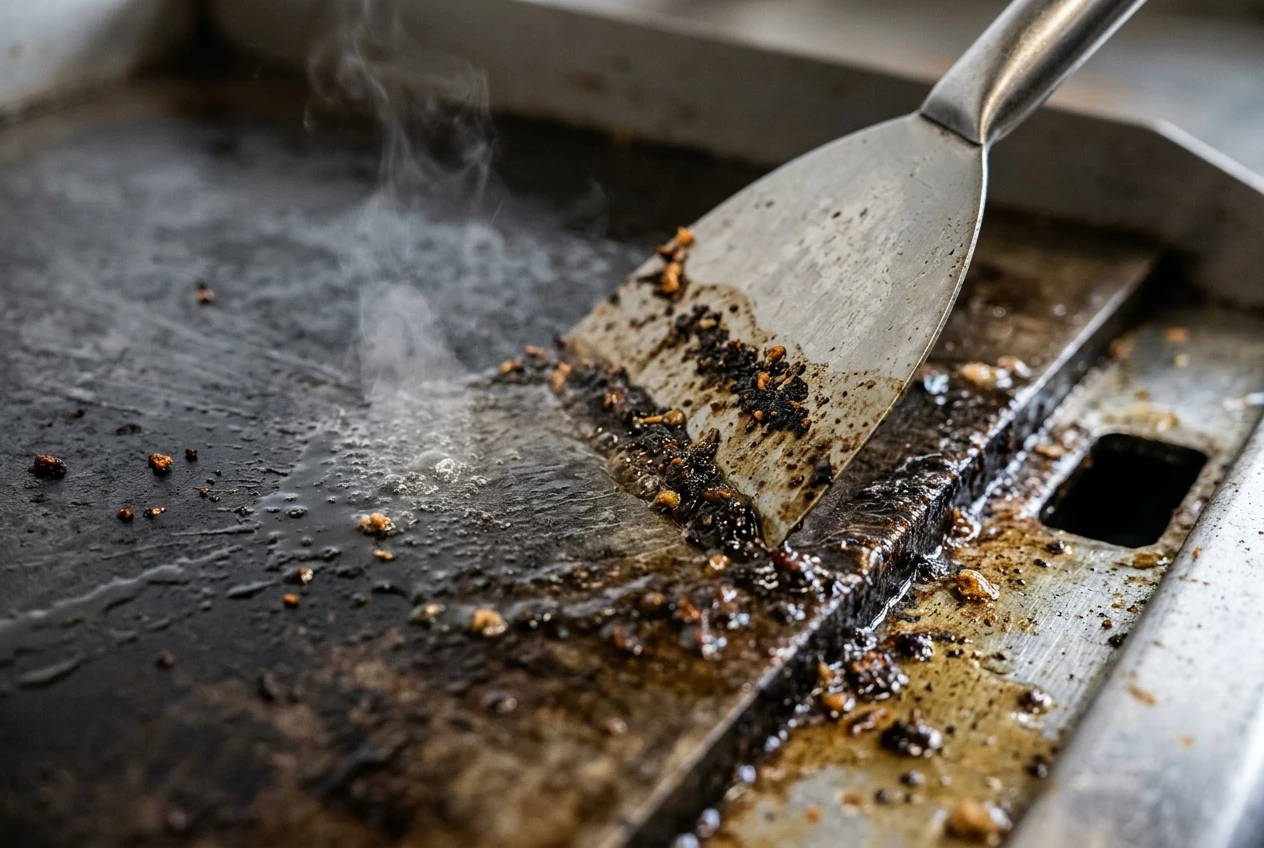
Scrape. Push food bits and grease toward the grease trap with firm, even strokes. Work in lines across the surface so nothing gets left in a corner. Scrape the trap opening clean as you go.
-
Add a little water. Squirt a small amount of water on the stubborn spots. It steams, loosens the residue and makes the second scrape easier. A little water goes a long way, so skip the pour.
-
Wipe. Hold a wad of paper towels in the tongs and wipe the surface. Swap in fresh towels until they stop coming away heavily soiled.
-
Dry it. Leave the burners on low for a minute or two so any leftover moisture evaporates. Water left on steel is what leads to rust.
-
Oil it. Put a small amount of oil on the surface and spread it with a clean towel or cloth until the whole cooktop has a thin, even sheen.
-
Empty the grease trap. Dispose of the grease once it has cooled. Do this before it overflows, since a full trap makes a mess and attracts pests.
The oil coat in step six matters more than it looks. A thin layer protects the bare steel from moisture, and over many cooks it builds the dark seasoning that makes food release cleanly. A thick coat turns tacky, so wipe on more than you think you need and then wipe most of it off.
Deep Cleaning Stuck-On Residue
Some weekends you cook sticky sauces, sugary glazes or a lot of cheese, and the routine scrape will not remove everything. Burnt-on spots also build up when cleanup gets skipped a few times.
Heat the griddle to a medium setting so the residue softens, then scrape as much as you can. Turn the heat off and let the surface cool to warm. Squirt a little water on the remaining spots and rub them with a grill stone in small circles. The stone wears down as it works, which is normal. Scrape the slurry into the grease trap and wipe the surface with paper towels.
If the cooktop is still dirty or smells of old grease, wash it with a small amount of mild dish soap and warm water. Rinse by wiping with a damp cloth, then dry it completely and heat it briefly to drive off moisture. Soap can strip some of the seasoning, so follow a soap wash with a full re-season (see below).
Removing Rust
Orange spots or a rough patch mean moisture got to the steel. This often happens after rain or after the cover traps humidity. Rust on a griddle is fixable.
-
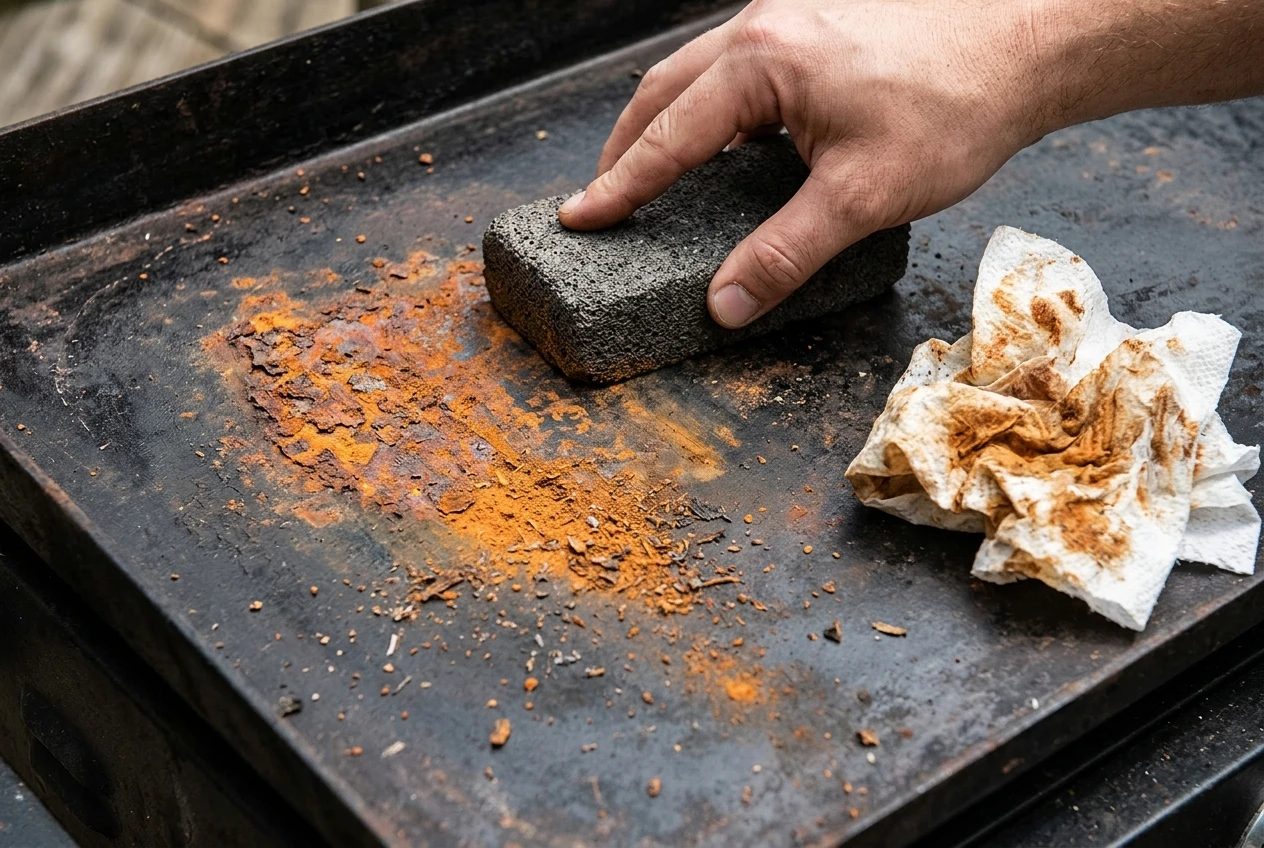
Scrub the rusty area with a grill stone, or with steel wool or fine sandpaper for heavier spots.
-
Wipe away the dust and rust flakes with paper towels.
-
Wash with warm water and a drop of mild soap, and rinse the surface with a damp cloth.
-
Dry it thoroughly, then warm the burners for a minute to evaporate any remaining water.
-
Re-season the whole cooktop, not just the repaired patch, so the finish is even.
Re-Seasoning the Cooktop
Re-seasoning bonds a thin layer of oil to the steel by heating it. Do it after a soap wash, after rust removal, or any time the surface looks dull, gray or patchy.
-
Heat the griddle on medium to dry it completely.
-
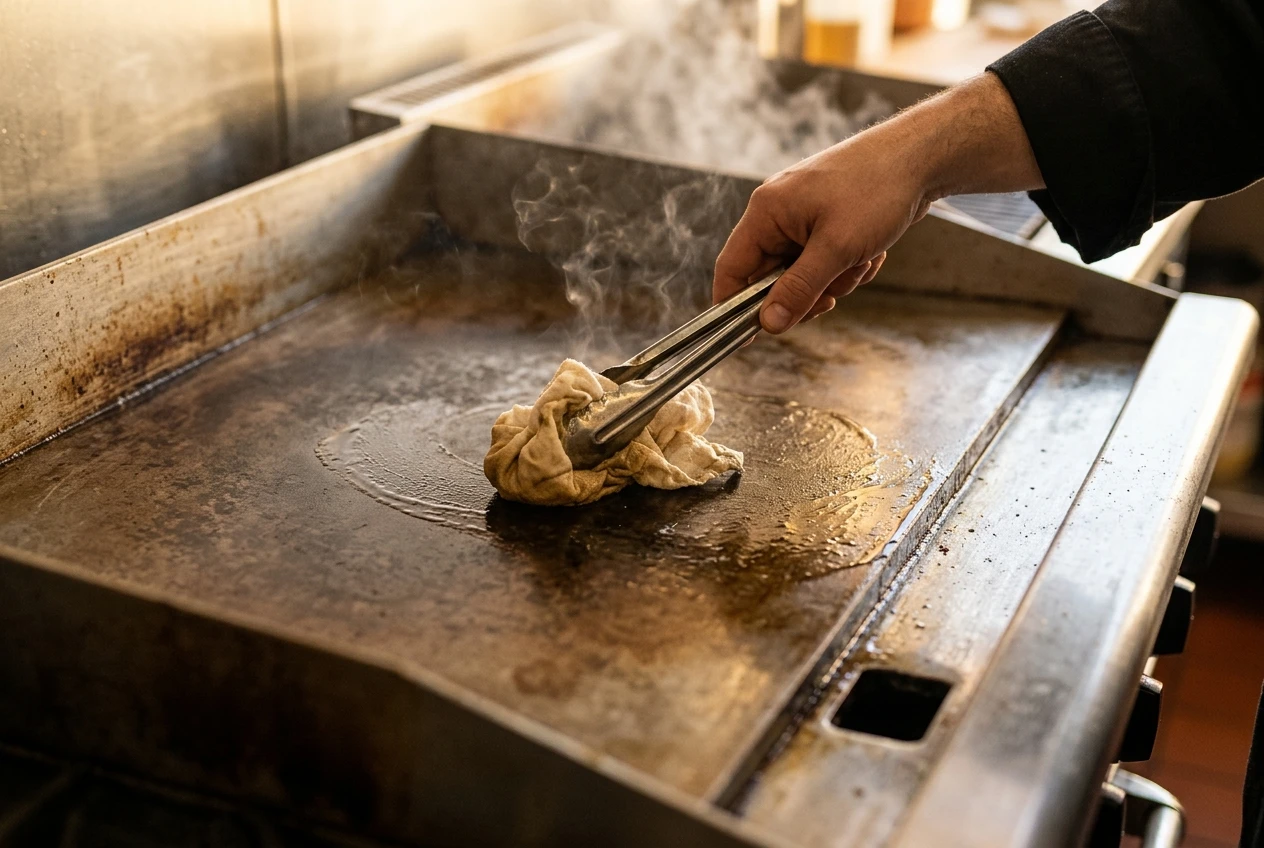
Spread a very thin layer of oil over the whole surface, including the edges.
-
Raise the heat and let the oil burn until it stops smoking. The steel will darken.
-
Let it cool a little, then repeat with another thin coat.
-
Do this a few times. Each layer adds protection and makes the surface more non-stick.
Several thin layers beat one thick one. A thick layer can flake or leave a sticky film that picks up food.
What to Keep Off the Griddle
-
Household cleaners. Degreasers and abrasive sprays are not made for a surface you cook on, and they can strip the seasoning. Whatever stays behind ends up in your food.
-
Vinegar and lemon juice. They are acidic and can eat into the seasoning layer. They are not a good routine cleaner for a seasoned steel cooktop.
-
Cold water on a very hot surface. A large splash of cold water at full heat is hard on steel and can contribute to warping. Let the surface drop to warm first and use small amounts of water.
-
Soaking. Do not leave wet towels or standing water on the cooktop.
-
Metal scrubbers that gouge. A scraper with a flat edge is fine. Sharp tools and aggressive wire brushes scratch the surface, and scratches hold residue.
Fixing Common Problems
The surface feels sticky
Too much oil is the usual cause. Heat the griddle, scrape off the tacky film, wipe it, and apply a much thinner coat.
Black flakes come off in the food
The top layer of seasoning or carbonized buildup is lifting. Scrape off everything that is loose, scrub with a grill stone, wipe clean, and re-season in thin layers.
Food sticks even after cleaning
The seasoning is probably thin. Re-season a few times, and preheat the griddle fully before food goes on.
Rust spots keep returning
Check for moisture. Dry the cooktop completely, oil it after every cook, and store it under a fitted cover. If the cover traps condensation, let the cooktop cool completely before covering it.
Maintenance and Storage
A schedule makes the upkeep automatic. If you cook on the griddle every weekend, a quick scrape, wipe and oil after each session is enough, with a deep clean when buildup shows up. If the griddle sits for weeks between cooks, check the surface before each use and re-oil it when you put it away.
Store it clean, dry and lightly oiled. Put the cover on once the cooktop has cooled, and check under it after rain or heavy humidity, since trapped moisture is a common cause of rust. Keep an eye on the grease trap and empty it regularly.
Upkeep is part of owning a flat-top, and it is worth weighing if you are still deciding what to cook on. The comparison in Weber gas grill or Blackstone griddle covers how each fits the way you cook on weekends.
Griddle care works best as a short routine after each cook, with an occasional deeper clean when the cooktop needs it. A well-seasoned surface releases food easily, resists rust and is quicker to clean the next time.